


Basalt rings and a burial chamber in the Golan. The occupant remains unidentified
Basalt rings surround a burial chamber at the Golan site known as Rujm el Hiri or Gilgal Refaim. The Hebrew name evokes the biblical Rephaim, but no inscription at the site identifies its builders or the person buried there.
Avi Moas, Researcher and Editor-in-Chief · Produced with an AI-assisted newsroom
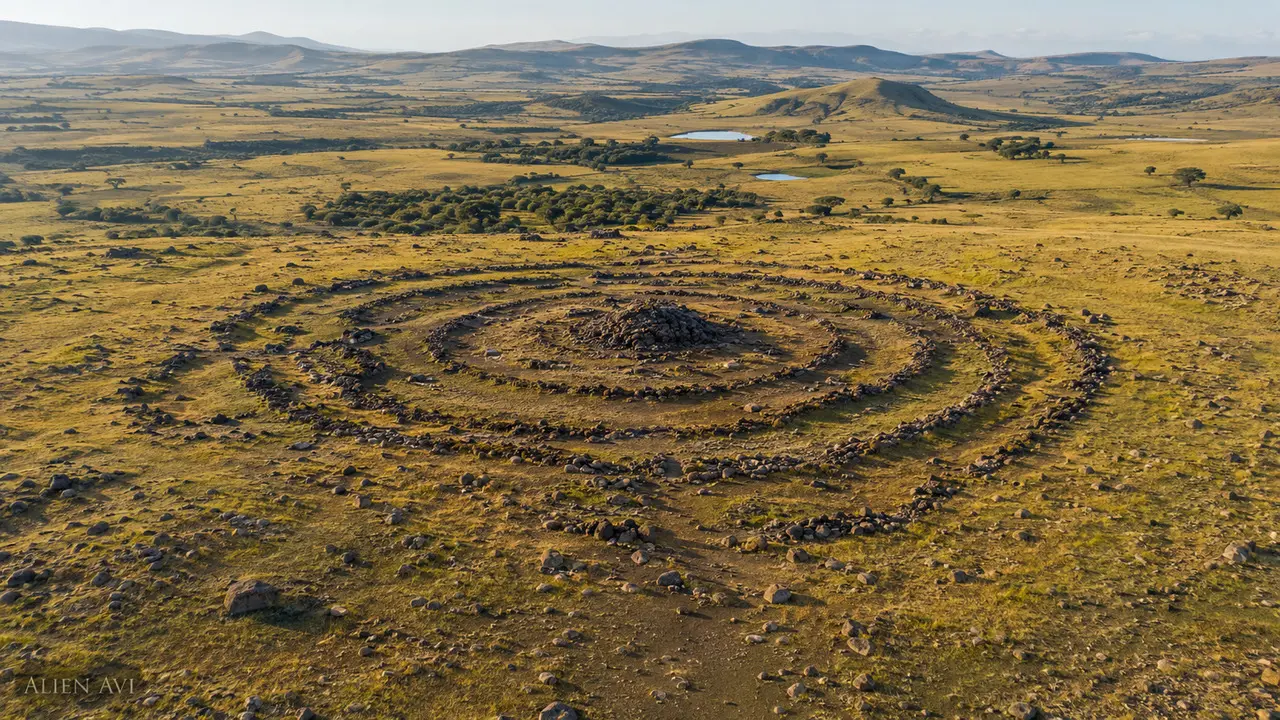
Architecture on a landscape scale
Several rings, radial walls and a central tumulus turn the basalt plain into a planned ceremonial landscape visible most clearly from above.
Burial, ritual or calendar
Proposals include a gathering place, funerary center, ancestor monument and seasonal marker. Recent work cautions that tectonic movement complicates claims of exact astronomical alignment.
The Rephaim of Bashan
Biblical texts place the Rephaim in Transjordan and describe Og of Bashan as their surviving remnant. His unusually large bed helped shape the enduring image of a giant king.
Og and the Flood
The Bible places Og in the time of Moses and does not say that he survived the Flood. That dramatic detail belongs to later Jewish legends and midrashic expansion.
What the tomb can tell us
The site plan in the linked archaeological paper shows the burial mound's position relative to the rings. The name Rujm el Hiri or Gilgal Refa'im does not identify the builders or occupant; the association with Og belongs to later interpretation.
The complex is about 150 meters across and contains tens of thousands of basalt stones. Major phases are generally assigned to the Bronze Age, with the central burial mound possibly added later.
No inscription or human remains identify the tomb as Og's. The connection comes from geography, biblical tradition and later legend, not a direct archaeological identification.
Found another source or a detail to correct? Let us know.
