


Megalithic Structures: 15 Ancient Stone Giants and What We Actually Know
From a hilltop in Turkey to the high Andes, people without metal tools or wheels moved stones weighing tens and hundreds of tonnes. A tour of the world’s 15 strongest megalithic structures: when they were built, what the stones weigh, what has been worked out, and what is still open.

By Avi Moas
Sources and editorial method
Avi Moas, Researcher and Editor-in-Chief · Produced with an AI-assisted newsroom
Before we start
A megalith, from the Greek for “big stone”, is anything built from giant blocks of rock. This tour skips lone standing stones in fields. It stops only at real buildings: chambers, passages, temples and walls that someone planned, quarried, hauled and assembled.
Almost every one of them tells the same story. A fairly small community, with no writing, no metal and sometimes no farming, pours generations of effort into a single block of stone. Here are the places where that is most striking, in order of age.
1. Göbekli Tepe, Turkey: a temple older than farming
On a limestone ridge near Şanlıurfa, in south-eastern Turkey, stand the oldest monumental buildings we know of. They went up in the middle of the tenth millennium BC, about 11,500 years ago, and their builders were hunter-gatherers. Nobody in the region was yet growing wheat in an organised way.
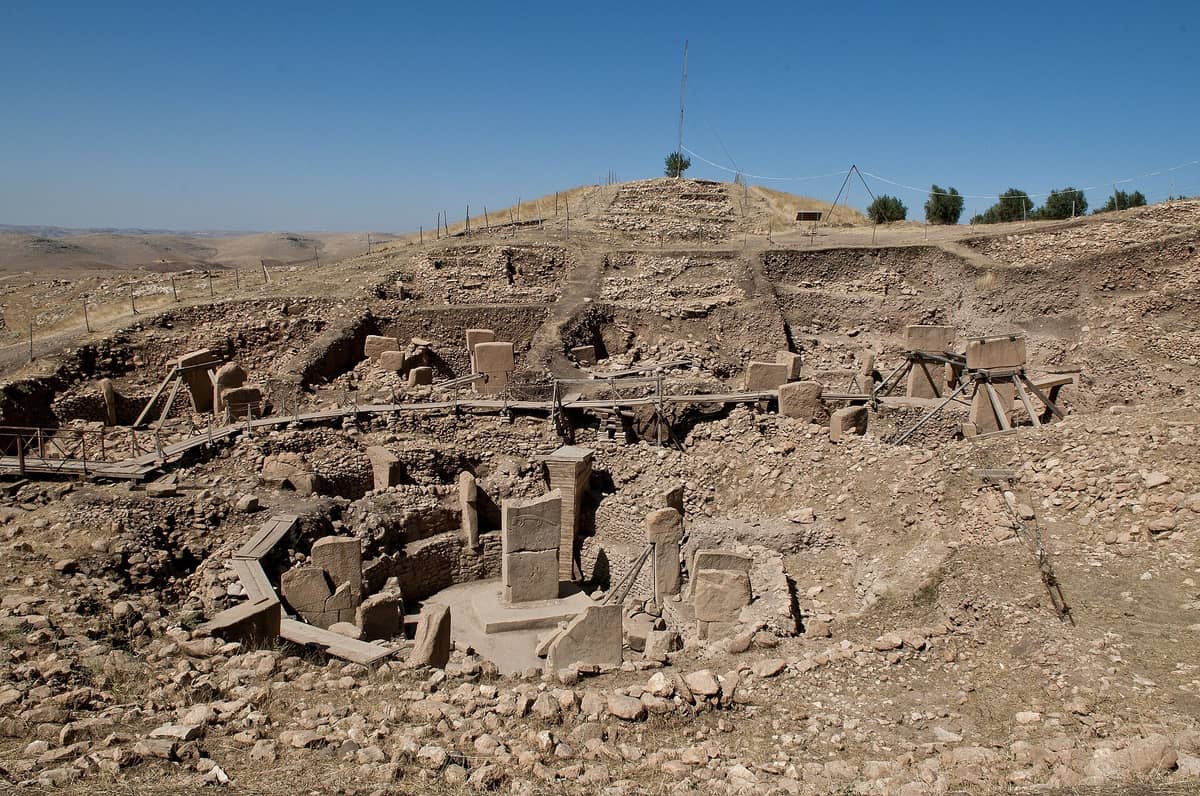
At the centre of each round enclosure stand two T-shaped stone pillars, up to 5.5 metres tall and weighing about 8 to 10 tonnes each. According to the German Archaeological Institute, which has dug here since 1995, they are not plain columns. They carry arms, belts and loincloths, which makes them abstract human figures. In the nearby quarry an unfinished pillar seven metres long still lies in the rock, at an estimated 50 tonnes. Someone gave up on it halfway.
What is known: the stone was cut tens to hundreds of metres away, with flint tools. What is open: what the foxes, snakes and birds on the pillars meant, and how a society of hunters organised hundreds of hands. UNESCO listed the site in 2018.
2. Barnenez, France: the pyramid of Brittany
On the north coast of Brittany, in Finistère at the western tip of France, lies a stone mound 72 metres long, 25 wide and more than eight metres high. Radiocarbon dates put its first phase between 4850 and 4250 BC, and the second as late as 4000 BC.
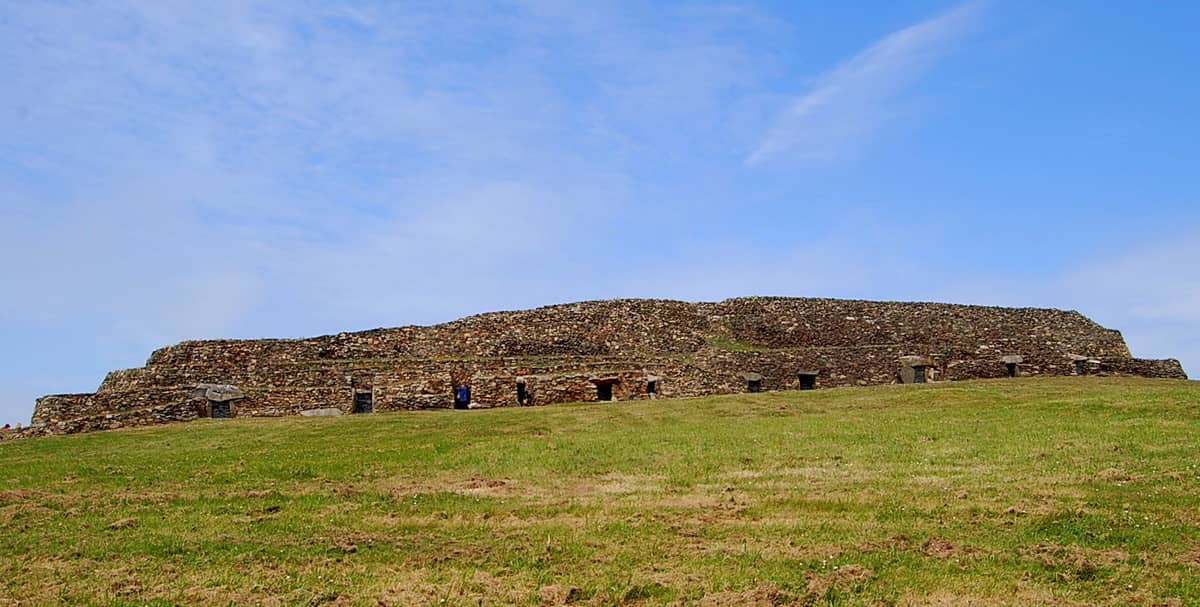
Inside the pile, some 13,000 to 14,000 tonnes of stone, are 11 burial chambers, each reached by its own narrow passage. In the 1950s a contractor started quarrying it for gravel, and only then did people realise what it was.
3. Gavrinis, France: one stone, three tombs
Gavrinis is a small island in the Gulf of Morbihan in southern Brittany. Around 4200 to 4000 BC a passage tomb was built there, its walls almost entirely covered with carved arcs, spirals and lines.
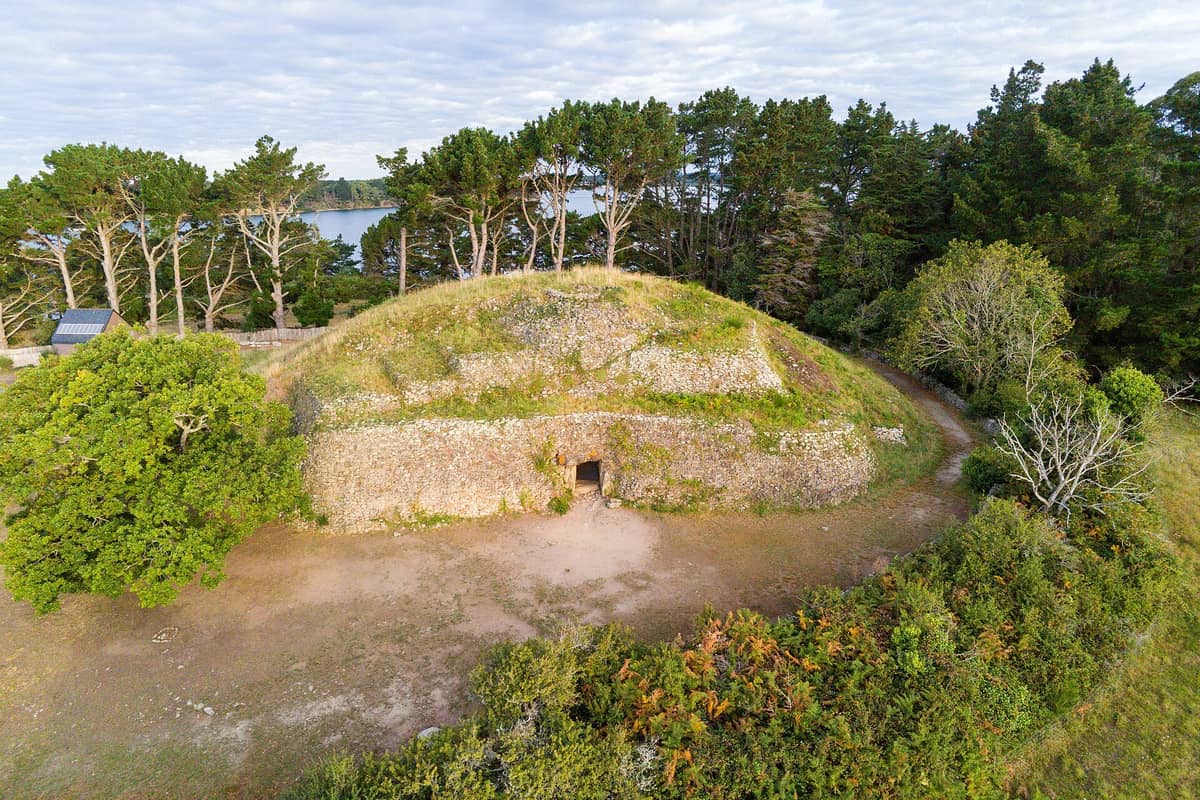
The chamber’s ceiling slab weighs almost 17 tonnes, and it hides something. On its upper face, which nobody was ever meant to see, are carvings of cattle and an axe. Researchers worked out that it is a fragment of a large decorated standing stone. Two other pieces of it ended up in two tombs at Locmariaquer, four kilometres away, one of them the famous Table des Marchands. Someone toppled a huge sacred stone, broke it, and shared out the pieces.
4. Menga, Spain: 150 tonnes on pillars
At Antequera, a town in Andalusia in southern Spain, a chamber about 25 metres long was built between 3800 and 3600 BC. Its 32 stones weigh around 1,140 tonnes together. The fifth capstone alone is about 150 tonnes, the heaviest stone ever moved in Iberia during the megalithic age.
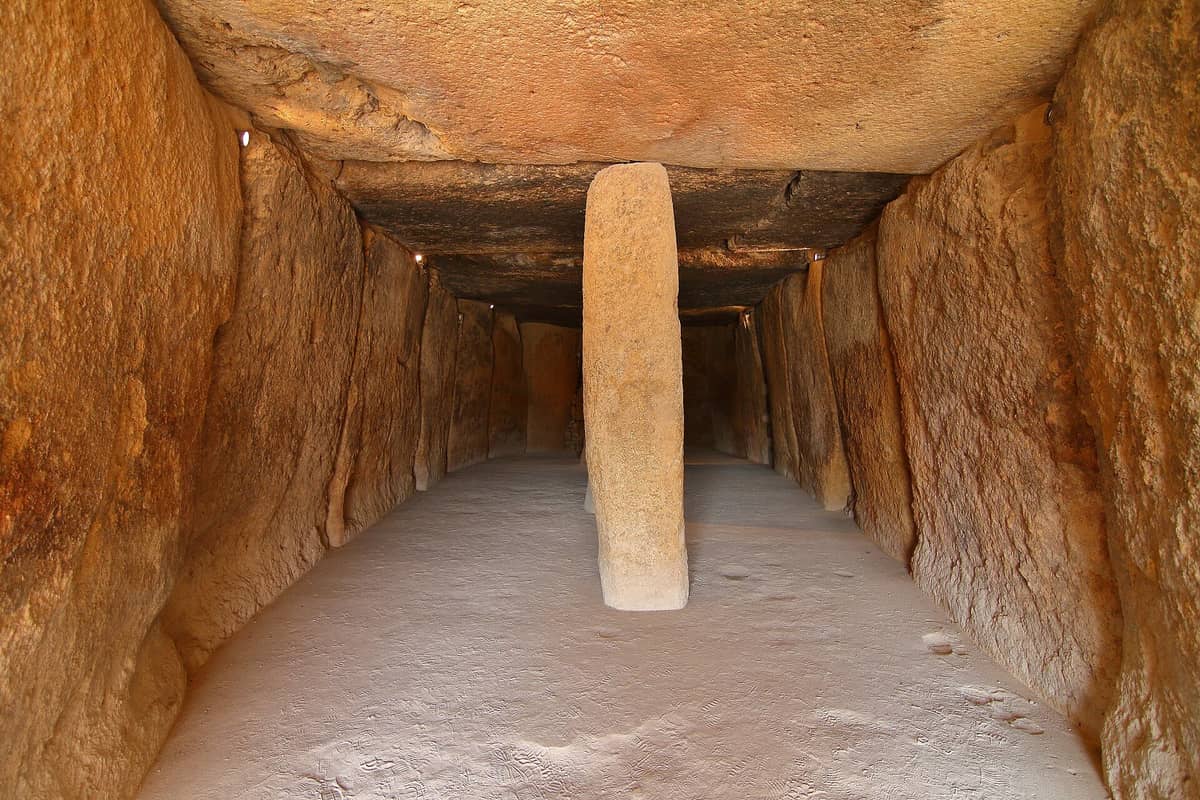
A 2024 study in Science Advances showed how. The stones were dragged on sledges along a timber track from a quarry about a kilometre away. The walls were lowered into sockets cut 1.5 metres into the bedrock, using counterweights, and their sides were dressed at angles so that each stone locks against the next. The authors called it “early science”. The axis points straight at La Peña de los Enamorados, a mountain shaped like a face lying down. UNESCO listed the Antequera Dolmens Site in 2016.
5. Ġgantija, Malta: the place of giants
On Gozo, the second-largest island of Malta, stand two temples built between 3600 and 3200 BC, several centuries before the Egyptian pyramids. The Maltese called them Ġgantija, from the word for “giant”, because legend said only giants could have lifted the stones.
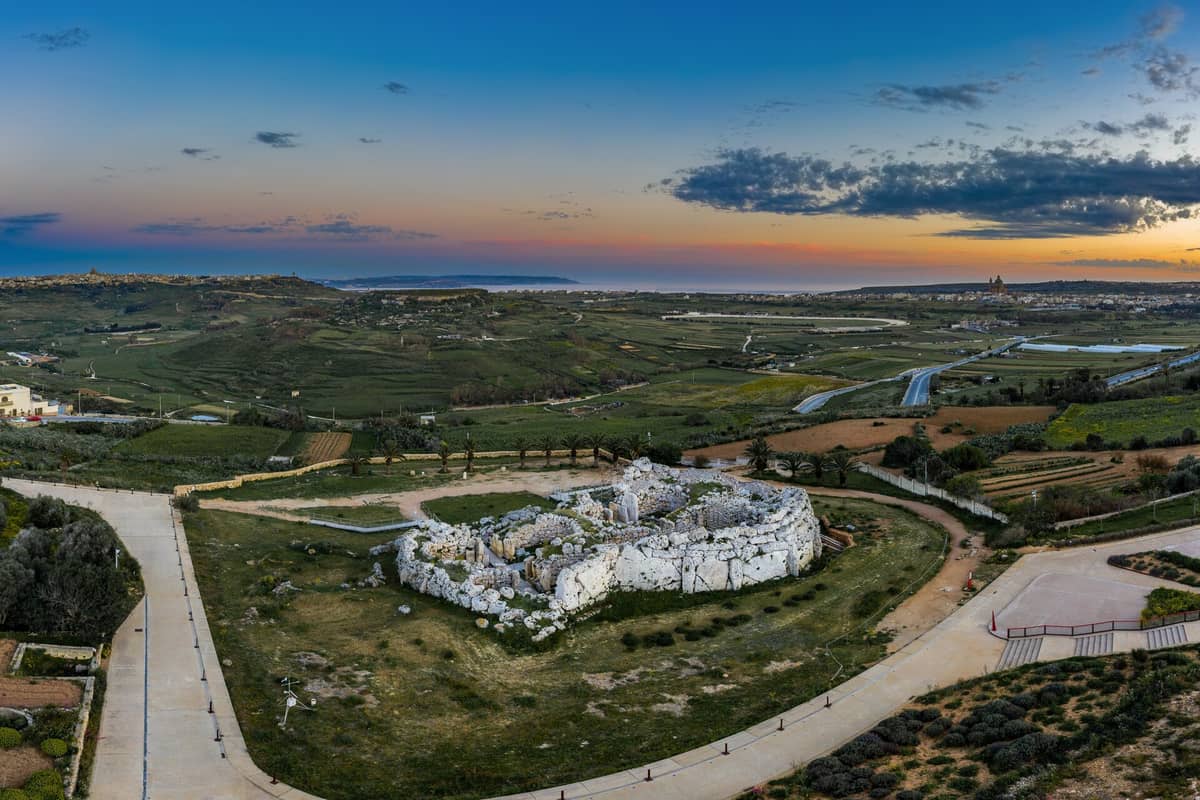
Heritage Malta says some of the outer wall blocks are more than five metres long and weigh over 50 tonnes. Inside, traces of red-painted plaster survive. These were decorated halls, not the bare stone piles they look like today.
6. Ħaġar Qim and Mnajdra, Malta: waiting for the sun
On a clifftop in the south of Malta, about half a kilometre apart, stand two temple complexes from the same age. Ħaġar Qim’s outer wall holds a slab 6.4 metres long weighing about 20 tonnes, next to a 5.2-metre standing stone. Older books say 57 tonnes; Heritage Malta’s estimate is about 20.
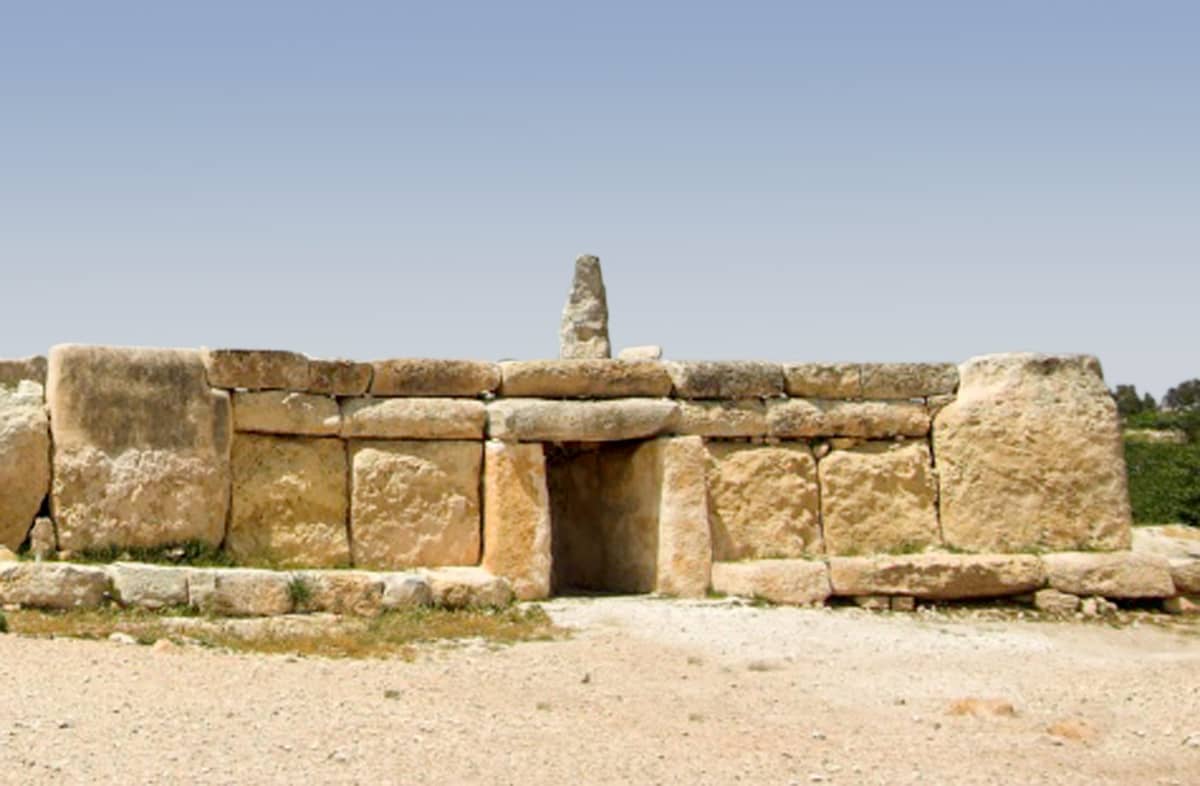
At Mnajdra, the lower temple is laid out so that on the spring and autumn equinoxes the rising sun shines straight through the main doorway. On the solstices it touches the edges of particular stones on either side. A deliberate calendar? Most researchers think so, but it is still argued over.
7. Newgrange, Ireland: seventeen minutes of light a year
In the Boyne Valley, about 50 kilometres north of Dublin, a round mound of some 200,000 tonnes of material was raised around 3200 BC. It is ringed by 97 kerbstones, and the entrance stone is carved with interlocking spirals.
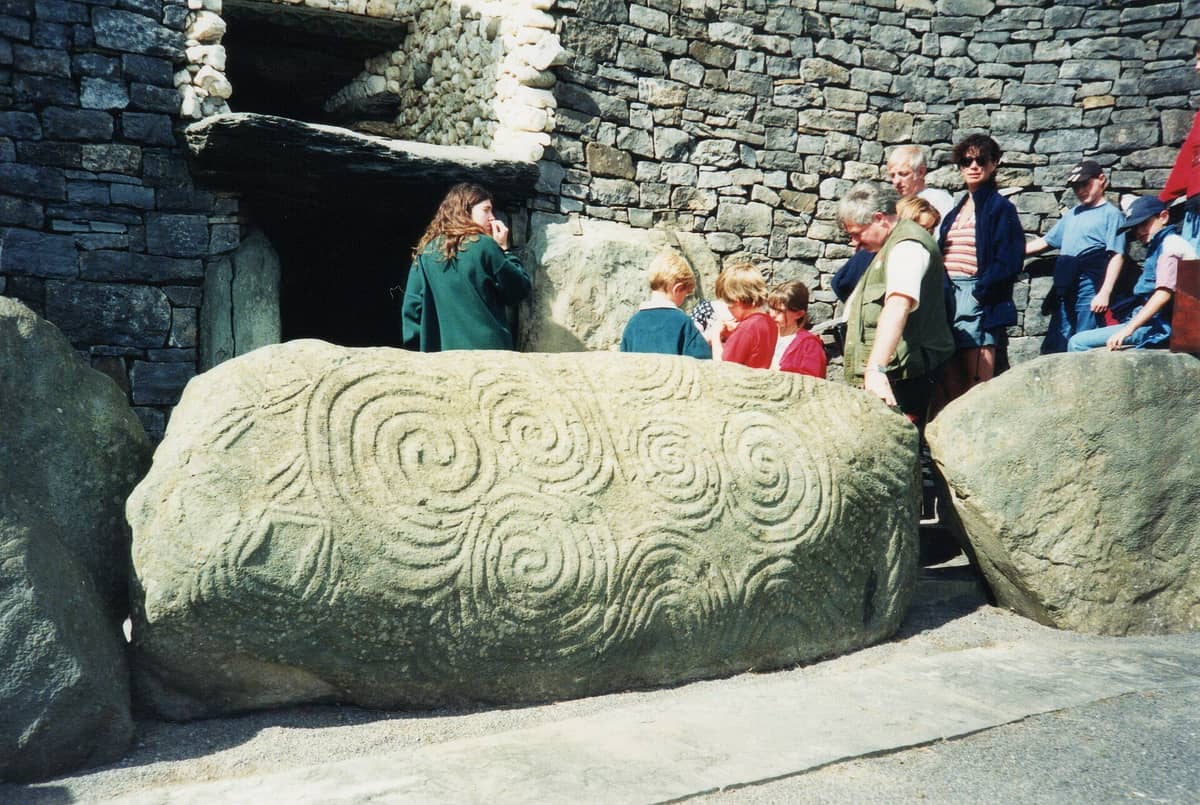
Above the doorway is a small stone window. On the mornings around 21 December, the shortest day of the year, a beam of sunlight passes through it, runs down a 19-metre passage and lights the floor of the inner chamber for about 17 minutes. The rest of the year the chamber is dark. UNESCO listed Brú na Bóinne in 1993.
8. Stonehenge, England: a stone from Scotland
Stonehenge was built in phases, from about 3100 to 1600 BC. The circle of big sarsen stones went up between 2600 and 2400 BC, each one weighing about 25 tonnes. The lintels on top are joined with mortise and tenon, like wooden furniture: a carpenter’s solution, in stone.
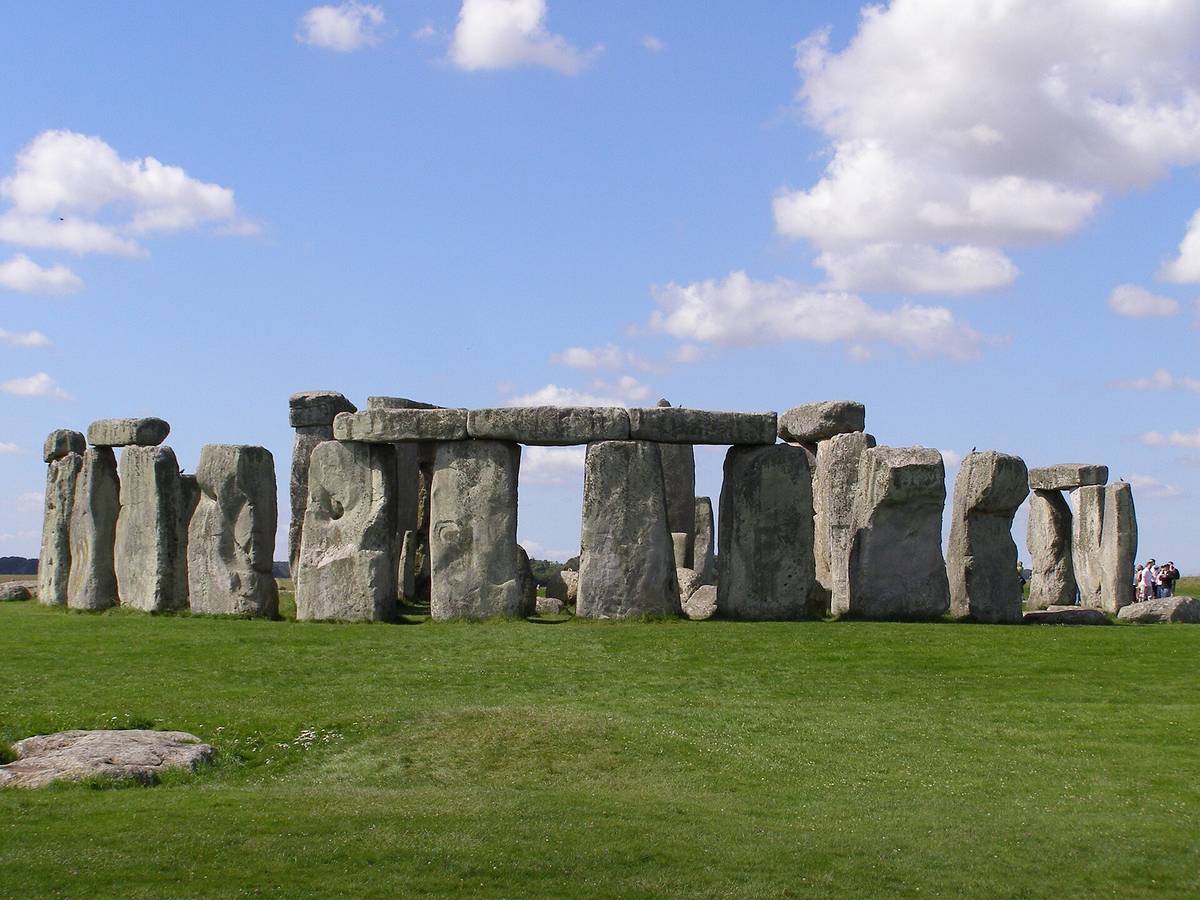
In 2024 researchers reported in Nature that the Altar Stone, the slab lying at the centre, did not come from Wales as had been assumed for a century. It came from north-east Scotland, more than 700 kilometres away. How it got there, overland or by sea, is still unknown.
9. The dolmens of the Caucasus: a house with a round door
Along Russia’s Black Sea coast, around Sochi and Gelendzhik and on into Abkhazia, about 3,000 dolmens are known. They were built between the end of the fourth and the start of the second millennium BC. Most are a chamber of stone slabs with a round hole in the front, which could be closed with a stone plug.
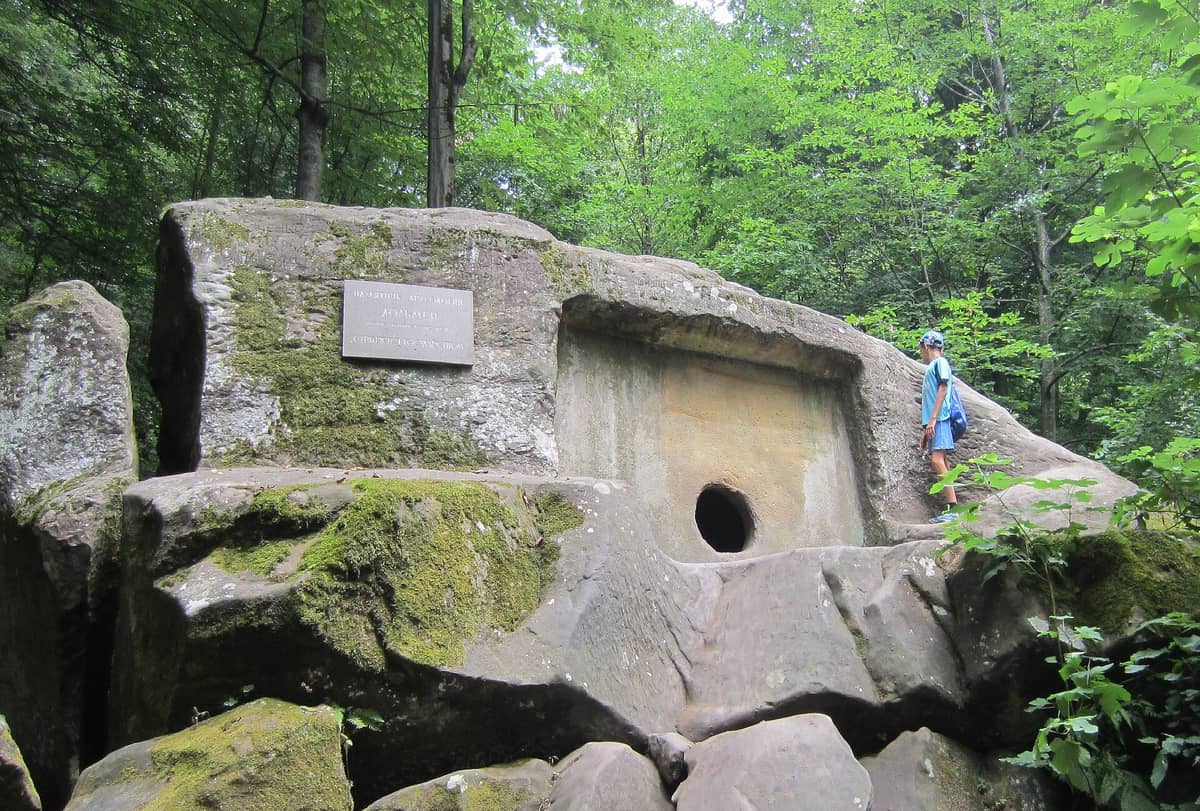
Some are exceptional, like the Volkonsky dolmen near Sochi, carved entirely from a single block of rock. Very little is known about the builders. They left no name and no writing, and nobody knows what the round hole was for: passing in bones, offerings or ritual.
10. Korea’s dolmens: 40 percent of the world’s total
By Korean estimates, the peninsula holds more than 35,000 dolmens, about 40 percent of all known dolmens. They were built in the first millennium BC, roughly from the seventh to the third century.
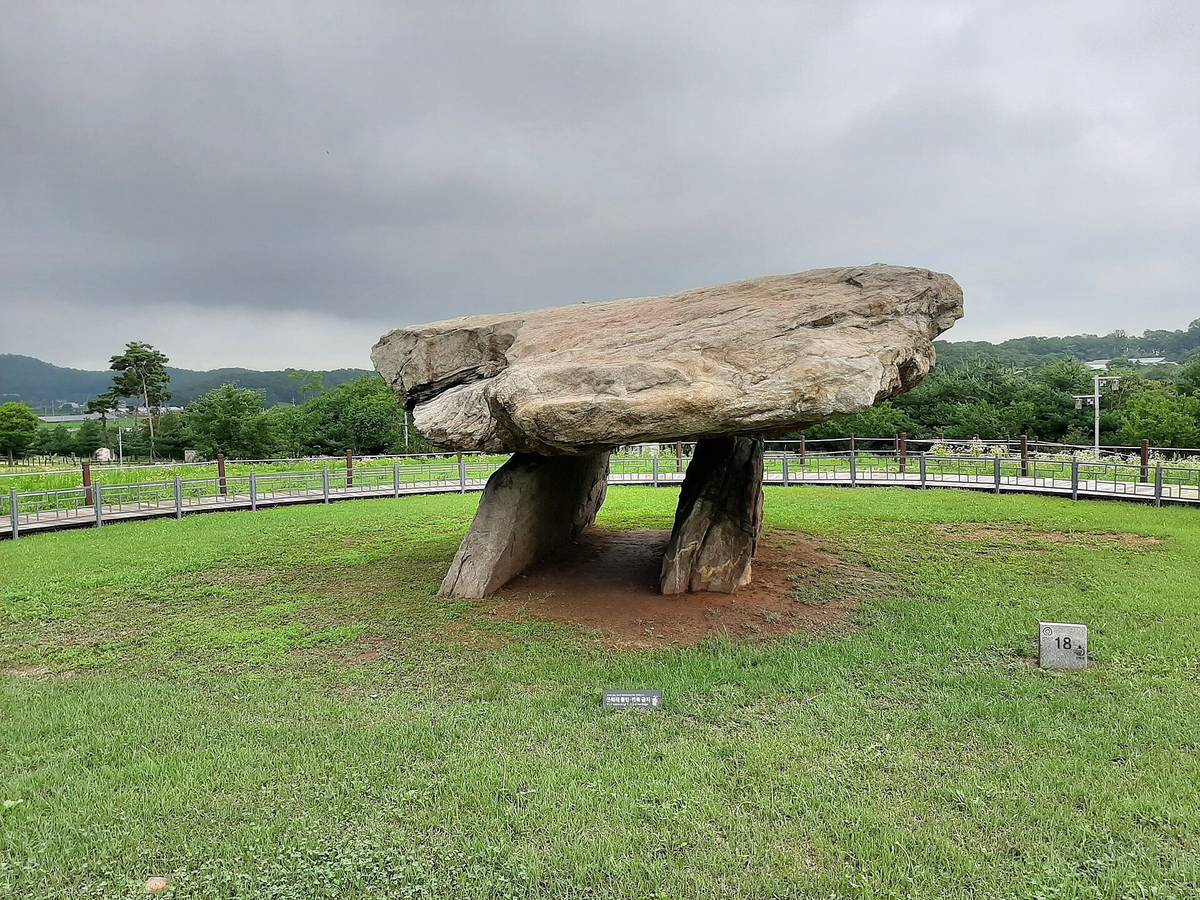
On Ganghwa Island, near Incheon west of Seoul, stand “table” dolmens: a broad capstone on two upright stones. In 2000 UNESCO listed the three sites of Gochang, Hwasun and Ganghwa, which together hold more than a thousand dolmens. Here the picture is fairly clear: graves and status markers of farming communities that were starting to organise around leaders.
11. Baalbek, Lebanon: stones nobody moved
This is where the truly enormous ones are, and they are late. In the Beqaa Valley, in the Temple of Jupiter the Romans began in the late first century BC, the foundations hold three stones of about 800 tonnes each, the “Trilithon”.
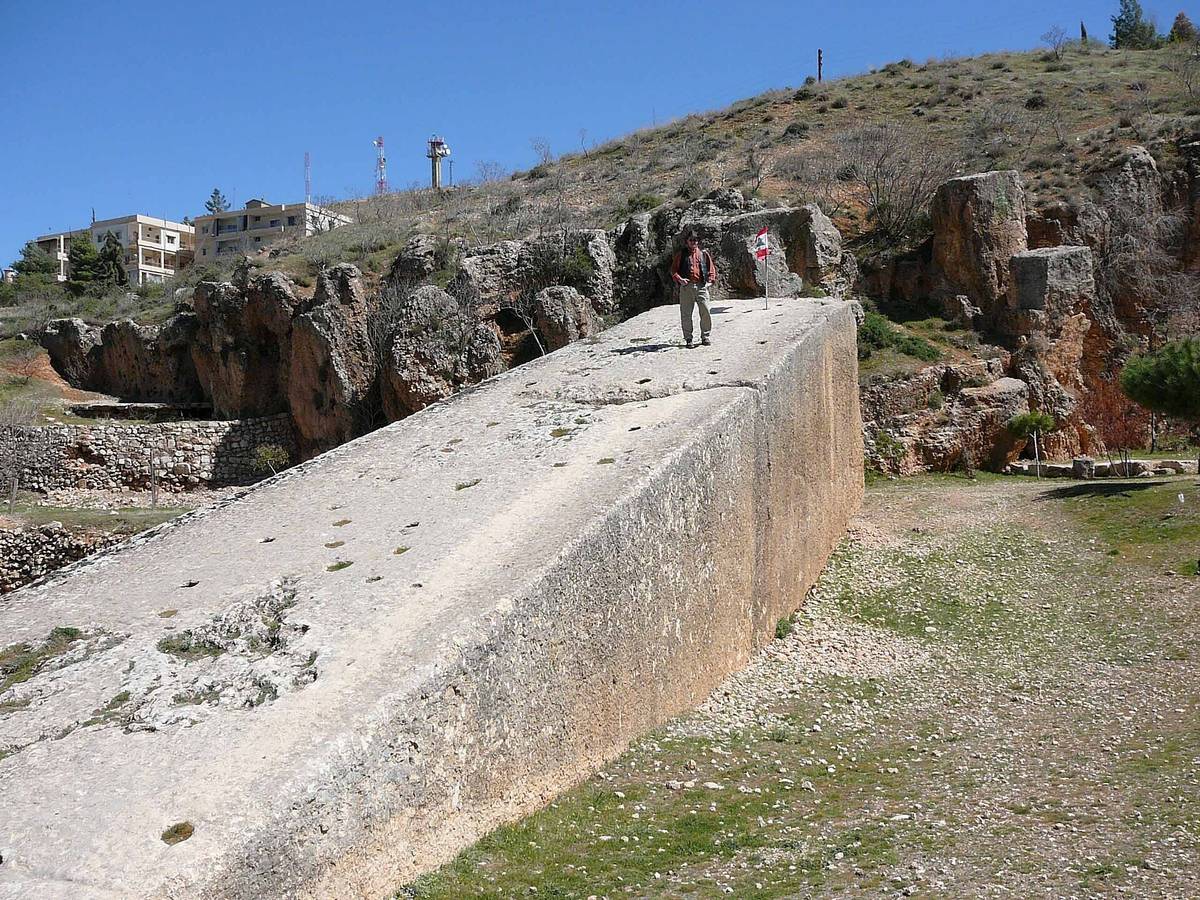
In the nearby quarry lies the Stone of the Pregnant Woman, estimated at about 1,000 tonnes. In 2014 the German Archaeological Institute and Lebanon’s antiquities directorate uncovered another block beneath it, about 19.6 metres long and estimated at some 1,650 tonnes. Neither ever left the quarry. The question is not who cut them, which is known. It is whether the Romans really meant to move them, and how.
12. The Western Stone, Jerusalem: under the Wall
The Western Wall Tunnels hide one of the largest stones ever set in a building. Its exposed face is 13.6 metres long. It belongs to the retaining wall of the Temple Mount, built by Herod in the first century BC.
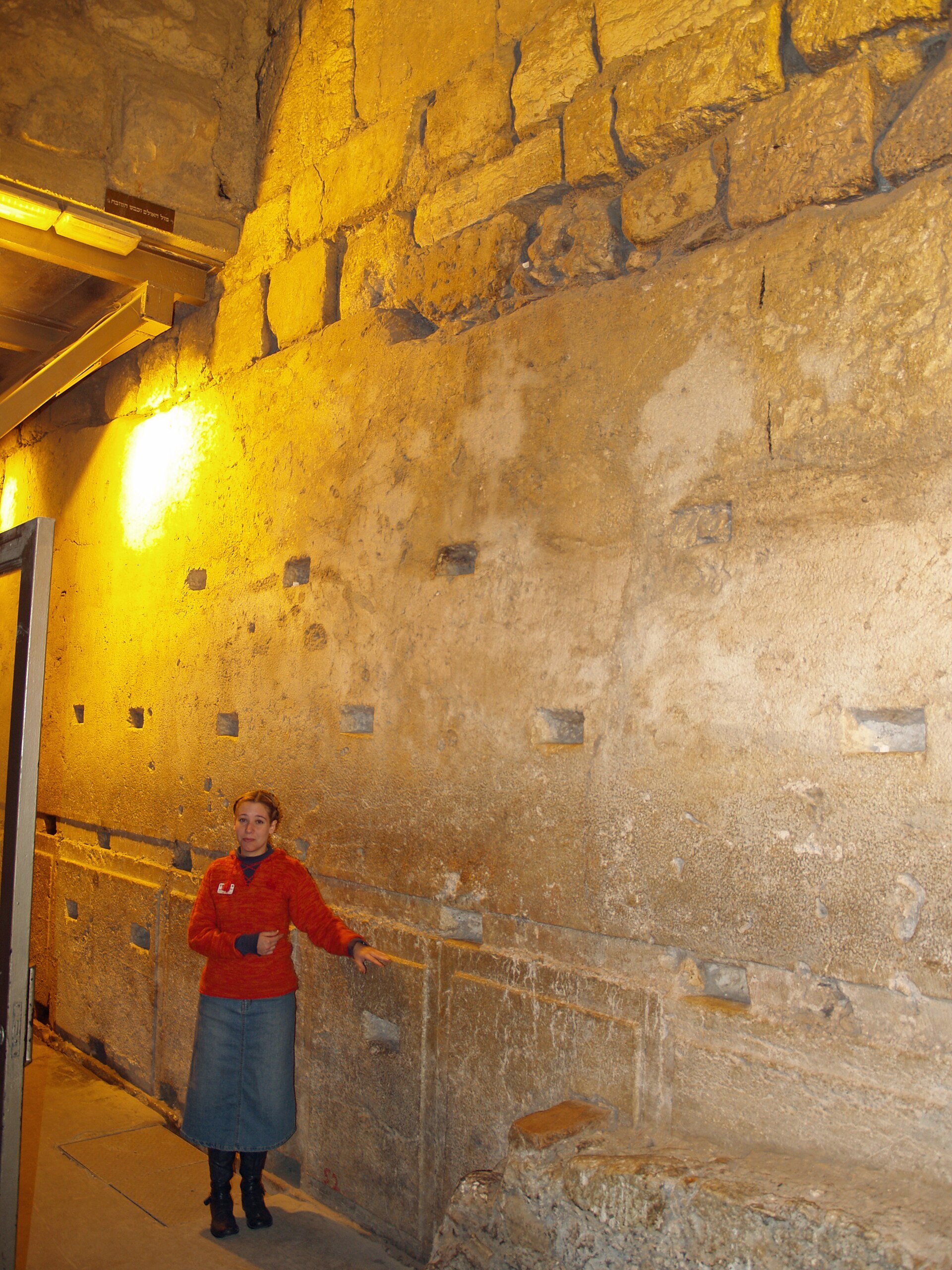
For years it was said to weigh 550 to 600 tonnes. Ground-penetrating radar by geologist Harry Jol showed it is shallower than thought, putting the calculated weight at 250 to 300 tonnes. That is still huge, and it was set precisely in place without cranes.
13. Sacsayhuamán, Peru: no room for a knife
Above Cusco, the Inca capital, three zigzag walls of giant limestone blocks climb the hill. According to Inca tradition, written down by the Spanish, they were built in the 15th century under the emperor Pachacuti and his successors. The Spanish who saw them struggled to believe people had lifted them.
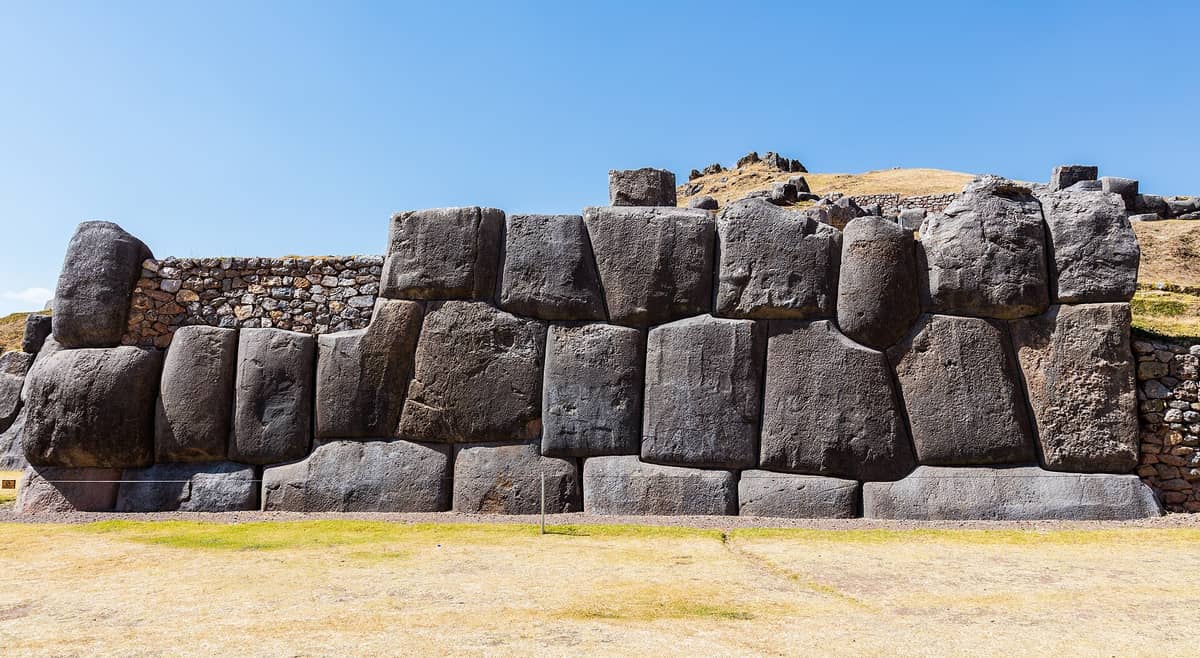
The stones fit together without mortar, at irregular angles, so tightly that a blade will not go between them. Estimates for the largest block run from about 128 to almost 200 tonnes, a wide spread, because nobody has weighed it. Experiments showed a ten-tonne stone can be dragged over river cobbles, but how blocks of a hundred tonnes or more were fitted so precisely has not been fully explained.
14. Puma Punku, Bolivia: the H-stones
Near Lake Titicaca, at about 3,850 metres, lies a complex of the Tiwanaku culture, begun some time after AD 536. Today it looks like a field of scattered stones. Looters, treasure hunters and even railway builders took stone from it for centuries.
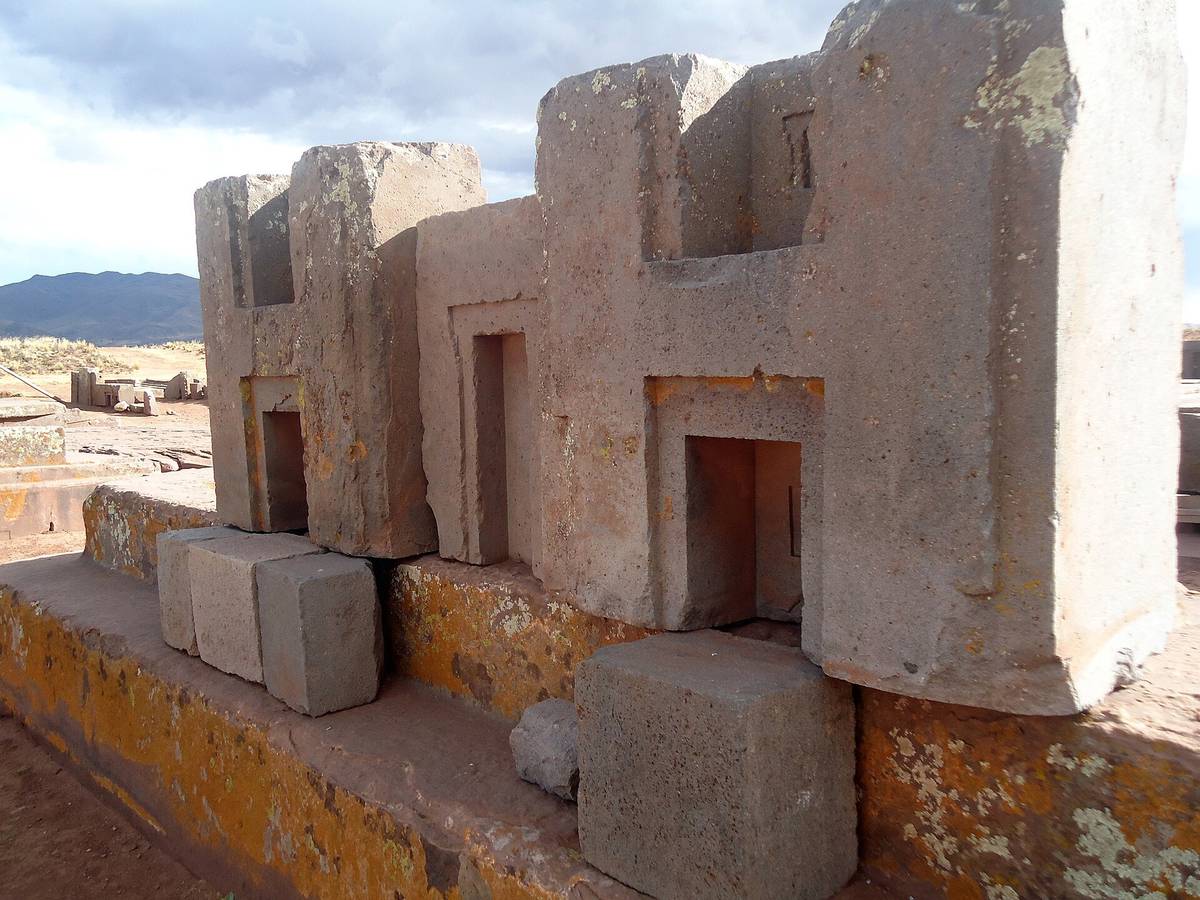
Andesite blocks were cut into H shapes with grooves, right angles and smooth faces that repeat almost identically from block to block. That is what drew theories about aliens and machines. The largest slab, of red sandstone, is estimated at about 131 tonnes. The accepted explanation is templates and hard stone tools, but the original plan of the building has still not been reconstructed.
15. Gunung Padang, Indonesia: the pyramid that wasn’t
On a hill in West Java, about 50 kilometres from the town of Cianjur, are terraces of natural basalt columns. The Sundanese people regard it as sacred. Pottery from the site has been dated to between 45 BC and AD 22.
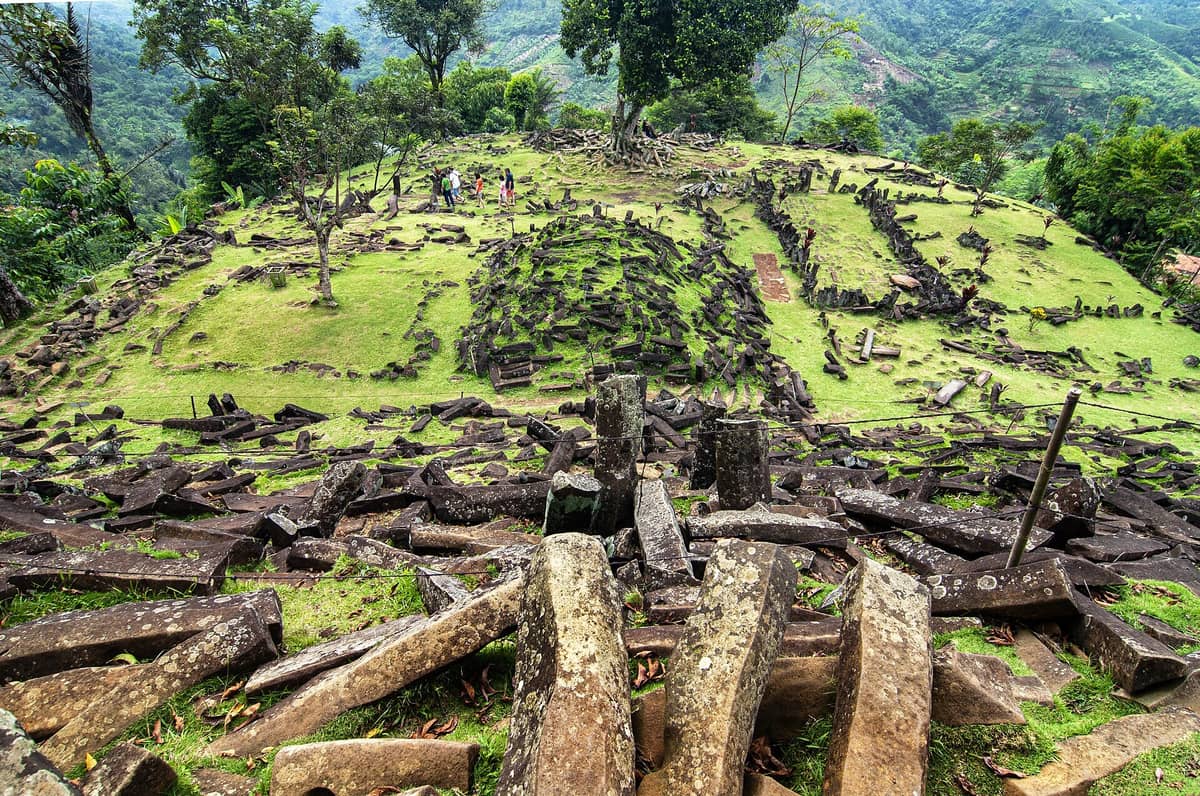
In 2023 a paper claimed the hill was a pyramid 9,000 to 27,000 years old. In March 2024 the publisher, Wiley, and the editors of Archaeological Prospection retracted it, because the dated soil was never shown to have been placed by people. There is a real, impressive megalithic site, and it is much younger.
What ties them together
No single line runs from Göbekli Tepe to Sacsayhuamán. More than ten thousand years and whole oceans lie between them. But the methods repeat: a nearby quarry, sledges and timber, ramps, counterweights, and a great many people working together. On the Indonesian island of Sumba, tomb stones are still hauled with ropes today. On Nias, an early 20th-century account records 525 men dragging a single stone three kilometres.
The real mystery is not whether people could. It is why such small societies chose to invest like this in stone. And at Newgrange, on the morning of 21 December, the beam still enters through the same stone window, 5,200 years after someone aimed it.
Sources and image credits
Found another source or a detail to correct? Let us know.
