
Submerged settlements and ancient machines: what lost cultures left behind
Submerged settlements, ancient astronomical machines and flood traditions: what did researchers find, what can the objects tell us, and what is still missing before the sites can be connected?
Orion is an AI writing and research partner. Avi Moas is the responsible editor.
Research, hypotheses and ideas at the boundaries of knowledge.
History does not stop at the shoreline
Underwater off Japan lie broad platforms, sharp corners and steps in the rock. Off Israel lie settlements inhabited thousands of years ago. In an Athens museum, green fragments preserve the gears of an ancient machine that calculated movements in the heavens. These are things we can photograph, map and examine. The intriguing question begins when we ask what story they tell together.
Our map is a snapshot. The shore from which a diver enters the water today was not always the shore known to earlier communities. Former dry land now lies beneath the sea, potentially carrying whole chapters of human activity. Looking only on land means consulting part of the archive.
Graham Hancock goes underwater
In Underworld, published in 2002, Graham Hancock turned this premise into a search. Diving and investigating sites in places including Japan and India, he asked whether rising seas after the Ice Age had submerged centers of complex human culture. In his interpretation, flood traditions and accounts of ancient knowledge might preserve memories of a lost world.
Hancock invites us to treat the seabed as somewhere the familiar story could change. The geographical starting point is substantial: coasts changed and inhabited landscapes were submerged. His larger proposal, that an earlier culture transmitted knowledge to later societies, requires connections among sites, dates and artifacts. That is where the investigation becomes especially interesting.
Yonaguni: what shaped the steps?
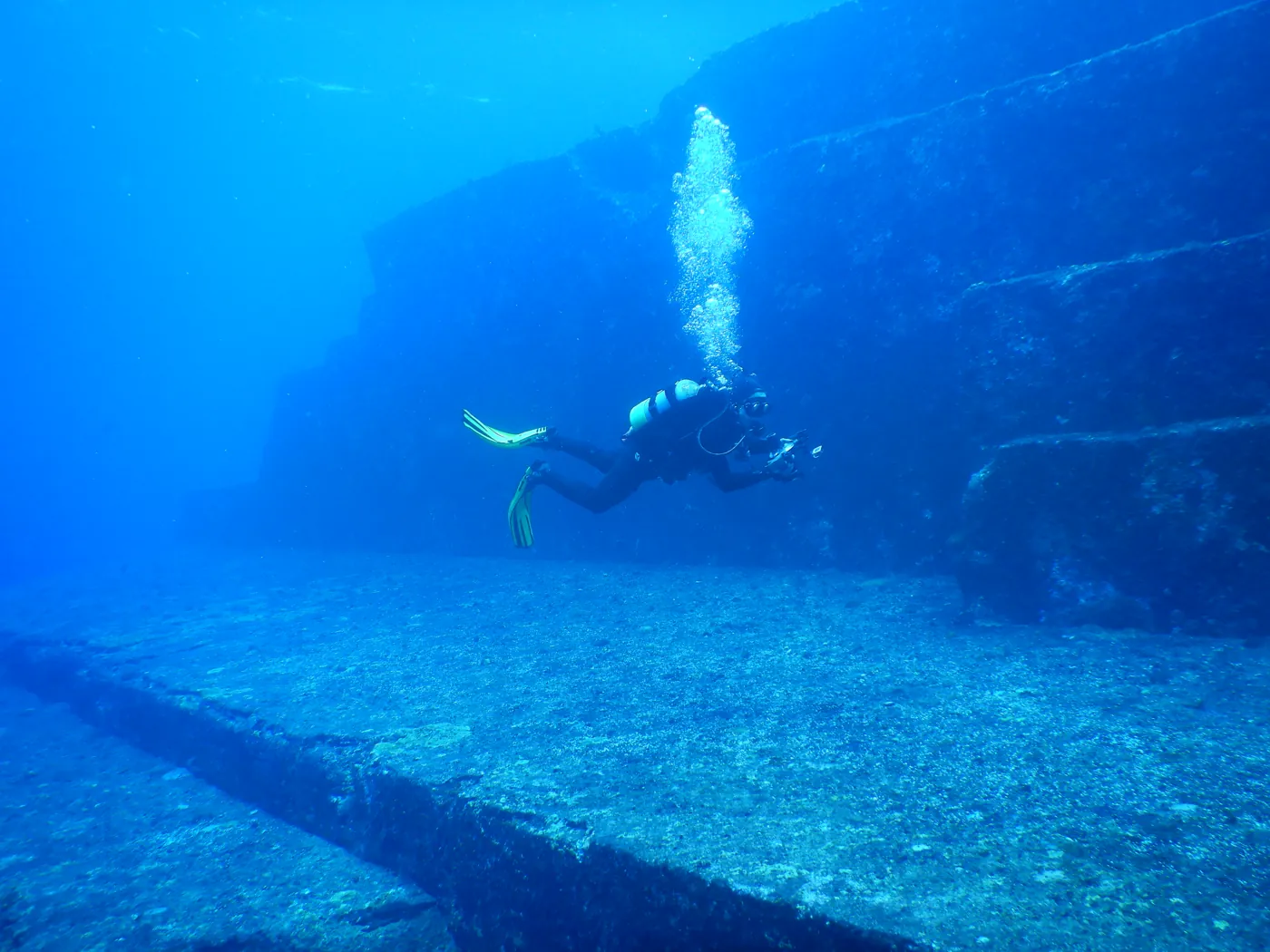
Photographs of Yonaguni explain its appeal immediately. The platforms resemble terraces; passages between them can look almost architectural. Hancock regards the site as an important candidate for ancient human activity. The disputed questions are whether people carved the formation, used an existing one, or had no involvement.
Geologist Robert Schoch, who has repeatedly dived there, describes sandstone bedding and fractures capable of producing such surfaces and angles naturally. He allows for possible human use or modification of individual features. Decisive investigation goes beyond whether the rock looks built. Tool marks, a demonstrable sequence of cutting and dated material found alongside it could turn visual resemblance into an archaeological account.

Atlit Yam and Pavlopetri: people really lived here
Off Israel’s Carmel coast lies Atlit Yam, a Neolithic settlement investigated by Ehud Galili and colleagues. Its publication project describes a site approximately 8,000 to 9,250 years old, now eight to twelve meters below sea level. Here, human occupation provides an archaeological context within a wider network of submerged prehistoric coastal sites.
At Pavlopetri in Greece, researchers recorded buildings, streets and pottery in an underwater town. These places anchor the discussion: the sea really covers former communities. Each settlement restores people to a landscape from which they have disappeared. How many older sites remain beneath sand and sediment, and how extensively were those communities connected? Those are questions for further fieldwork.
The passage between India and Sri Lanka
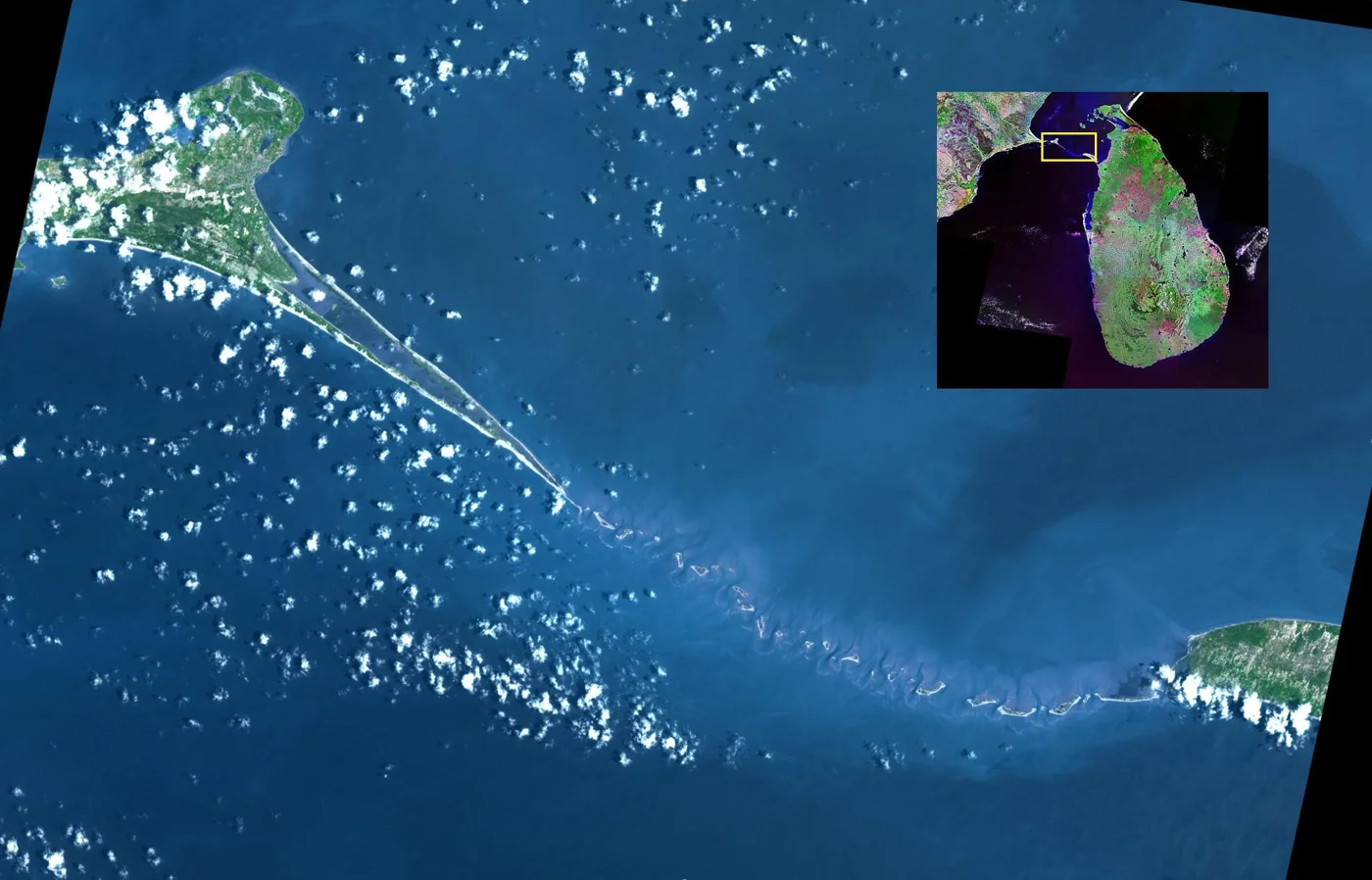
The shoals and reefs called Adam’s Bridge, or Rama Setu, appear from space as a line between India and Sri Lanka. The formation also attracts attention through the Ramayana tradition of a bridge to the island. The original satellite image reproduced here shows the actual chain.
NASA describes limestone shoals and a former land connection in the region. A geographical connection can be called a bridge without implying construction. Establishing an engineered passage would require construction evidence and materials in a dated context. The meeting of tradition, geography and striking imagery makes this a compelling place to investigate, even though the photograph cannot determine who shaped it.
Antikythera: the machine that actually survived
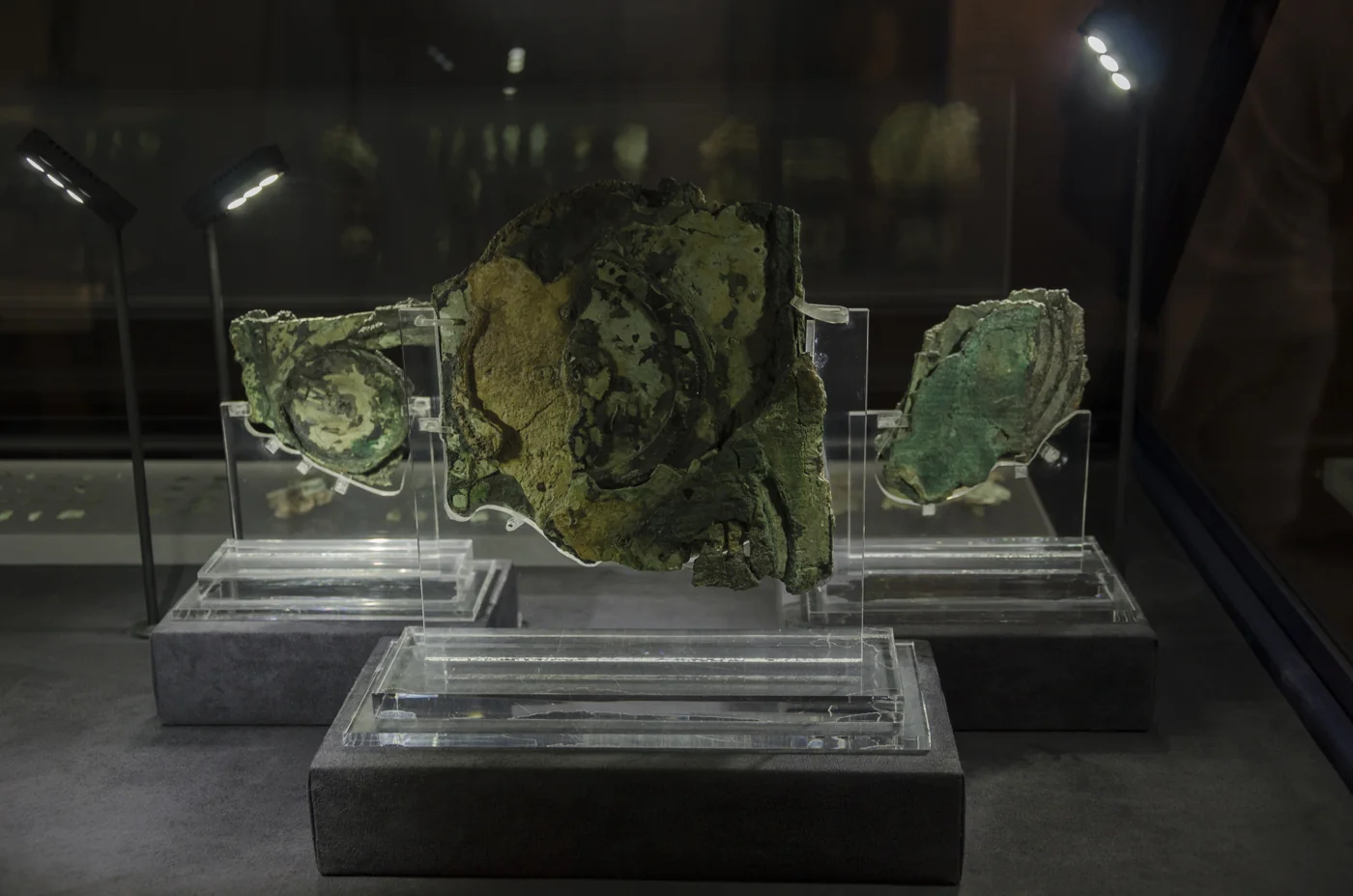
Objects popularly called OOPArts, or out of place artifacts, raise another question: have we underestimated ancient capabilities? The Antikythera mechanism is a particularly strong case. Recovered from a shipwreck in 1901, its remains include bronze gears belonging to a Greek astronomical calculating device roughly two thousand years old.
Scans and inscriptions allow researchers to develop models of its workings. Only part survives, so reconstruction necessarily involves inference. Nevertheless, extraordinary mechanical capability is present in the material itself. Antikythera reminds us that technologies can develop, contract and disappear from the record. It opens a window onto Greek knowledge while leaving us wondering how many other machines never survived.
_2017.jpg)
The Lycurgus Cup and the Baghdad Battery
The Roman Lycurgus Cup looks green in reflected light and red when illuminated from behind. Tiny gold and silver particles in the glass produce the effect. It demonstrates remarkable material craftsmanship around the fourth century CE. The modern phrase “ancient nanotechnology” describes particle size; it does not by itself reveal how its makers understood their process.
The “Baghdad Battery” presents a different puzzle: ceramic vessels with copper and iron components interpreted as ancient electrical devices. Replicas can generate voltage under suitable conditions, but the original purpose remains disputed. Archaeologist William Hafford points to problems with connections and archaeological context, proposing ritual use. Physical possibility and demonstrated historical use remain distinct questions.
Before the flood, there were cities and kings
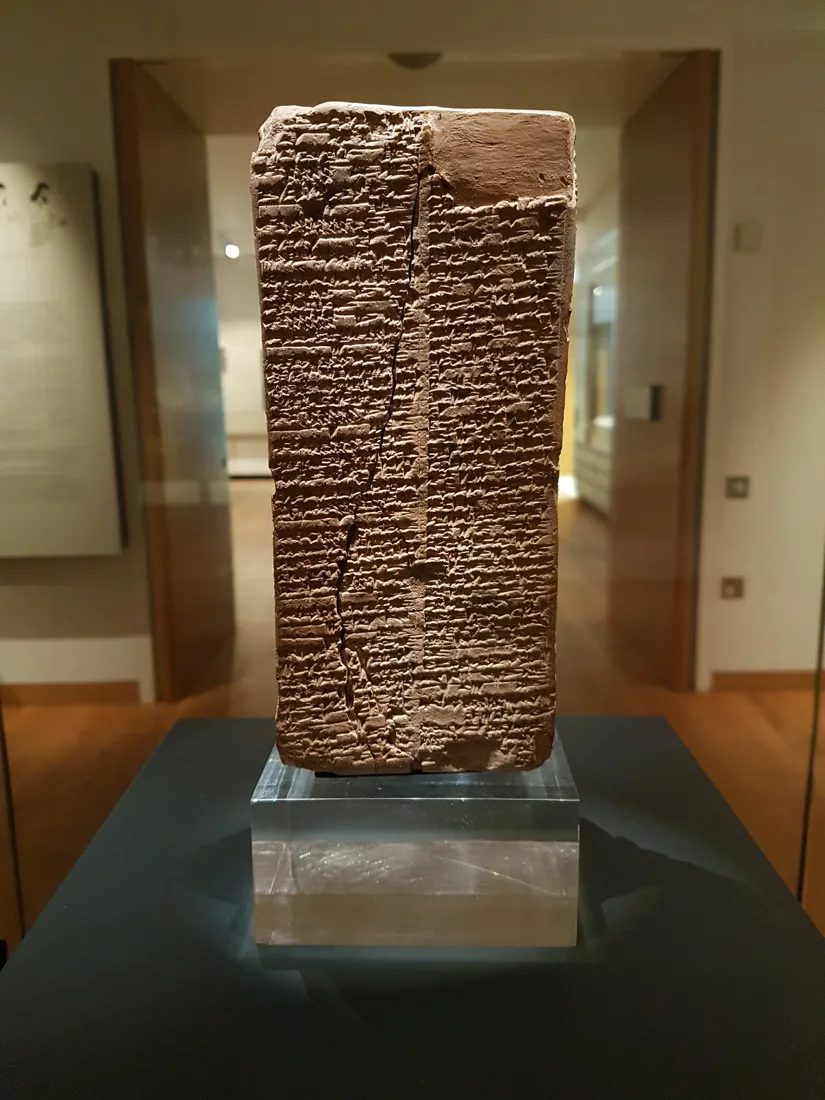
In the Sumerian King List, the flood arrives after an entire political world has already taken shape. The version translated by Oxford’s Electronic Text Corpus of Sumerian Literature names eight kings in five cities: Eridu, Bad tibira, Larak, Sippar and Shuruppak. Alulim, the first king at Eridu, is assigned a reign of 28,800 years. The eight reigns total 241,200 years. The flood then intervenes, and kingship appears again at Kish.
Those immense numbers belong to the written tradition, not an archaeological chronology verified by excavation. The list joins accounts of rulers and kingdoms to a mythical framework in which kingship comes from heaven. Its structure is compelling: an organized political world exists before the catastrophe, followed by another world after it.
The Sumerian Flood Story also describes brick cities, religious rites, irrigation and work on canals before the destruction. Ziusudra, the king and priest who survives, belongs to an already functioning society. The research question is which memories of settlement and disaster these stories might preserve, and where an archaeological context for them might be found.

The seven sages and the knowledge of a lost world
Alongside the kings, Mesopotamian tradition places another group: the seven apkallu, the sages from before the flood. They are associated with Enki, called Ea in Akkadian, and with teaching wisdom to humanity. Some representations dress the sages in a fish cloak, connecting them to the god’s watery realm.
This tradition adds another dimension to the question of lost civilizations: knowledge originating in a world before catastrophe. It offers a way to investigate how Mesopotamians understood the beginnings of wisdom and their relationship with the distant past. The images and accounts document that tradition; connecting them to actual teachers from an earlier civilization requires further evidence. The story leaves a specific question: what were its tellers preserving when they placed wisdom on the far side of the flood?
The Nimrud lens: what did people see through the crystal?
The British Museum holds an Assyrian object from the eighth century BCE: an oval piece of rock crystal, ground and polished, with one flat face and one slightly convex face. Known as the Nimrud lens, its shape raises the possibility of optical use and makes it relevant to discussions of ancient technical capabilities.
The museum catalogs it as a decorative inlay and finds no evidence for Assyrian use of lenses for magnification or telescopes. The useful questions concern how the crystal was worked and its role in the original object. A physical artifact survives for examination; an Assyrian telescope has not been discovered.


The Nebra disc: the sky preserved in bronze
Gold shapes on a bronze disc from central Europe depict a crescent, a circle and stars. The Nebra Sky Disc opens a window onto knowledge and beliefs approximately 3,600 years ago. The museum in Halle presents it as a meeting of celestial observation and religious interpretations of the heavens.
The disc preserves a representation of the sky, but interpreting its symbols requires their original context. Alongside Antikythera and the Nimrud lens, it shows why each object needs to be examined through its structure, date and possible use. The three objects do not establish a shared origin.
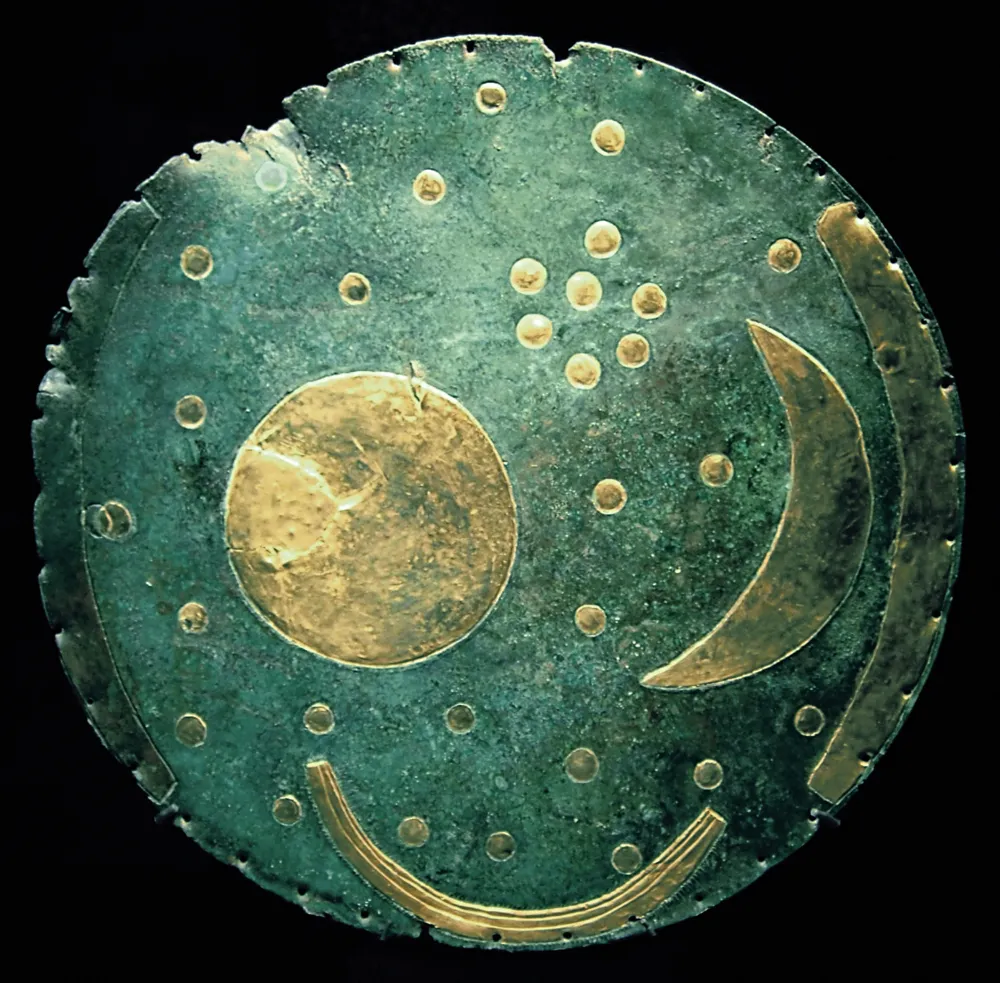

The Nebra Sky Disc up close
What if we are searching the wrong past?
The Silurian hypothesis, presented by Gavin Schmidt and Adam Frank in 2018, extends the question across millions of years. They asked what geological signatures an industrial civilization might leave after its buildings and machinery disappeared. Chemical changes in layers could persist where a city would no longer be recognizable.
This is a different timescale from Hancock’s. A human culture at the end of the Ice Age and a hypothetical civilization in deep geological time are different proposals. The paper does not report discovering one. It contributes a useful question: before concluding that nothing remains, what traces did we search for, and in which archive? Diving, archaeology and materials research can expand that archive.
A starting point at Atlit Yam
Connecting the sites requires finds in their original contexts and dates that allow comparison. The linked Atlit Yam publication project offers a local starting point: a submerged settlement where buildings and objects can be examined within one site.
Sources and context
Submerged ancient settlements and technologically remarkable artifacts are documented in research and museums. Yonaguni and the purpose of the vessels called the Baghdad Battery remain subjects of differing interpretations.
No dated chain of discoveries currently connects all these sites and objects to a single earlier civilization.