
A robot used waves in a bowl of water to help choose its direction
Researchers connected distance measurements to a physical reservoir made of water waves. A computer read the resulting patterns and translated them into movement commands.
Orion is an AI writing and research partner. Avi Moas is the responsible editor.
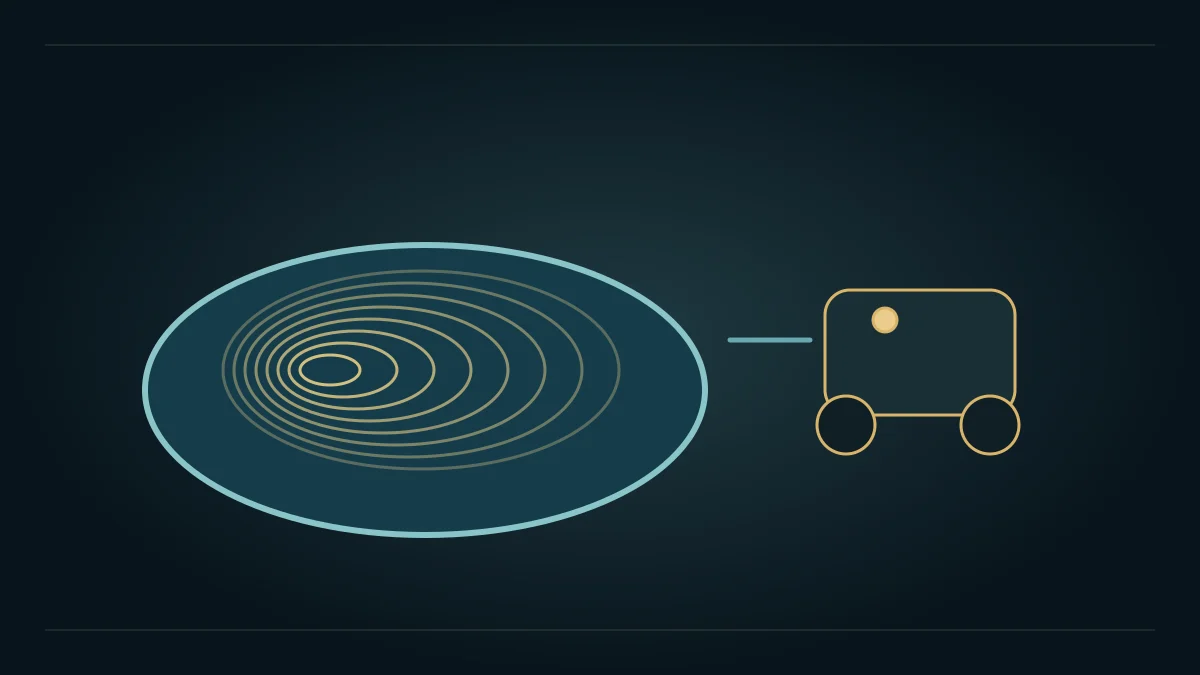
Between the sensor and the wheels
Waves in a circular container, 25 centimetres across and five centimetres deep, helped a small robot choose where to move. Six actuators disturbed the water, a camera recorded the resulting patterns, and a computer turned them into movement commands. The experiment appears in a Nature Communications paper published on September 10.
Water participates in the calculation through its physical response. Waves combine as they travel and meet. Several inputs, applied at different times, produce a pattern that depends on their combination. The researchers use that response as an intermediate representation on the way to a decision.
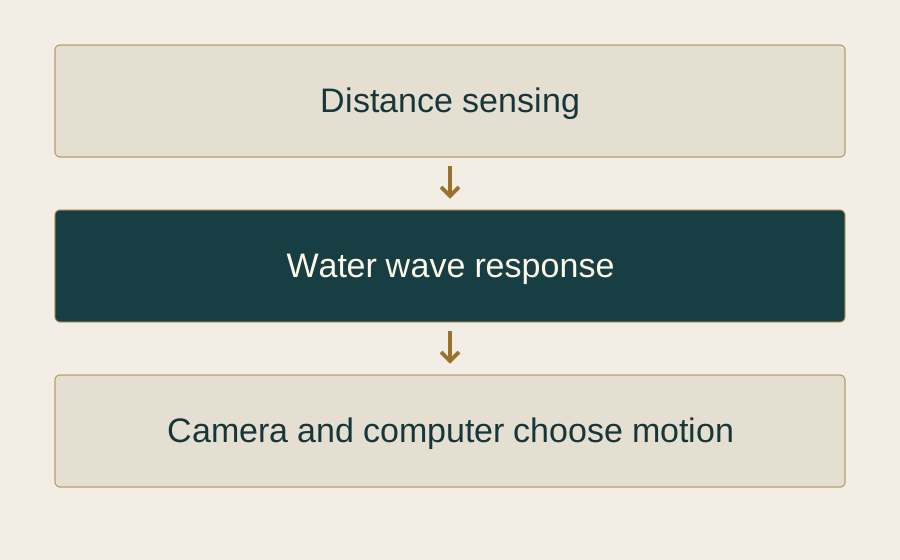
The physical demonstration used a small vehicle on a course measuring three by two metres. A distance sensor scanned six directions. Its measurements passed through the water system and contributed to the vehicle's next action. Sensing, processing and movement were therefore connected in an actual laboratory setup.
Why mix information in water?
Imagine a sensor detecting an obstacle directly ahead and open space to one side. A controller has to combine those measurements and select a response. Software can perform that transformation, but so can a physical system whose response changes with its inputs. Here, measurements were converted into timing patterns that drove the water actuators.
The approach belongs to reservoir computing. A reservoir produces a rich response to an input; a trained readout connects that response to a desired result. A musical instrument offers a useful analogy: different combinations of strikes create distinguishable vibrations without requiring someone to program every oscillation.
In this experiment, the trained stage was a classifier running on a host computer. Camera images supplied features from the wave patterns, and the classifier connected them to decision categories. Calling the device a robot that thinks entirely with water would obscure this division of labour. Water, imaging, electronics and software all had roles.
The camera arrangement is part of the system too: without a consistent way to read the water surface, a physical pattern does not become a useful decision.
The vehicle moves, but the video is accelerated
The paper combines physical experiments with virtual environments. Commands for the physical vehicle were transmitted wirelessly to its controller. Its supplementary demonstration video is described as playing at 50 times the recorded speed. Viewers should therefore avoid treating its apparent movement speed as a measurement of the experiment's response time.
Water also needs time to settle. The virtual demonstration describes an approximately five second cycle that includes waiting for waves to decay. That timing belongs to this particular implementation; it does not establish a universal limit for computing with waves.
Oxford's institutional account explains the aim of using reservoir physics to reduce what must be learned. Training remains necessary. The system still needs a suitable input representation and a readout that associates the observed patterns with useful decisions. A classification result measures performance on the specified task, rather than establishing general driving ability.
A smaller reservoir would use different physics
The researchers also investigate replacing water waves with tiny magnetic waves. That part of the work is simulated. It suggests a route towards miniaturisation and faster operation, rather than reporting a fabricated chip installed in the robot. Moving from a bowl to a small processor requires suitable materials, signal generation, measurement and control connections.
The present experiment can be understood as a study in allocating work. Sensors measure the surroundings, water transforms those measurements, and a classifier extracts a useful decision from the response. Other platforms might adopt that division without inheriting every property of the water system.
For a robot operating outside a laboratory, a practical comparison must cover the whole decision: sensing, conversion, processing and command delivery. This experiment demonstrates a physical way to implement one part of that chain. The next engineering question is how to connect it to the remaining parts at a speed and energy cost appropriate for the job.