Mount Karkom: rock art, stone tablets and the Burning Bush of light
Mount Karkom contains tens of thousands of engravings, cult sites and standing stones. Emmanuel Anati proposed it as biblical Sinai, linking a ten-part engraving, twelve pillars and a winter-solstice light effect with Exodus.
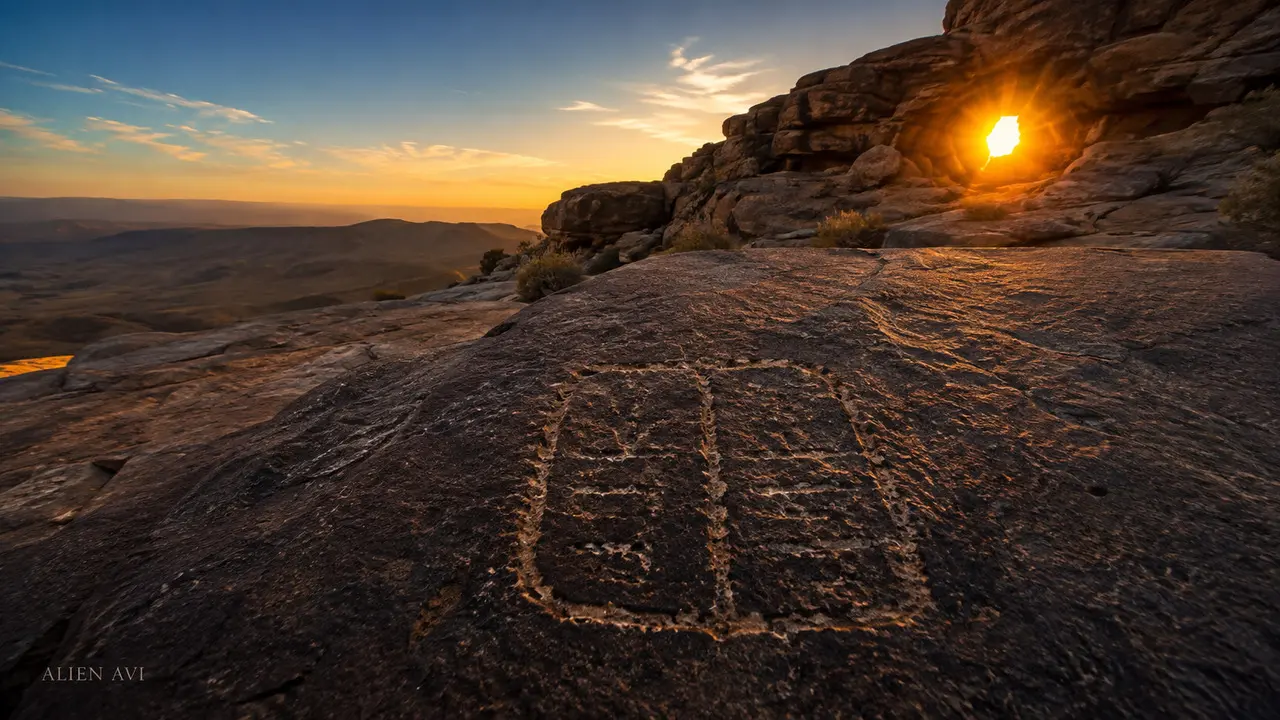
What the site actually looks like
Documentary photographs from the location, clearly separated from the editorial lead illustration.


.jpg)
More than a thousand sites and roughly 40,000 engravings have been documented. The mountain was an important ritual landscape, especially during the Early Bronze Age.
No inscription names Moses or Sinai, and the main ritual phase is earlier than the chronology commonly assigned to the Exodus.
A sacred mountain
Altars, shrines, standing stones and gathering places surround a plateau used over an immense span of time.
The ten-part engraving
Anati interpreted a rounded, divided image as two tablets and ten commandments, though no text fixes its meaning.
A group of twelve standing stones recalls the twelve pillars described at Sinai in Exodus 24.
Near the winter solstice, sunset through a rock opening produces a golden flame-like glow now associated with the Burning Bush.
Accepting the identification requires an earlier date for the Exodus tradition because the site's ritual peak precedes the conventional setting.