


6.5 Seconds After the Heart Stops: The Mind in a Fourth Dimension
When the heart stops, brain waves fade within seconds, yet people return with memories of light, tunnels and dead relatives. Pekka Rechardt, an independent researcher in Finland, offers an explanation that begins in an 1884 novel and ends with whether death erases the mind.
By Avi Moas
Sources and editorial method
Avi Moas, Researcher and Editor-in-Chief · Produced with an AI-assisted newsroom
Six and a half seconds. According to a 2025 medical review, that is how long it takes, on average, for the alpha and beta waves to vanish from the cortex once the heart stops.
These are the rhythms many brain researchers tie to waking consciousness. Within 10 to 30 seconds the EEG trace is a flat line. The recording from the surface of the cortex has gone flat.
And still people come back with stories. A tunnel, a light, relatives who have died, a review of their whole life.
Sometimes details from the resuscitation room itself: who stood by the bed, what was said, where a nurse put a pair of dentures.
Whole, meaningful scenes, experienced as entirely real, during a period of unresponsiveness and severely compromised brain function.
Pekka Rechardt, an independent researcher in Finland, thinks he knows where those scenes take place. Not inside the brain, but in a fourth spatial dimension beyond length, width and height.
If he is right, he writes, death may not erase consciousness at all. It may only cut it loose from the body. It is the old question of consciousness after death, posed as geometry.
The researcher behind the proposal
Rechardt's paper, "The Near-Death Experience, an Instance of Higher-Dimensional Phenomenal Consciousness?", appears in issue 9–10 of the Journal of Consciousness Studies for 2026, pages 111 to 138.
The journal, published by Imprint Academic in Exeter, put it online on 29 September 2026 as open access, free for anyone to read.
He lists no university. The footnote describes him simply as "Independent researcher, Finland", exactly as on his previous paper.
In early November the work reached the headlines: on 6 November the Daily Mail ran a piece by Stacy Liberatore, its US science and technology editor, and three days later Metro followed.
He builds the argument on four assumptions and states them openly. Phenomenal consciousness, the felt experience itself, can only be had in the first person. Consciousness cannot be reduced to its neural correlates.
The constituent elements of consciousness are present in a near-death experience. And the higher-dimensional framework, along with the conditions for any human experience to arise, is the same in every state of consciousness.
Everything else rests on those four.
Three building blocks that refuse to disappear
The paper does not try to catalogue everything known about near-death experiences. Rechardt says plainly that this is not his aim. He asks something more basic: what has to be in place for there to be any experience at all?
He names three building blocks common to every state of consciousness, the threshold of death included. The first is the Now, the sense of being here, in this moment.
The second is qualia, the felt quality of what is seen and sensed: the redness of red, the sun's warmth on the skin.
The third is what he calls spatio-temporal integration, the capacity to experience all of it together as a single whole.
In his argument, the esoteric and supernatural parts of a near-death experience, the meetings, the light, the sense of being somewhere else, could not appear without those three elements underneath.
And if they show up when the brain is impaired and effectively paralysed, the question he poses is what that reveals about the relationship between consciousness and the physics of the brain.
The clinical ground for this comes from a 2025 review in the International Review of Psychiatry.
Its authors are Bruno Angeli-Faez of the Federal University of Juiz de Fora in Brazil and psychiatrist Bruce Greyson of the University of Virginia.
The third is cardiologist Pim van Lommel of Rijnstate Hospital in Arnhem.
That is where the opening figures come from. Their conclusion: near-death experiences in cardiac arrest most likely arise while the patient is unresponsive, not in the seconds before or after resuscitation.
In their words, this "can be assumed as evidence for the continuity of consciousness beyond the brain". Rechardt takes that review as his empirical starting point.
The man on the beach
To show the problem, Rechardt chooses something completely ordinary. A person walks along a sunny beach, taking in the view, feeling the warmth and turning over philosophical questions.
Each of these is handled by a different part of the brain, and signals take time to travel between them. Yet the walker does not experience a mosaic. He experiences one continuous scene.
This is the binding problem. You can identify each brain process on its own, but that does not explain how the parts fuse into a single point of view. The brain, as Rechardt already noted in 2023, is an uncentred structure.
There is no one spot where everything comes together.
Above the binding problem sits the "hard problem" of consciousness: why physical processes come with subjective experience at all.
Measuring the brain's response to a colour, he writes, is not the same as the experience of seeing it.
The view from above
His answer is the heart of the paper: an additional spatial dimension. From there, the proposal goes, everything happening across the separate regions of the brain could be experienced at once.
The image he uses is simple. Take a flat drawing on a page. Someone living inside the page sees each line separately, one after another. Someone looking down from above sees all the lines together, as a whole.
In the same way, Rechardt proposes, our three-dimensional brain could be linked to a conscious viewpoint in a fourth spatial dimension.
In the paper he puts it bluntly: the integrative mechanism involved in binding "requires higher-dimensionality to work".
That brings him to death. Destroying a painting, he observes, does not destroy the person who was looking at it.
In his model, death could sever the link between brain and consciousness without destroying the framework in which experience happens. Consciousness could then carry on without any information arriving through the body's senses.
The sentence that made headlines
In the abstract Rechardt writes that phenomenal consciousness "has no satisfactory explanation in the strict natural scientific physicalist framework", and that "this may be an indication of consciousness not being a causal outcome of neurophysics at all."
If so, he goes on, "there would be no grounds for postulating that the collapse of neurophysical structures at death would dissolve consciousness and its constituent elements."
The near-death experience, the abstract says, could indicate that consciousness continues after the brain's functions collapse, "even after death".
This is where near-death experiences become, for him, an argument about consciousness after death.
In the body of the paper, as quoted by the Daily Mail, he goes further: "This empirical consideration supports life after death being a credible option."
And of someone who passes through a near-death experience, he writes that it may offer "a glimpse of what awaits her or him" once the bodily functions that sustain life have ended.
2023: a novel from 1884 and a single principle
None of this is new for him. In March 2023 Rechardt published "The Phenomenal Hyperspace" in the same journal, and laid the foundations there.
His starting point was a Victorian book: Edwin Abbott's Flatland, published in London in 1884.
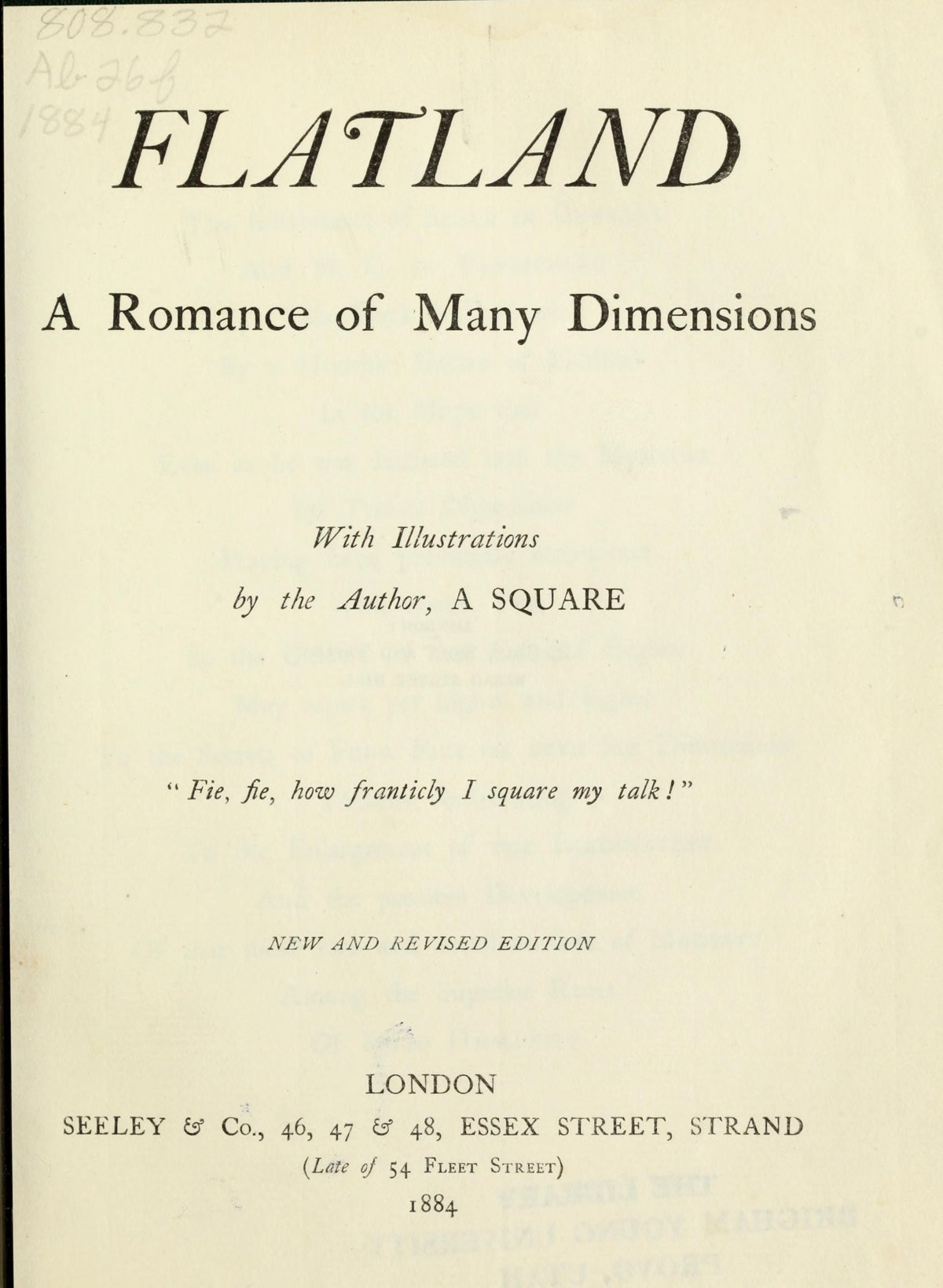
In Abbott's story, creatures living on a two-dimensional plane see one another only as lines. To see their country as a whole plane, you have to step out of it, into the third dimension, and look down.
Rechardt turned that parable into a principle he calls the transcendence principle of detection: to experience a structure of a given number of dimensions as a whole, you need a vantage point in one dimension more.
We experience a complete three-dimensional world; so, by that logic, our experience is taking place from a vantage point in a fourth.
He was careful to separate his dimension from the fourth dimension of relativity. In relativity, time is the fourth dimension.
His is spatial, and "somewhat like time", he wrote, it cannot be detected, measured or outlined as extension in ordinary 3D space.
In his 2023 conclusion he went a long way: if the principle holds, our everyday experience of three-dimensional space is itself "empirical proof" that consciousness is bound together in a fourth spatial dimension.
And here is the telling detail. In 2023 he deliberately set near-death experiences aside. The aim of that paper, he wrote, was not to explore the whole array of mental phenomena, "including dreams, NDEs, and OBEs".
Three years later he came back to exactly those, and chose to test the theory against the most extreme moment there is.
Rechardt is not alone, and he is the first to say so. His 2023 paper devotes a full section to thinkers who went down a similar road, and the clinical research on near-death experiences offers him a run of parallels of its own.
Broad, Carr and Smythies: Consciousness in Higher-Dimensional Space
As early as 1923, in Scientific Thought, C.D. Broad proposed a model in which sensations of every kind and the objects of science literally have places in a shared, higher-dimensional "quasi-space".
Physical space and the space of experience, for Broad, are two sections of that larger whole.
Bernard Carr went further.
In a 2015 chapter titled "Hyperspatial models of matter and mind", physical and mental space are both cross-sections of a higher-dimensional communal space, and he links mental space to a version of M-theory in physics.
Unlike the Rechardt of 2023, Carr explicitly brings dreams, out-of-body experiences and near-death experiences into the model, suggesting they correspond to real events taking place in other sections of that higher-dimensional space.
John Smythies, also in the Journal of Consciousness Studies, set out a theory he called "material dualism" in 2003.
Smythies proposed a distinct consciousness module located outside the physical realm of the brain, in a dimension of its own, intersecting physical space in a shared higher-dimensional space.
In 2014 he gave the whole line of thought a name: the Broad-Carr-Smythies hypothesis.
Rechardt presents himself as continuing that tradition, with one addition: the very structure of the binding problem, he argues, is further evidence of higher dimensionality.
Charles Hinton and Culianu: Picturing the Fourth Dimension
Rechardt also cites Charles Howard Hinton, the mathematician who in the late 19th century tried to train the human mind to picture a fourth spatial dimension using sets of coloured cubes.
We wrote at length about Hinton and the scholar who picked up his thread in our story on Ioan Petru Culianu and the fourth dimension.
Culianu, like Rechardt, started from Flatland. The difference is that Culianu looked to the fourth dimension for the logic of religious ideas across history, while Rechardt looks there for the home of experience itself.
The Brain as a Receiver of Consciousness
The Angeli-Faez, Greyson and van Lommel review ends on a hypothesis very close to Rechardt's spirit.
The evidence, they write, is compatible with the view that under normal conditions the brain works as a kind of filter or transmitter of consciousness.
When that filtering function is weakened, people may experience exceptional states such as near-death experiences, out-of-body experiences and mystical states.
We looked at the history of that image, and the question it leaves open, in Is the brain a receiver?.
Rechardt gives the transmitter an address: in his model, it sits in a fourth spatial dimension.
Others have looked for the link between brain and mind somewhere else entirely. Roger Penrose and Stuart Hameroff look for it in quantum processes deep inside the nerve cell.
And the Mexican researcher Jacobo Grinberg measured brain signals between isolated people in search of a connection between minds, until he vanished in 1994.
Pim van Lommel, Pam Reynolds and the AWARE Studies: Cases From the Resuscitation Bed
The philosophical debate carries weight because of what has happened in real resuscitation rooms.
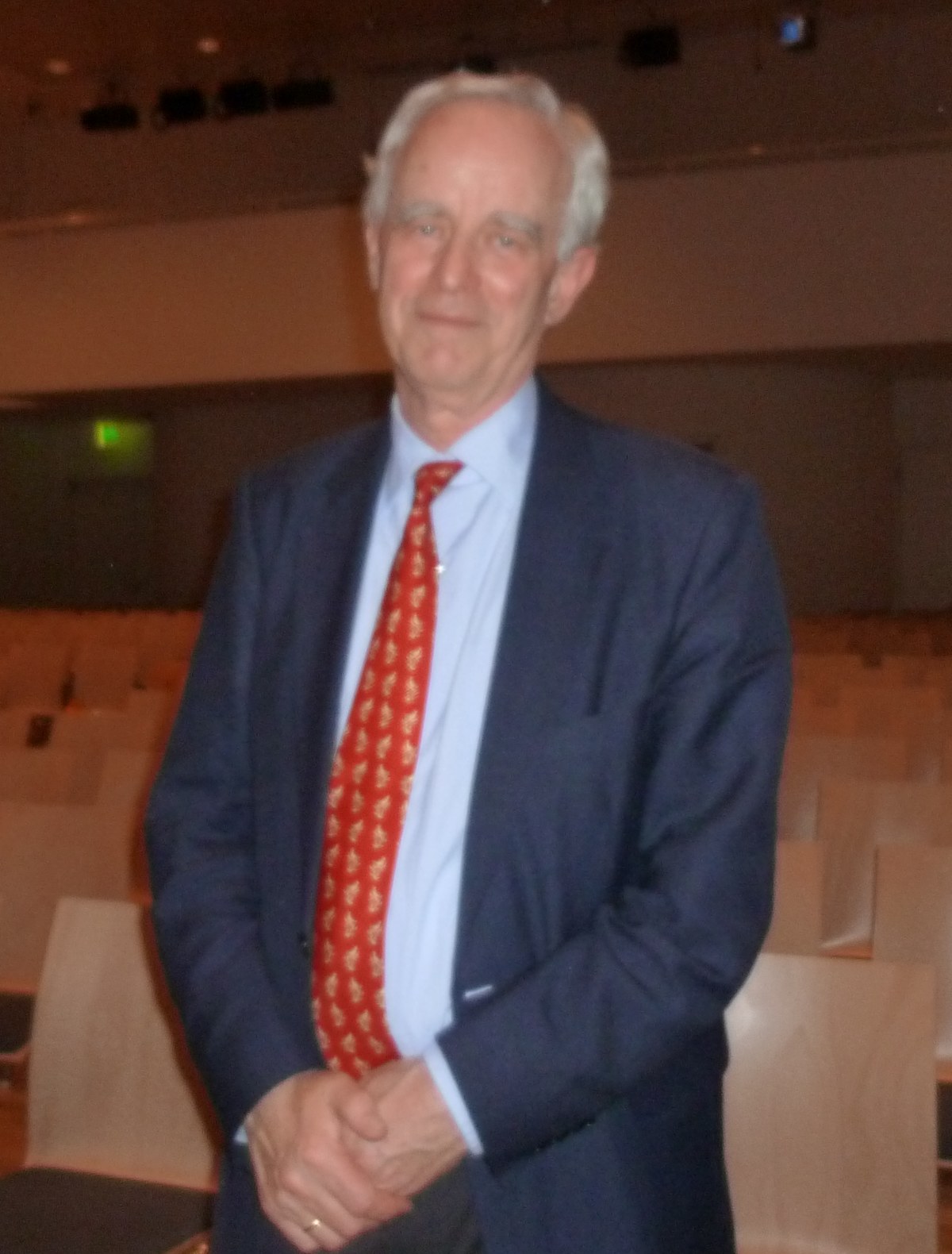
In 2001 van Lommel published a study in The Lancet of 344 consecutive patients resuscitated after cardiac arrest in ten Dutch hospitals.
Sixty-two of them, 18 per cent, reported a near-death experience, and 41, or 12 per cent, described a core experience.
The authors wrote that with a purely physiological explanation such as cerebral anoxia, most patients who had been clinically dead should report one. Only a minority did.
The same study produced one of the best-known cases in the field.
A man brought in comatose and resuscitated while his brain was starved of oxygen later described, correctly and in detail, the small room where he had been revived and the appearance of the people there.
He also remembered the nurse who took the dentures out of his mouth, at the moment CPR was briefly paused to insert a breathing tube, and where she put them. According to the 2025 review, the nurse confirmed his account.
Another case discussed in the review is that of Pam Reynolds.
She underwent surgery to remove a giant aneurysm at the base of the brain, in which her body was cooled to 60 degrees Fahrenheit, her heart was stopped and the blood was drained from her brain.
Her brain activity was monitored throughout, and small speakers in her ears played clicks to test her brainstem response.
She later described leaving her body and hearing, she said, a female voice remark that her veins and arteries were very small.
The operative record confirmed that the femoral artery was indeed unusually small, and a neurosurgeon on the team confirmed the song she remembered from the moment she came back: "Hotel California".
The review places the corroborated perceptions before and after the cardiac arrest and blood drainage. During the arrest itself her EEG was flat and her brainstem showed no response.
The reviewers interpret the subjective continuity of her account as suggesting that awareness also continued through that interval. And she never mentioned the clicks at all.
As the reviewers point out, if she had been hearing in the normal way, it is strange that she never even noticed them as a distraction.
In Dr Sam Parnia's AWARE study, published in Resuscitation in 2014, researchers looked at 2,060 cardiac arrests. Of the 101 survivors who completed in-depth interviews, 9 per cent described a near-death experience.
One of them described, as if from above, staff he had not seen beforehand, along with the sounds and activity of his resuscitation, which matched the medical record of an automated defibrillator.
According to the record he received two shocks, over a process estimated at two to three minutes. The researchers called it "a verifiable period of conscious awareness during which time cerebral function was not expected."
The follow-up, AWARE II, published in 2023 from 25 hospitals, went a step further and wired patients to brain monitoring during CPR. Of 567 in-hospital cardiac arrests, 53 patients survived and 28 were interviewed.
Eleven reported memories or perceptions suggestive of consciousness, and six described a transcendent recalled experience of death.
The team also found normal brain activity consistent with consciousness emerging as late as 35 to 60 minutes into CPR.
Paradoxical Lucidity Before Death: the NYU Study
Another parallel comes from the far end of life, from a study led at NYU Langone.
In a 2025 research abstract published in a supplement to Innovation in Aging, Parnia and colleagues reported following 151 patients with moderate to severe dementia and a life expectancy of under a year.
Caregivers of 93 of them reported moments of lucidity, 267 events in all: sudden orientation to what was happening, old memories returning, lost abilities coming back.
"The common unresolved question for both of these areas of research", Parnia said in remarks published by NYU Langone, "is how do you have lucidity at a time when the brain is assumed to not be functioning?"
Haifa and China: What People See at the Edge of Death
In the same weeks that Rechardt's paper came out, a University of Haifa researcher asked 50 people to draw the spaces they had seen at the edge of death.
According to the study, 22 of 28 tunnels had no colour, while the broad arched spaces were almost always in colour.
Our full story on the Haifa study is worth reading alongside this one. There you have the geometry of the experience.
Here you have a proposal for where it takes place. And for how consistently these scenes recur across cultures, see the 48 accounts gathered in China.
Gamma waves: the rival explanation
There is a competing explanation, and Rechardt and the researchers he relies on know it well.
In 2013 Borjigin and colleagues reported an experiment on nine rats in which synchronised gamma waves appeared within the first 30 seconds after the heart stopped.
They suggested this offered a scientific framework for the "realer-than-real" experiences survivors describe.
The 2025 review answers on several points. The rats' gamma activity was a tiny fraction of the electrical power measured before the arrest, and stood out only because everything else had collapsed.
In humans, the EEG slows and fades within an average of 6.5 seconds of cardiac arrest rather than surging. Many near-death experiences, including some with corroborated details, happen well after those first 30 seconds.
And they occur under general anaesthesia, while the gamma bursts in the rats did not appear when the animals were anaesthetised.
Even the rises in brain activity recorded in dying patients, the review notes, came before circulatory arrest, not during it.
The mechanism still waiting for an explanation
This is where the philosophical model meets the clinical test.
In Parnia's follow-up study, a computer and headphones were built into resuscitation to show the patient an image and play a sound, to test whether anything is taken in while the patient appears unconscious and can be recognised later.
So far, no survivor has identified the image, and one in 28 identified the sound.
Separately, the team announced a study to connect around 500 dementia patients, in what was expected to be their last week of life, to in-home EEG with video, to catch a moment of lucidity as it happens.
In his 2023 paper Rechardt left a specific question for further research: by what mechanism does information from separate regions of the brain reach the space where it is experienced as a whole?
Discussing that mechanism, he wrote, was beyond the paper's scope.
Now that he has brought his model to near-death experiences, the question waits beside the bed: what exactly links the image on the screen, the activity in the brain and the memory a person brings back?
Further reading: Consciousness as a foundation of the universe · Kids who remember past lives · Where is the self? 912 studies
Questions and Answers on Near-Death Experiences and Consciousness After Death
What is a near-death experience?
It is an experience people describe after coming close to death, for example in cardiac arrest: a tunnel, a light, relatives who have died, a review of their whole life, and sometimes details from the resuscitation room.
According to a 2025 medical review, such experiences during cardiac arrest most likely arise while the patient is unresponsive. In Pim van Lommel's 2001 study, 62 of 344 resuscitated patients reported one.
What is the fourth dimension in Pekka Rechardt's model?
It is an additional spatial dimension beyond length, width and height, not the time dimension of relativity.
In Rechardt's view, from there everything happening across the brain's separate regions can be experienced at once, like someone looking down on a flat drawing. He says it cannot be detected or measured in three-dimensional space.
If death severs the link between brain and consciousness, he writes, consciousness could carry on without information from the senses.
Which documented resuscitation cases does the article cover?
In van Lommel's Lancet study, a patient described the nurse who removed his dentures, and according to the 2025 review the nurse confirmed his account.
In Pam Reynolds' case, the operative record confirmed details she described, and according to the review her EEG was flat during the cardiac arrest.
In the 2014 AWARE study the researchers called one case "a verifiable period of conscious awareness", and in AWARE II in 2023, 11 of 28 interviewed survivors reported memories or perceptions suggestive of consciousness.
How does Rechardt's model differ from the gamma-wave explanation?
The gamma-wave explanation rests on a 2013 experiment on nine rats in which synchronised gamma waves appeared within the first 30 seconds after the heart stopped, and the researchers suggested they underlie the experiences.
Rechardt proposes that experience itself takes place from a vantage point in a fourth spatial dimension, and in his words "this may be an indication of consciousness not being a causal outcome of neurophysics at all."
According to the 2025 review, in humans brain waves fade within an average of 6.5 seconds, and many near-death experiences happen well after those 30 seconds.
Sources and image credits
Pekka Rechardt, "The Near-Death Experience, an Instance of Higher-Dimensional Phenomenal Consciousness?", Journal of Consciousness Studies 33 (9–10), pp. 111–138, online 29 September 2026. https://doi.org/10.53765/20512201.33.9.111
Pekka Rechardt, "The Phenomenal Hyperspace: A Study of the Dimensional and Spatio-temporal Structures of Phenomenal Space and Binding", Journal of Consciousness Studies 30 (3–4), pp. 106–131, 31 March 2023. https://doi.org/10.53765/20512201.30.3.106 (open access PDF: https://www.imprint.co.uk/wp-content/uploads/2023/04/Rechardt_Open_Access.pdf)
Bruno Angeli-Faez, Bruce Greyson, Pim van Lommel, "Near-death experience during cardiac arrest and consciousness beyond the brain: a narrative review", International Review of Psychiatry, online 15 May 2025. https://doi.org/10.1080/09540261.2025.2503729
Pim van Lommel et al., "Near-death experience in survivors of cardiac arrest: a prospective study in the Netherlands", The Lancet 358 (9298), 15 December 2001. https://doi.org/10.1016/S0140-6736(01)07100-8
Sam Parnia et al., "AWARE: AWAreness during REsuscitation, a prospective study", Resuscitation 85 (12), December 2014. https://doi.org/10.1016/j.resuscitation.2014.09.004
Sam Parnia et al., "AWAreness during REsuscitation II: A multi-center study of consciousness and awareness in cardiac arrest", Resuscitation 191, October 2023 (online 7 July 2023). https://doi.org/10.1016/j.resuscitation.2023.109903
Maria Tollock, Natalia Leontovich, Anelly Gonzalez, Sam Parnia, "A Multi-Site Prospective Study of Paradoxical Lucidity in Moderate to Severe Dementia", Innovation in Aging 9 (Suppl 2), 31 December 2025. https://doi.org/10.1093/geroni/igaf122.2914
Edwin A. Abbott, Flatland: A Romance of Many Dimensions, London: Seeley & Co., 1884 (title page, revised edition). https://commons.wikimedia.org/wiki/File:Flatland-2nd-0009.jpg
Secondary sources
Stacy Liberatore, "What really happens when you die? Scientists find 'credible' evidence your consciousness lives on after your brain shuts down", Daily Mail, 6 November 2026. https://www.dailymail.com/sciencetech/article-16271709/life-death-consciousness.html
Metro, "Your consciousness carries on after death, scientist claims", 9 November 2026. https://metro.co.uk/2026/11/09/consciousness-carries-death-scientist-claims-29777254/
NYU Langone News, "New Studies Explore End-of-Life Cognitive Thought & Improved Cardiopulmonary Resuscitation Methods" (undated on page). https://nyulangone.org/news/new-studies-explore-end-life-cognitive-thought-improved-cardiopulmonary-resuscitation-methods
Imprint Academic, Journal of Consciousness Studies open-access list. https://www.imprint.co.uk/open-access-journal-of-consciousness-studies/
Broad 1923, Carr 2015, Smythies 2003 and 2014, Hinton 1902: as described and cited in Rechardt 2023 (primary source 2, section 2.2 and references). Borjigin et al. 2013, Holden et al. 2009, the Pam Reynolds case (Sabom 1998; Rivas et al. 2023): as described in the 2025 review (primary source 3).
Hero: "Hospital Corpsman on EEG machine (BUMED 09-5030-31)", U.S. Navy BUMED Library and Archives / National Museum of Health and Medicine, CC BY 2.0. https://commons.wikimedia.org/wiki/File:Hospital_Corpsman_on_EEG_machine_(BUMED_09-5030-31),_U.S._Navy_BUMED_Library_and_Archives_(5425510745).jpg
Pim van Lommel: Siegfried Hornecker, CC BY-SA 3.0, Wikimedia Commons. https://commons.wikimedia.org/wiki/File:Pim_van_Lommel.JPG
Flatland title page, 1884: public domain, Wikimedia Commons. https://commons.wikimedia.org/wiki/File:Flatland-2nd-0009.jpg
--
