The seven strata after death: Robert Bigelow on the journey of the soul
Robert Bigelow lost his father, one of his sons, his grandson and his wife of 55 years. Grief did not lead him to settle for consolation. It led him to invest a fortune, establish a research institute and ask what exactly survives when the body ends. In a full interview with Jeffrey Mishlove, he describes continuing consciousness, free will beyond death and seven strata through which the soul evolves beyond human identity.
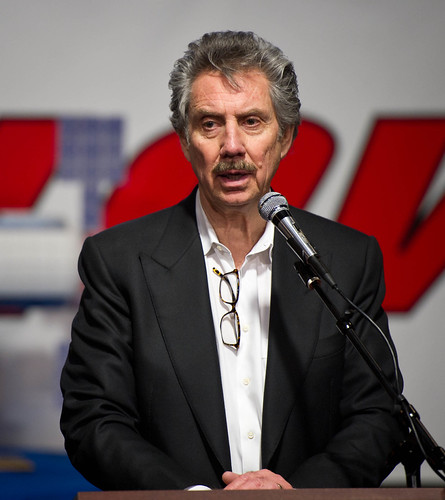
Robert Bigelow researches the afterlife
The complete episode is embedded so Bigelow's account can be heard in sequence. The article below is a comprehensive edited rendering of the strongest ideas, with a focused viewing guide.
The central moments
Family losses and the search for proof beyond faith
The creation of BICS and the body as a temporary container
Spirit, soul and what crosses with us
Spiritual evolution and free will after death
The seven strata and the fading of human identity
What follows survival and acclimatisation to the other side
Why the early stages may resemble life here
Why Bigelow separates artificial intelligence from soul
Bigelow made these statements in the complete interview Researching the Afterlife with Robert Bigelow, recorded on June 6, 2023 and published on August 20, 2023. This article was prepared from the edited captions and checked against the official chapter times supplied by New Thinking Allowed.
New Thinking Allowed states that no official written transcript is available for this episode. This is therefore a comprehensive edited account of the central statements and ideas, not a word for word republication of the entire 82 minute conversation.
The man who wanted evidence, not consolation alone
Bigelow is known as the entrepreneur who built a real estate fortune and founded Bigelow Aerospace to develop expandable habitats for space. Yet the question at the centre of this interview did not begin in a laboratory. At 18 he received a call from his mother telling him that his father had been killed in a plane crash. He later lost one of his two sons, his grandson and his wife after 55 years of marriage. He says he knows grief and the question that follows it: what comes next. His guiding sentence arrives in the second minute. He is comfortable with faith, but he wants faith accompanied by good proof. For him, evidence does not weaken faith. It gives faith something firm to stand on.
Why he invested so heavily in survival research
Bigelow dates his interest in the survival of consciousness to the early 1980s. Personal experiences reported by him, his wife, relatives and employees, together with the work he funded at Skinwalker Ranch, persuaded him that reality extends beyond visible matter. In 2020 he founded the Bigelow Institute for Consciousness Studies. Its first major public project asked for the best evidence that human consciousness survives permanent bodily death. The contest received 204 essays from 38 countries after about 1,300 applications. Twenty nine winners shared 1.8 million dollars, including a 500,000 dollar first prize for Jeffrey Mishlove. Bigelow asked writers to reach the courtroom standard of beyond a reasonable doubt and excluded scripture as evidence. The money turned a universal private question into an organised public research programme.
Bigelow prefers the word container for the body because containers are temporary. What survives, he says, is consciousness, including personality, memories and the continuity that lets a person say I. He describes three states of consciousness: incarnate consciousness within a body, discarnate consciousness after bodily death and a supreme consciousness that encompasses reality. Death is not the erasure of the person in this model. It is a change in mode, from existence through matter to existence in which thought itself becomes the medium.
At about 22 minutes, Bigelow draws his own distinction between spirit and soul. Spirit is the entity that moves from embodied to discarnate existence. Soul is the character of that spirit, carrying integrity, morality, love, hatred and what the person became during life. Death does not immediately make anyone an angel. We cross with what is good, difficult and unresolved. Spiritual development is not an automatic reward for leaving the body. It must be chosen, practised and earned.
The centre of the interview comes at about 47 minutes. Bigelow says the research he relies upon describes seven major strata, with many subsidiary levels inside them. A soul does not arrive at a fixed destination where nothing changes. It enters an evolutionary process and moves toward a higher order of spirituality. The pace is not fixed because free will remains active. A spirit may advance, delay, choose an environment suited to its condition and remain among spirits that think and behave similarly. Near the end of the sixth and seventh strata, he says, connection to human identity becomes faint. Memories of being human and attachment to former incarnations recede as consciousness begins to operate on a scale much larger than the single personality known on Earth.
One of the strongest claims in the conversation is that death does not end the possibility of choice. Beyond the body, the spirit can still alter the way it thinks and behaves. Bigelow does not describe an everlasting purgatory or a punishment without an exit. A spirit in a dark environment may reach a point at which it wants something better. When that desire changes, he says, more developed spirits can help. The journey therefore takes a different length of time for each soul. Free will can slow the pace, but it is also what makes genuine growth possible.
Mishlove suggests that the early stages of the afterlife may resemble life here: there are challenges, guides, choices and the need to navigate a new setting. Bigelow agrees and says soul and spirit must acclimatise. Deathbed visions and near death experiences may mark the beginning of that transition. The great difference is that thought can form an environment that can be seen, heard and felt. Change may arrive in very small steps, according to what the spirit can accept. As development continues, the restraints of matter weaken and thought becomes the field of action itself.
If one value stands above all others in Bigelow's account, it is love. He says the research repeatedly identifies the acquisition of love as the most valuable and universal part of the process. This is not merely a gentle feeling. It is the ability to change conduct, morality and relationship toward other consciousness. Spiritual progress is measured less by knowledge or power than by what a spirit can give, receive and recognise in another. The extraordinary abilities he attributes to discarnate existence are not the final purpose. They matter only within a movement toward deeper communion with other spirits and the supreme force.
Bigelow calls the transition from a body to existence as thought the greatest jump. Personality and memory remain at first, but through the strata consciousness expands until it no longer needs to define itself through one human life. He describes growing communion with a supreme force that he treats as encompassing consciousness rather than a human figure in the sky. He also offers a philosophical proposal that the unseen majority of the universe may be related to a consciousness that provides order. In this way his afterlife research joins the three questions that have driven him for decades: whether we are alone, what happens after death and what supreme force underlies life and matter.
Late in the interview, Bigelow distinguishes artificial consciousness from soul. An artificial intelligence may imitate personality, memory and emotion, but in his view it begins when a machine is assembled and activated. It has no history of incarnation, no spirit and no path beyond its container. Biological extraterrestrial beings, by contrast, would participate in the same spiritual order. He believes they possess spirit and soul and move through an evolutionary process whose central demand is also love. Consciousness, rather than human biology, becomes the centre of his picture of the universe.
Near the end, Bigelow calls survival of human consciousness the greatest white crow, the single case capable of overturning the rule that mind is only a temporary product of the body. Yet the question he leaves is not merely whether we survive. It is what we do with survival. In the picture he presents, death is not a finish line but a transfer from one form of responsibility to another. Personality continues, choice continues and the road toward a higher spiritual order remains open. The container closes. The journey of the soul changes form.