


Pascagoula: two fishermen, a hidden recording and an unresolved account
A 1974 account and its drawings bring the case back to the witnesses: what each described, what the recordings preserve and who actually took a polygraph.
Avi Moas, Researcher and Editor-in-Chief · Produced with an AI-assisted newsroom

A story that continued in the interview room
Two fishermen approached sheriff’s officers in Jackson County, Mississippi, with an extraordinary account. Charles Hickson and Calvin Parker said that while fishing near Pascagoula on 11 October 1973, they encountered a strange craft and figures that took them inside.
One detail helped keep the case alive: what happened after questioning. A September 1974 account in the Spanish magazine Stendek reported that investigators left the men alone while recording continued without their knowledge. They still discussed the experience. That episode became central to arguments about their sincerity.
Its appeal is understandable. Someone performing for an investigator might speak differently when the investigator leaves. Yet an apparently sincere conversation leaves another question unresolved: what happened before the men entered the room?
What the early account contains
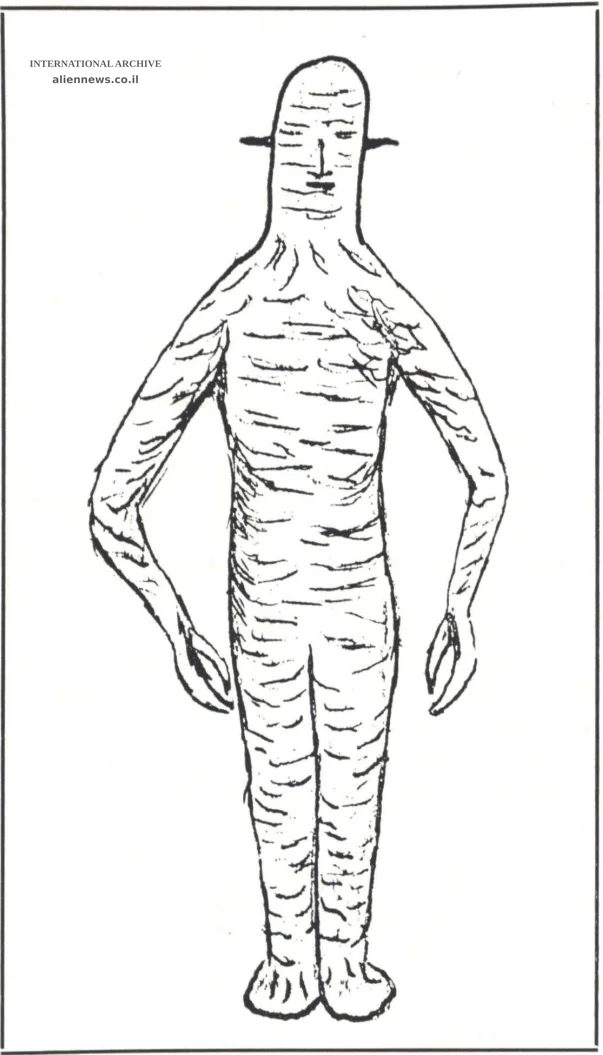
Richard Heiden’s review survives in Sweden’s Archives for the Unexplained. It includes a photograph of the witnesses and drawings of the reported being and craft. These document the account as it circulated, rather than photograph an encounter with beings.
Hickson described three figures with wrinkled skin, pointed features around the head and clawlike hands. The drawing differs from the smooth, large-eyed figure later familiar from abduction imagery. Its value is historical: it preserves a version of the description relatively close to the reported event.
The craft was described as elongated, with bluish light. Hickson said the figures took him inside. According to the same review, Parker lost consciousness, limiting what he could independently describe in that early account.
Two people reporting an experience together are not automatically two witnesses to every detail. What each remembered, when they first related it and what they might have learned from the other person are distinct questions.
A recording is not a camera at the river
The audio cataloged today at the Internet Archive includes interviews and recordings associated with the case. Its description identifies a compilation assembled after the event. The early recording and the later collection presenting it should therefore be distinguished.
Heiden’s 1974 review also describes subsequent examinations. It reports that the men were checked for radioactive contamination at the Air Force base in Biloxi and that none was detected. This is the writer’s account of an examination; the scanned article does not include the medical record itself.
The emotional response described in the interview room requires similar care. Fear may matter when assessing testimony, but it cannot independently identify its cause. A recording can preserve what people said and how they sounded at a particular time. It cannot retrospectively film the place where they say an encounter occurred.
The polygraph story needs its missing distinction
According to Heiden, Hickson underwent a polygraph examination on October 30. Parker did not attend. That detail changes a familiar shorthand about the case: this source does not support saying that both men passed the examination.
The review also discusses visits by UFO researchers J. Allen Hynek and James Harder and the use of hypnosis. These belong to the history of the investigation. They do not substitute for external documentation of the alleged event or provide a reason to stop examining the underlying accounts.
What remains is a case with early material that can be inspected: a dated publication, witness portraits, drawings and cataloged recordings. Each preserves a different kind of information, and none should be asked to establish more than it contains.
That is why the old illustration and the distinction between the two witnesses matter. Pascagoula becomes more revealing when it is no longer compressed into a sentence about two men passing a test, and attention returns to what each person could actually have known.
The publication date matters too: this is a September 1974 article about a reported October 1973 event.
Found another source or a detail to correct? Let us know.
