


Llíria–Olocau, Spain, 1976: the reported Michelin Man encounter and failed headlights
A couple described a bulky figure with a light at head height. As their Renault passed it, the headlights failed. Two drawings made seven years later preserve differences in their memories; an investigator who returned with a padded jacket and a torch reached a different conclusion from the one that made the case famous.
Avi Moas, Researcher and Editor-in-Chief · Produced with an AI-assisted newsroom

The first light stayed distant
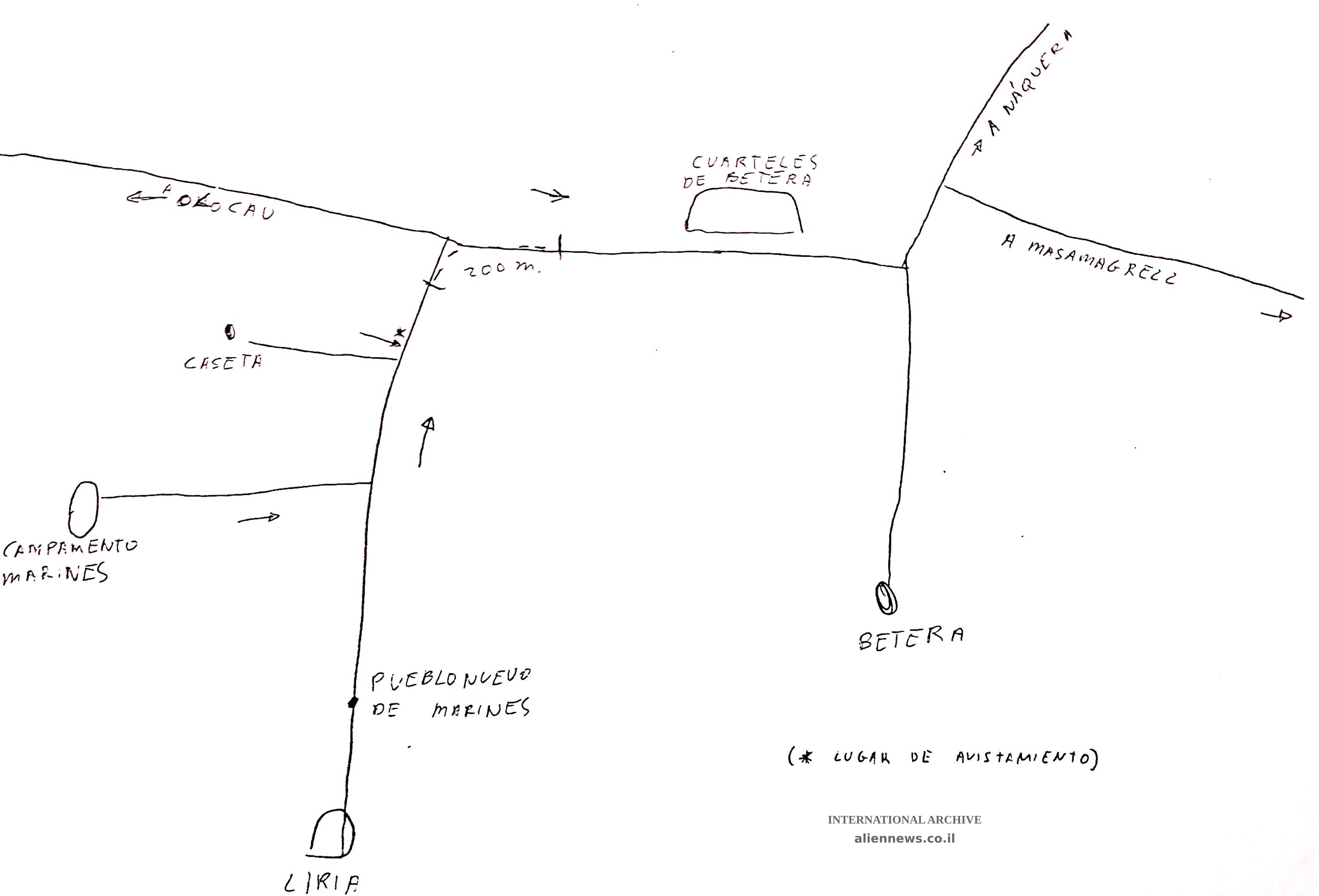
On the night of 14 March 1976, Vicente Corell Cerdá and Carmen Civera Sales were driving between Llíria and Olocau in Spain’s Valencia region. They had taken their son back to the recruit training center at Marines and planned to spend the night in Museros. Corell was driving a Renault 4L Super. In investigator Juan Antonio Fernández Peris’s later account, the night was cold and clear.
The exact hour differs within that account: the event narrative gives approximately 22:45, while the route section records departure from the base at about 21:45. No correction resolves the discrepancy.
The first light appeared far ahead, in the direction of the hills: a whitish-orange oval. It seemed to approach, although Corell acknowledged that their own car might have been moving towards it. At the time, they took it for distant vehicle lights. The road turned, and they lost sight of it.
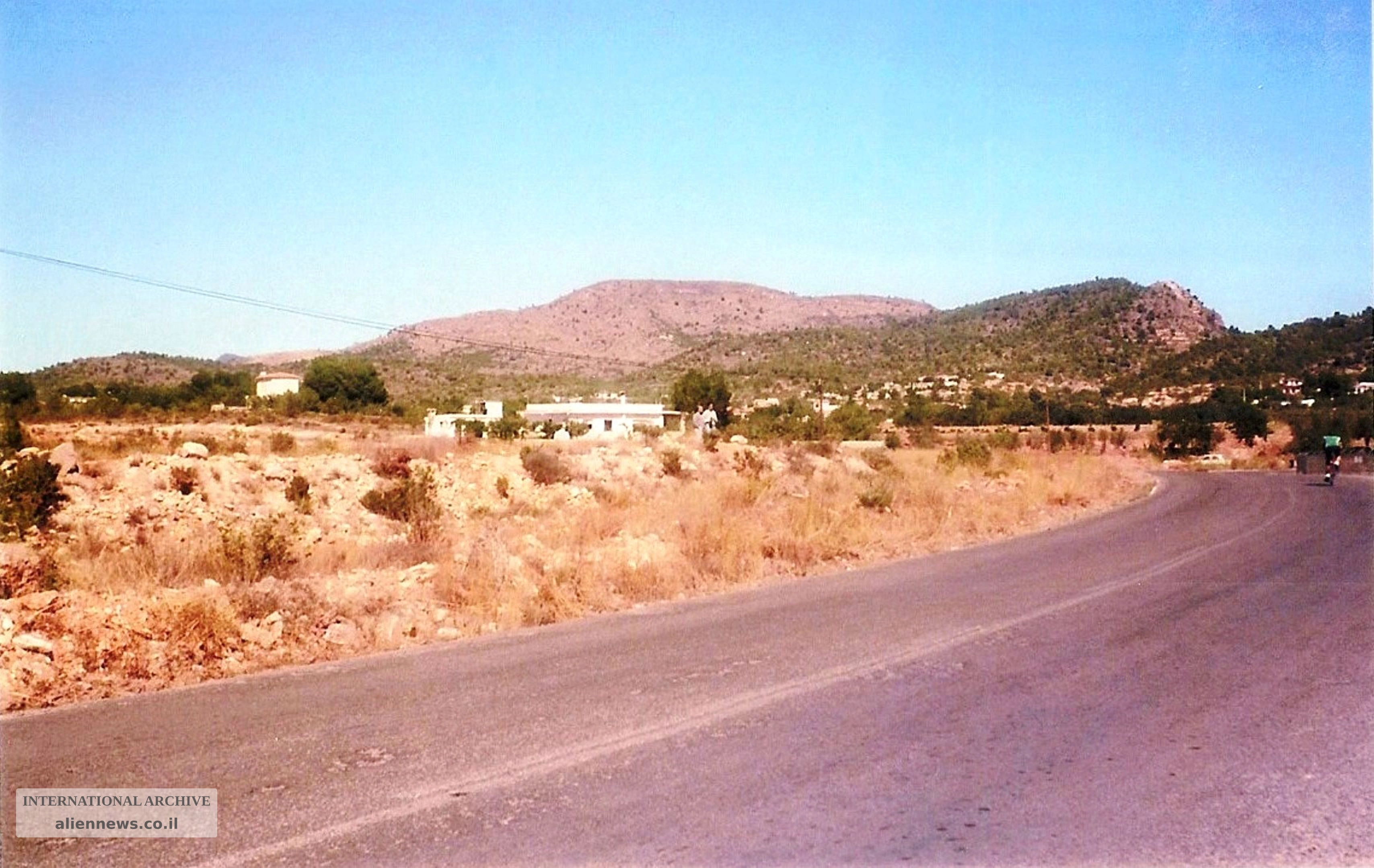
Shortly afterwards, they noticed something much closer. In the fields on their left was a faint glow, described as a luminous swirl or haze. As the car approached, a human-shaped figure became visible, apparently rising from the ground. In the testimony assembled by Fernández Peris, it stood on a bank about a meter and a half high, seven or eight meters from the road, near a track leading to a house.
Two witnesses, two drawings
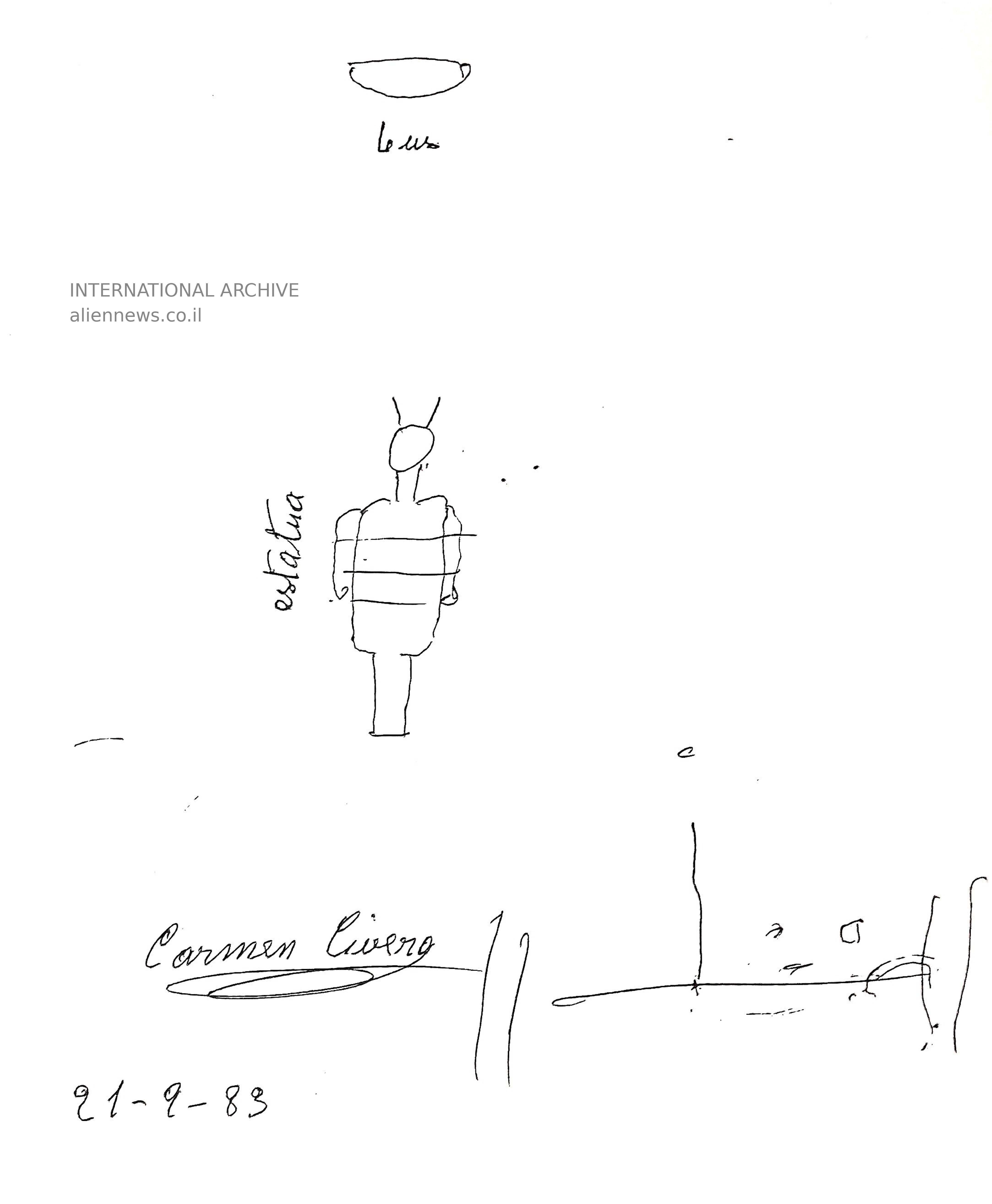
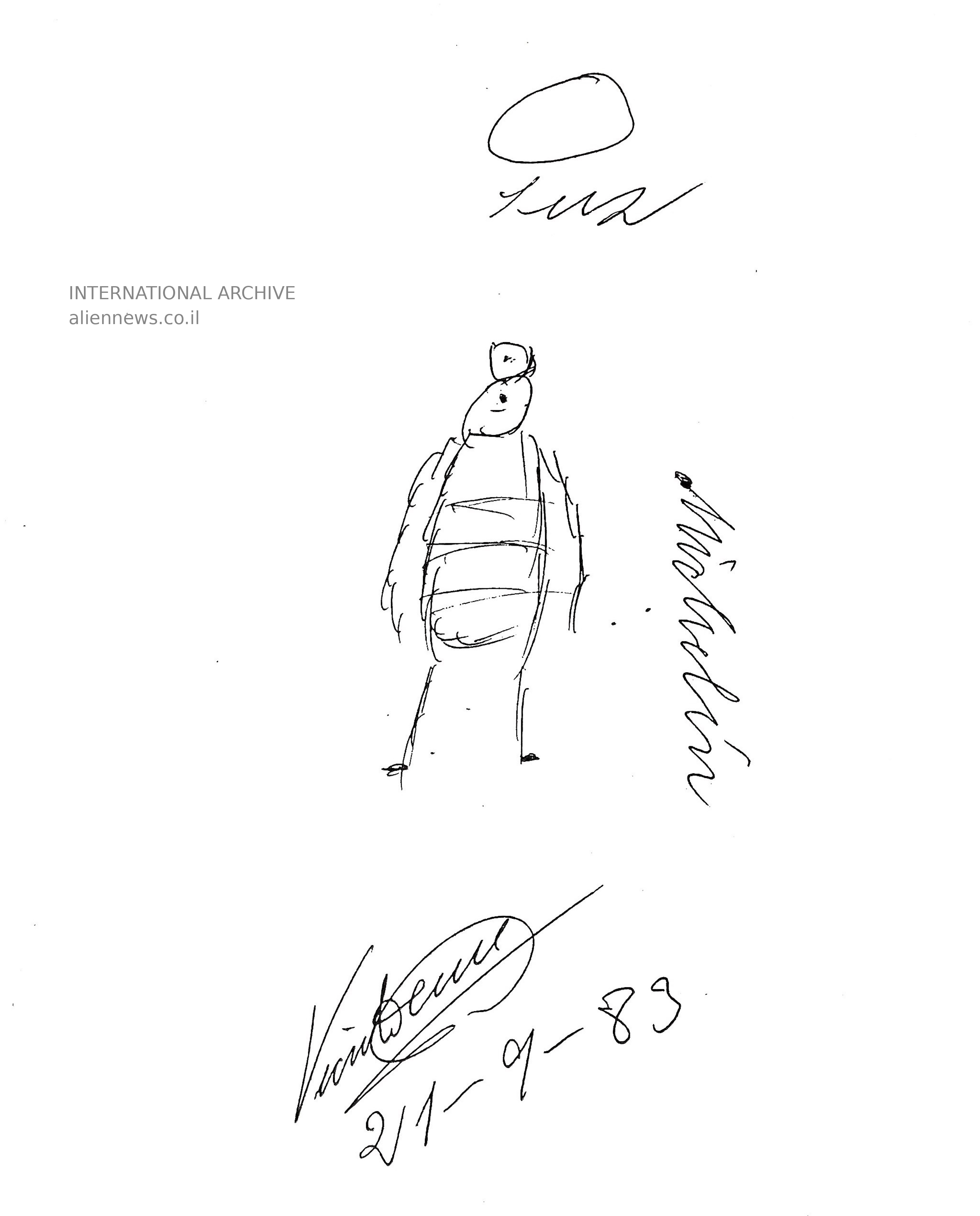
The couple described clothing that bulged around the upper body, marked with horizontal bands, and fitted more closely around the legs. Carmen said the upper part shone; Vicente remembered a duller appearance. They also differed over the light at head height. She recalled two small lights, while he described one, reminding him of a miner’s lamp. They did not identify a helmet or make out facial features.
They said its movement resembled hopping with the feet together, or a swaying motion, with an impression of floating just above the bank. Before the Renault drew level, the figure stopped and faced the road.
Their drawings, both signed and dated 21 September 1983, show how each represented the memory. Carmen drew a banded torso and wrote the Spanish word for “statue” beside it. Vicente drew a rounded figure and labeled it “Michelín.” Both also included a separate oval labeled as a light. These are later witness drawings, made more than seven years after the encounter.
Fernández Peris also argued that the interviewers, himself included, had helped shape the story through repeated retelling. He singled out Corell’s Michelin comparison, which he felt did not come naturally to him, as a possible example.
The Renault kept moving
As the car passed the figure, Corell reported a flash at the lighting switch. The headlights went out, and smoke and a burnt smell came from the dashboard. He concentrated on the dark road while Carmen turned and continued watching the figure briefly. Fernández Peris estimated that Corell had at most six seconds to observe the figure; Carmen could watch for a few seconds longer after the lights failed.
The engine kept running. After they stopped farther along the route, two motorists coming from behind helped them reach Bétera, with the Renault traveling between their cars. Asked whether they had seen anything unusual, both said no. One driver later took the couple to Museros.
According to the couple’s account to the investigator, a garage traced the trouble to a short circuit around the left front indicator, replacing burnt wiring. Fernández Peris stressed that the failure affected the lighting while the engine and battery continued to work. He suggested damaged insulation as a possible cause, but the precise trigger was not established. The material reviewed here does not contain a garage invoice allowing the repair to be independently checked.
An investigator on the bank
Fernández Peris and Juan Marcos Gascón interviewed the couple at home in September 1983. In October 1984, Fernández Peris returned with investigator Enrique Valls, and Corell accompanied them to the site. Another visit followed in September 1985: Gascón drove along the road at night while Fernández Peris stood nearby wearing a padded jacket and carrying a torch.
Gascón first noticed the light, then a silhouette with a broad upper body as he approached. In the report, the result supported the possibility that a person dressed this way could resemble the described figure. The author explicitly acknowledged that the reconstruction did not conclusively identify what the couple had seen in 1976.
In his full article in El Ojo Crítico no. 93, Fernández Peris concluded that a misidentified person and an unrelated lighting fault had combined to produce the encounter. He did not believe the couple had fabricated their story. The supposed person’s identity and purpose remained unknown; the ordinary activities he proposed remained possibilities.
Found another source or a detail to correct? Let us know.
