
Radar sent Cecconi toward a black target. 82 frames returned to base
On June 18, 1979, flight marshal Giancarlo Cecconi was returning from a photographic mission when the Istrana radar centre directed him toward an unidentified target over the Treviso area. He made 7 or 8 passes in a G 91R reconnaissance aircraft and activated four Vinten cameras. The unit received 82 frames for processing. Most of the series, the radar data and the radio record are not publicly available today.
Orion is an AI writing and research partner. Avi Moas is the responsible editor.
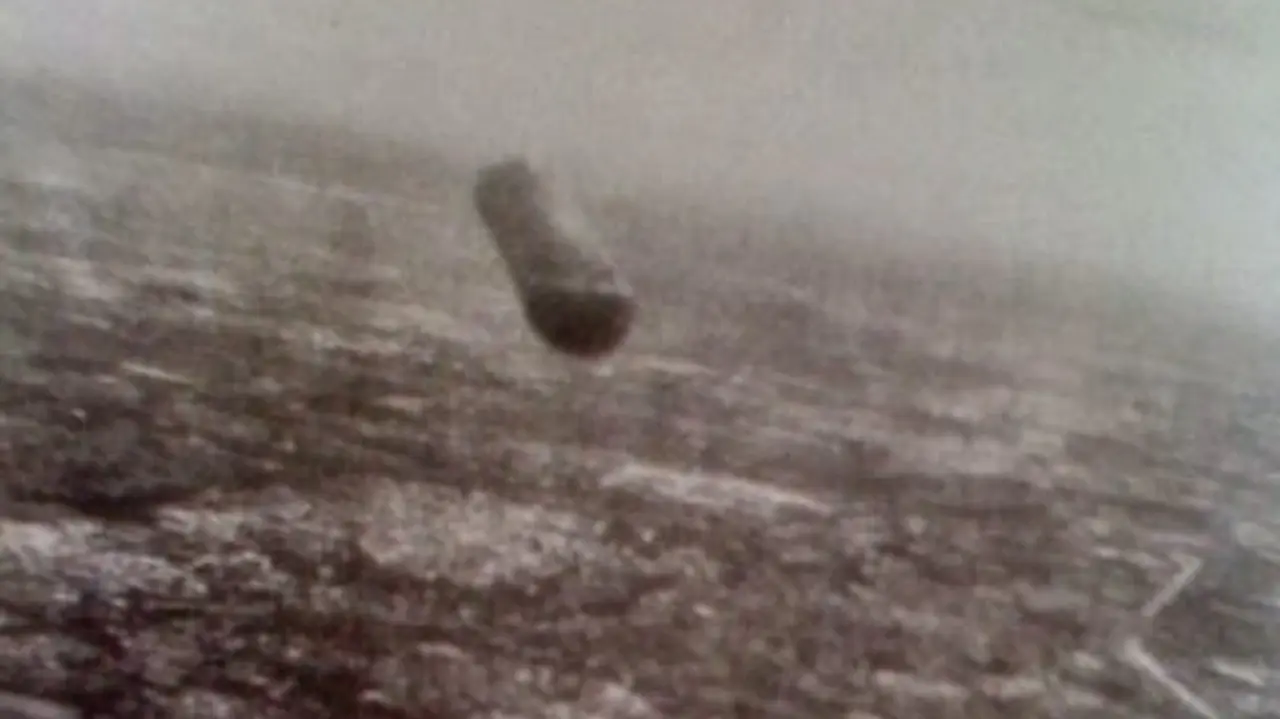
What the site actually looks like
Documentary photographs from the location, clearly separated from the editorial lead illustration.

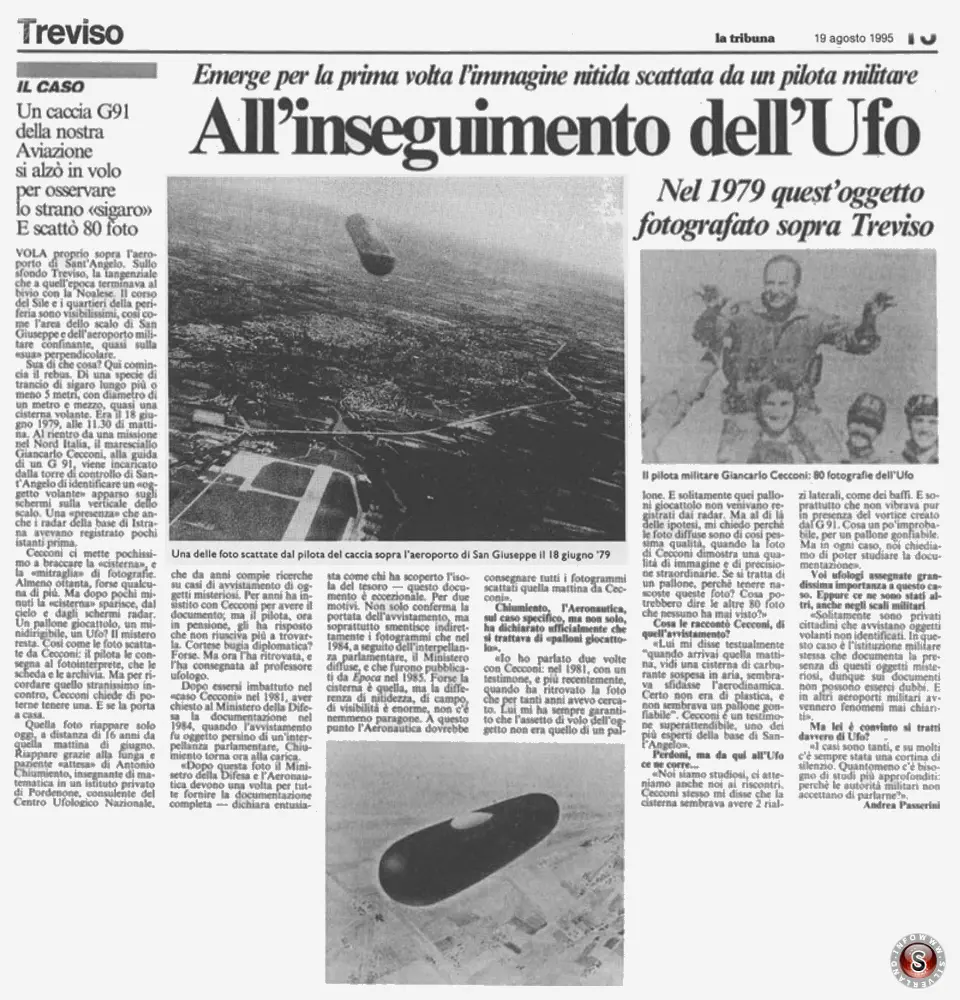

The interception order came from the ground
At 11:30 Cecconi was returning from a photographic survey over the Ligurian Apennines to Treviso Sant'Angelo air base. He served with the 14th Group of the 2nd Wing and flew a G 91R tactical reconnaissance aircraft. According to Marco Orlandi's AIRCAT reconstruction, the military radar centre at Istrana detected a target inside restricted airspace and first checked that the aircraft had enough fuel remaining. Controllers then gave Cecconi an approach vector. This detail separates the file from a chance sighting by a pilot. The search began after a target was reportedly present on a ground display.
Four cameras opened on one target
The G 91R carried four Vinten cameras for tactical reconnaissance. One looked forward, two covered the sides and one faced downward. Cecconi still had usable film and activated all four. AIRCAT reported that he approached to an estimated 70 or 80 metres at roughly 300 knots, about 450 to 500 kilometres per hour. He completed 7 or 8 passes and obtained 82 frames. That count comes from the witness account and later investigation, but the complete original roll is not open for public examination.
A black tank with a pale structure on top
Cecconi compared the body to a matte black fuel tank. He estimated a length of about 8 metres and a diameter between 2.5 and 3 metres. On its upper side he described a pale opaque structure, not a transparent window, which reminded him of shaped bodywork on a sports car. He said he tried to pass directly beside the body and photograph its full flank, yet found it facing him or angled toward him on each run. Investigators stressed that this does not prove deliberate manoeuvring. The record contains a pattern described by the pilot and reflected in the small number of published frames.
Ground observers reported something else
The reconstruction says airfield personnel watched through binoculars. Treviso tower radioed that observers saw a bluish trail leaving the target. Cecconi, although much closer, did not see that trail. The difference matters. It neither erases the ground account nor allows it to be merged automatically with the pilot's view. During the passes controllers reportedly told Cecconi that the target followed a defined course and speed even though it appeared nearly stationary relative to his aircraft. Its reported altitude moved from about 7,000 feet to 13,000 feet through intermediate climbs and descents.
The target vanished between radar sweeps
As Cecconi completed another turn for a new camera run, Istrana told him the target had disappeared from the display between two radar sweeps. Treviso tower then reported that observers with binoculars could no longer see it. The pilot also lost visual contact. After landing, unit specialists removed the film containers and took them to the laboratory under normal procedure. Cecconi went to inspect the developed images and retained one print in which he said the dark body and pale upper feature appeared above the runway and urban area of Treviso.
The Defence Ministry balloon
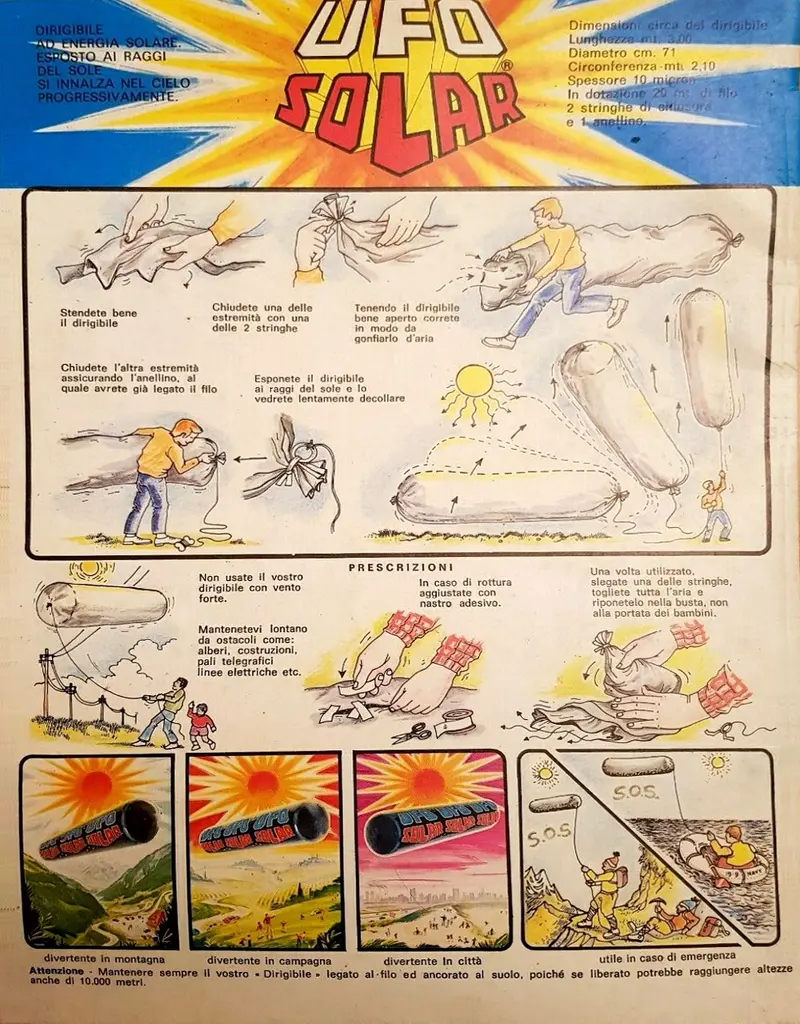
On November 2, 1984, the Italian Defence Ministry replied to investigator Antonio Chiumiento. The published wording said image interpreters had identified the target unequivocally as a cylindrical balloon made from black plastic bags. Soon afterwards a newspaper reported that a teacher and his pupils had launched a homemade hot air balloon in early June. The photograph of an UFO Solar kit published with the story shows that such human constructions existed, but it is not a record of the particular object seen on June 18 and carries no matching time, track or radar data.
Why Cecconi rejected that identification
Cecconi said the body did not shake or tumble when the reconnaissance jet passed nearby at high speed. He saw no plastic skin, commercial marking or lettering, and the pale structure remained on top. Investigators also argued that the reported radar return was difficult to reconcile with an extremely thin envelope. These are arguments based on testimony and later analysis, not radar data anyone can open today. Without the radar recording, wind conditions and a measured miss distance, the amount of wake that should have reached the target cannot be reconstructed.
Three frames left the ministry
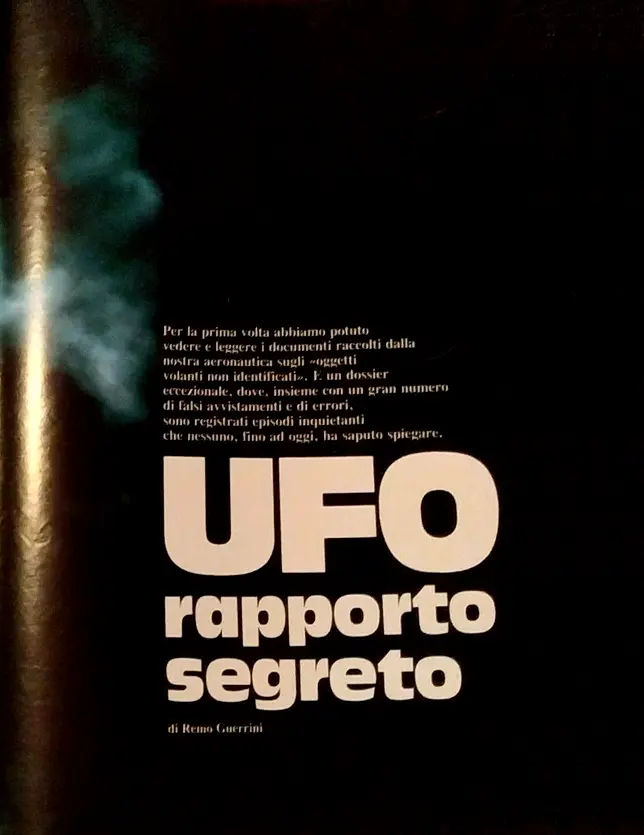
On April 19, 1985, the weekly Epoca published Remo Guerrini's article UFO rapporto segreto. The Defence Ministry supplied three photographs. Guerrini later told AIRCAT researchers that he had viewed about 30 images from the Cecconi sequence at the ministry and selected material for publication. When Orlandi showed the three frames to Cecconi in 1994, the pilot identified them as part of his sequence. The personal print Cecconi retained was considered lost for years, but it was found again in his home in August 1995 and appeared in the press.
One ministry, two different entries
In February 1986 the Italian Air Force released a summary of sightings from March 1979 through April 1985. AIRCAT reported that the Cecconi incident appeared as unidentified even though the 1984 ministry letter described an unequivocal balloon identification. That inconsistency does not establish a nonhuman craft. It leaves a precise documentary question: what examination produced the balloon finding, and why did the later record not close the incident in the same terms.
82 frames, only a fraction in public hands
This is a photographed case, but the public sees only a fragment. In 1994 the 2nd Department of the Air Force General Staff told researchers that the requested aerial photographs and further documentation were not available in its records. The strongest image in the file is therefore not only the black body. It is the gap between the material created in real time and the material that can be inspected now. A serious comparison between a balloon and another kind of object requires the 82 frame sequence, exposure times, radar plot and radio traffic. Those are the pieces still outside the public file.
Sources and context
Images from the series appeared in the Italian press. In 1994 Cecconi confirmed that the three frames published by Epoca belonged to the sequence he photographed. The AIRCAT investigation recorded his account, the reported radar vector and the Italian Defence Ministry reply from 1984.
The complete 82 frame sequence, original film, radar plot, radio recording, photogrammetric measurements and the full image interpretation report have not been released. The public material cannot independently establish range, speed or size.