


Dyatlovo district, Belarus, early 1990s: A man and a “flying carpet” in the mist
O. N. Kisel set out to plant beet seedlings in Belarus. Years later, he described two figures in the mist, a flexible surface descending from the hills and rows planted without his remembering how.
Avi Moas, Researcher and Editor-in-Chief · Produced with an AI-assisted newsroom

Seedlings in the mist
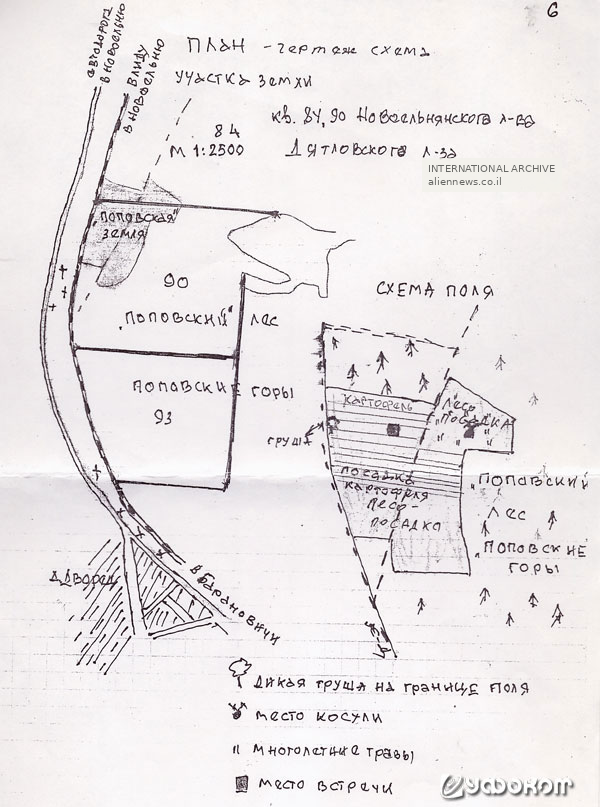
At dawn one June morning, O. N. Kisel rode from Novoyelnya with fodder-beet seedlings in his motorcycle’s sidecar. He intended to fill rows where bad weather had damaged the potatoes. Thick mist covered the field near Dvorets, in the Dyatlovo district of Grodno region. As he prepared holes for the seedlings, he later recalled, he felt someone watching him.
Kisel told Ufocom his story many years later. Ilya Butov published it on 11 April 2018 with drawings requested from the witness. The exact year remained unresolved: Kisel placed the event in the early 1990s, or about twenty-five years before his account. This Dvorets is in Grodno region, separate from the July 1989 report involving two boys in Dvorets, Vitebsk region.
A clear face in the mist
He said the motorcycle headlight helped him find the empty furrow beside the field track. Carrying a stake to make planting holes, he worked his way almost by touch towards the railway. After about forty meters he stopped and put down the seedlings. His first thought on sensing a presence was that someone might be walking from Bartashi to catch a train. He looked towards the track but saw nobody, then slowly returned to the motorcycle for more seedlings.
Returning towards the motorcycle, Kisel said he noticed a man slightly more than an arm’s length away. He described a rounded face, black hair combed backwards and a short beard. The face was sharply visible, but the shoulders and lower body dissolved into mist. Where he expected legs, he could see potato foliage. He thought the figure was hovering.
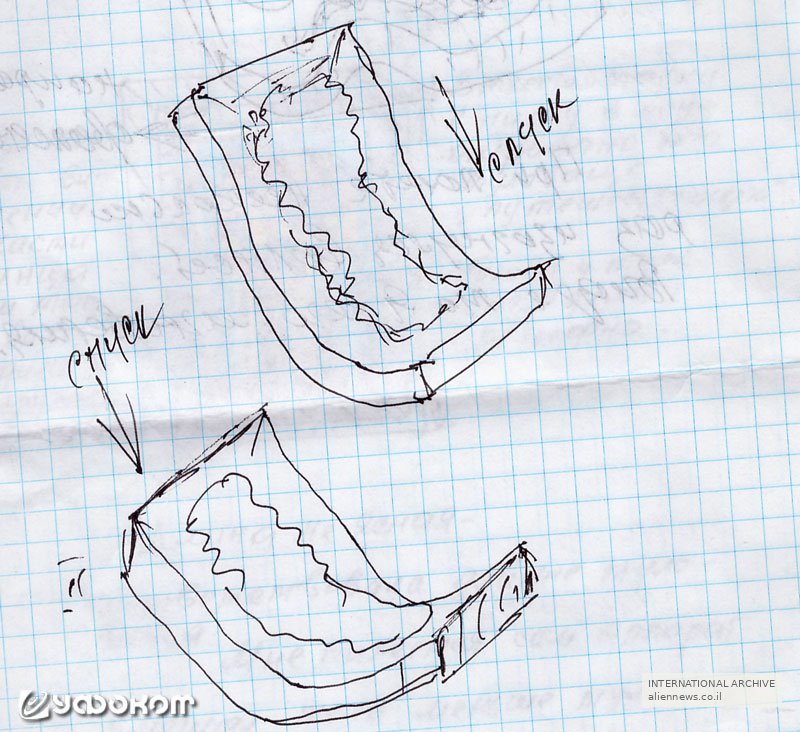
The man seemed unthreatening, so Kisel decided to keep planting. A step or two later he stopped again. Something he likened to a cartoon flying carpet was descending from the hills.
Figure and surface joined together
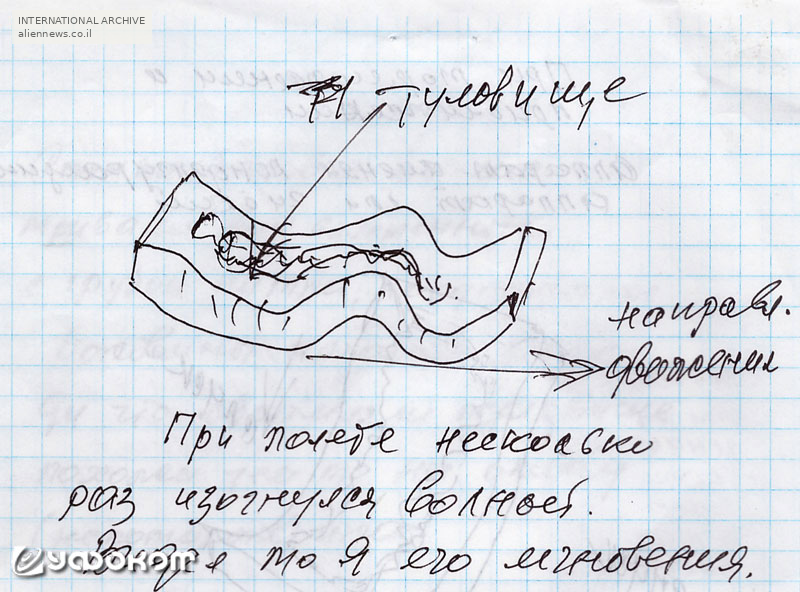
His description was stranger than a passenger riding a carpet. Kisel said that the figure and the flexible surface formed a single whole, as though the figure had been pressed into or imprinted on it. He compared the appearance to an image on a church banner. He estimated the surface at 10 to 20 centimeters thick, with dimensions corresponding to the passenger’s body.
According to Kisel, it undulated during its descent, then bent into a shape resembling a reclined chair back as it slowed. The second figure had an elongated face, sparse greyish-white hair and a thin pale beard. Kisel interpreted its expression as hostile. He lowered his head and moved away along the furrow.
Planting he could not remember
At the far end of the row, he crouched and resumed planting. He said the second figure remained overhead while pressure built across his shoulders and back. He felt passing trains shake the ground but could not hear them. Eventually a brief rushing sound moved upwards and the pressure lifted.
When he stood, his watch showed eight o’clock. All the seedlings, he said, had been removed from the sidecar and planted in orderly rows. He remembered beginning the work but not completing it. He reckoned that about three and a half hours had elapsed, although the encounter had seemed brief.
What the file preserves
Kisel also connected the place with its local history. He said the land had belonged to the church, and names for the woodland and hills still referred to the priest. The surrounding plots were later planted with trees, eventually including his own.
Butov discussed the account alongside other reports and folklore, including motifs of paralysis and missing time. Those comparisons are the author’s interpretation. The file presents a late recollection, two drawings by Kisel and a site diagram whose creator is not identified. They document the account and how it was presented; they do not independently verify what happened in the field.
Kisel returned in his account to taking a seedling, crouching and beginning to plant. After the pressure and darkness he described, he found finished rows and no seedlings left in the sidecar. He hurried back to the motorcycle because the working day had already begun. How he finished the planting remained outside the memory he recounted.
Found another source or a detail to correct? Let us know.
