


What patients recalled after cardiac arrest, and where the quantum claim enters
A study examined sound recognition in cardiac arrest survivors and proposed a quantum interpretation. Its methods distinguish the measured outcome from the mechanism the authors want to investigate.
Avi Moas, Researcher and Editor-in-Chief · Produced with an AI-assisted newsroom
Research, hypotheses and ideas at the boundaries of knowledge.

Sounds during resuscitation
While medical teams performed resuscitation, a speaker played sounds selected for an experiment. After recovery, 142 cardiac arrest survivors who reported experiences tried to recognize them in a study by Álex Escolà Gascón and colleagues, who investigated a proposed connection between memory and quantum organization of stimulus delivery.
The paper was published online on 25 March 2026, in The Innovation and later appeared in its September issue. This article examines the study and its authors’ interpretation of memories around cardiac arrest.
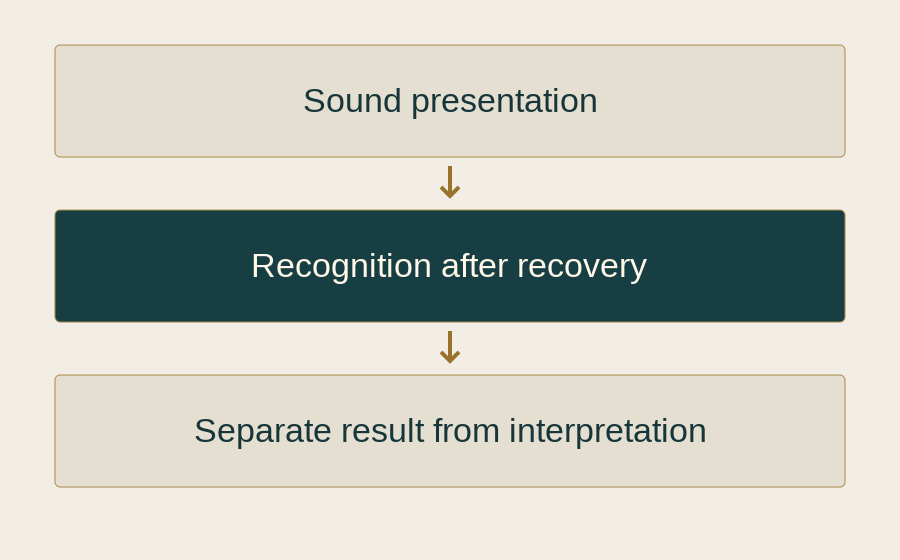
The sounds were ordinary. The quantum component concerned how their presentation was determined, rather than a special sound being transmitted into the brain. That distinction establishes what was tested before considering the interpretation.
Mean scores on the ten item recognition task were 6.68, 6.00 and 4.94 for groups A, B and C, respectively. Half the items had been played and half were distractors. The scores count correct responses, rather than the proportion of patients who remembered resuscitation.
Recognition is an outcome; mechanism is another question
Group A heard natural sounds, including waves and rain, delivered using a mechanism based on quantum entanglement. Group B used the same type of mechanism for novel melodies. Group C heard those melodies without entanglement. Interpreting the comparisons therefore requires attention both to the sounds and to the process selecting and presenting them.
A quantum computer's involvement does not independently demonstrate quantum consciousness. In general, a physical process can select a sequence of events, after which researchers measure responses to them. Connecting the selection mechanism to the mechanism of perception requires additional evidence.
The authors describe their quantum interpretation as provisional and model dependent. They also report lacking systematic EEG measurements across the sample. Recognition findings and the proposed explanation can be reported without presenting their connection as established.
The analyzed sample consisted of people who survived, reported an experience and could complete testing. That selection matters: the result describes this group, rather than the rate of recall among everyone who experienced cardiac arrest in the participating hospitals.
Part of a broader research question
Research into experiences around resuscitation predates this paper. AWARE II, described by New York University in 2023, followed hospital cardiac arrests and examined later recollections alongside brain monitoring in a subset of patients. It illustrates the need to connect reported experience with observations available during treatment.
That connection is difficult to study. An experience is recounted afterward, whereas physiological measurements are collected during the event. Linking them requires timing, knowledge of what sensory information was available and an account of missing observations. A detailed personal report and a physiological measurement answer different parts of the question.
Who enters the analysis also affects interpretation. People who survive and can complete a later test do not automatically represent everyone experiencing cardiac arrest. This is a basic question for research involving follow up after an acute event: precisely which population do the results describe?
What a next experiment should establish
A productive next step is to compare predictions. If the quantum explanation is correct, what result should occur under one condition and not another? Can that difference be specified in advance and examined by an independent team? A follow up experiment should distinguish explanations rather than simply repeat the same measurement.
Preserving data and event timing also matters. Those records allow examination of whether a difference relates to timing, group composition or the proposed mechanism. Such questions do not diminish interest in people's experiences. They turn that interest into claims that can be investigated precisely.
The next step should link recognition testing to precise records of sound delivery and physiological measurements, with different predictions for competing mechanisms specified in advance. An independent team could then examine whether the difference persists when the selection process changes while sounds and testing conditions remain comparable.
Editorial clarification ·
The study groups and task were clarified from the paper, distinguishing recognition results from the authors’ proposed quantum interpretation.
The study reports a sound recognition task among cardiac arrest survivors and presents a provisional quantum interpretation of how stimuli were presented.
It did not collect systematic EEG measurements across the full sample.
