


Out of the Body in a Sleep Lab: 36 Strange Experiences, a Left-Right Eye Signal, and a Brain Caught Between Sleep and Waking
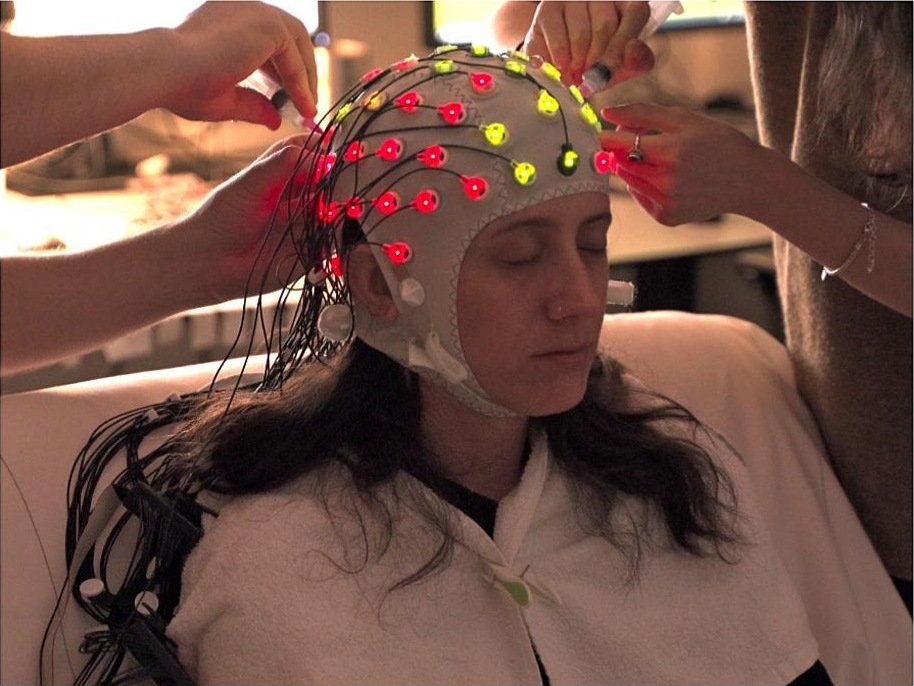
At a sleep lab at Radboud University in Nijmegen, 35 volunteers slept two to three hours less than usual the night before, then came in for the morning, put on a 64-electrode EEG cap, meditated and drifted into a three-hour nap. Twenty of them reported 36 unusual bodily experiences: floating, falling, spinning, vibrating, a body that lost its edges. In ten, they felt they were outside the body or above it. Each time, they signalled from inside the experience by moving their eyes left, right, left, right. In those moments the brain showed a mix of sleep and wakefulness.

By Avi Moas
Sources and editorial method
Avi Moas, Researcher and Editor-in-Chief · Produced with an AI-assisted newsroom
A morning in Nijmegen
The session started at seven in the morning at the Donders Centre for Cognitive Neuroimaging. The volunteers were not picked off the street. Every one of them had either had at least one lucid dream, the kind where you know you are dreaming, or had some meditation practice behind them. A few days earlier, at an intake meeting, the researchers told them what they were after: "sensations you would not usually experience during normal wakefulness, such as having strong bodily vibrations, floating, or feeling as if you were going outside of your physical body."
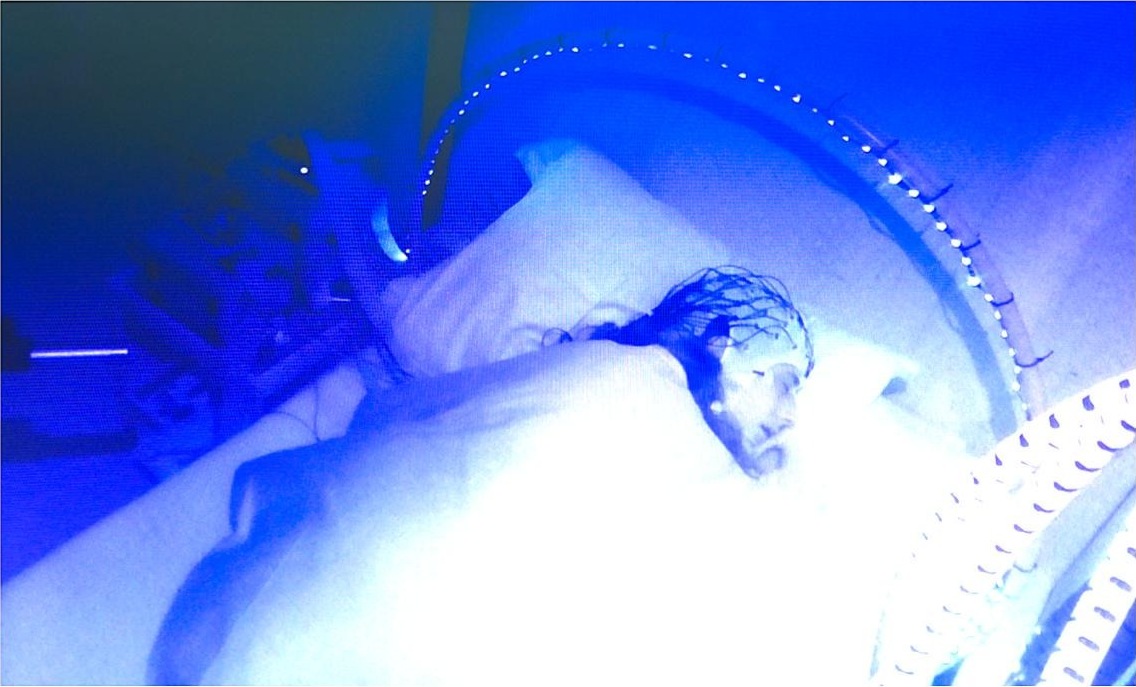
The night before, they had slept two to three hours less than usual. At 8:30, electrode cap already on, they did roughly an hour of semi-guided meditation: square breathing, a body scan, and lying still in the "corpse pose" of Yoga Nidra. Then came a morning nap of about three hours, with instructions to keep meditating and stay aware while falling asleep. Throughout, awake and asleep, light cues were played over them to nudge such experiences along.
The hard part was knowing exactly when something happened. Someone in the middle of an experience like this cannot talk, and may well be asleep. The fix came from lucid-dream research: the moment something odd begins, sweep the eyes left, right, left, right. The eye muscles are spared from the paralysis of sleep, so the movement shows up in the recording even when the rest of the body is out cold. Afterwards, the researchers sat down with each participant for a detailed interview that rebuilt the experience second by second.
What they felt
The study, led by Teresa Campillo-Ferrer of Radboud University with Robert Oostenveld and sleep researchers from the Gaslini children's hospital in Genoa, appeared in Consciousness and Cognition early in 2026 and reached a wide audience this week through ScienceAlert. Twenty of the 35 participants, 15 women and five men with an average age of about 25, reported 36 experiences between them. Most came during meditation, while they were awake. Others came in REM sleep, in non-REM sleep, and in brief arousals out of sleep.
Some felt themselves float, fall or spin while their bodies lay perfectly still. Others felt vibration, pressure, or the touch of something that was not there. Some lost track of where their body ended, or what shape it had. A few were paralysed, sometimes with frightening hallucinations, a picture familiar to anyone who has read about sleep paralysis. In ten cases, people described being outside the body or high above it. According to the interviews, some of the experiences lasted only two or three seconds.
What the EEG showed
The team compared each experience with the state the same participant had been in just before, meditating or asleep. They expected a rise in alpha waves, the rhythm of relaxation. That is not what they found. During the experiences, slow activity fell, delta and theta between 1 and 8 hertz, while fast activity rose, beta and gamma between 15 and 45 hertz. The effect was strongest over the temporal regions. That part of the brain, especially the temporo-parietal junction and the insula, is where the senses are stitched into the feeling of having a body, and earlier studies have already tied it to out-of-body experiences.
The slow activity landed somewhere between the patterns of sleep and waking. The fast activity looked more like a waking brain. And that held whether, by the usual criteria, the person was asleep or awake. "Taken together, our findings suggest that UBEs may not depend on a specific sleep stage or waking condition, but rather on a state of consciousness that blurs the boundaries between them," the researchers wrote. That, they add, could explain why someone in sleep paralysis sees their real bedroom while living through a dream-like hallucination.
What is still open
Electrodes on the scalp cannot tell whether the whole brain slips into an in-between state, or whether some regions sleep while others wake at the same time. Recordings from inside the brains of epilepsy patients have shown that the second can happen. The authors suggest that in waking these experiences are intrusions of dreaming, and in sleep they are intrusions of wakefulness. They also list the limits: some experiences may have gone unsignalled or been forgotten, the light cues may have broken up sleep, and the analysis used five-second windows around each marker.
In August 2026, Campillo-Ferrer and colleagues from Oxford and Barcelona posted a second analysis of the same recordings as a preprint, not yet peer reviewed. It finds that during the experiences the brain's usual hierarchy of activity flattens while the complexity of the signal climbs to waking levels, a profile that resembles what has been measured in psychedelic states. We have covered how meditation and psychedelics loosen the body's boundaries before.
The recordings themselves have been deposited in Radboud University's data repository, under restricted access. In every one of them, each experience a participant signalled is marked the same way, by a movement made from inside meditation or sleep: left, right, left, right.
