McMinnville 1950: Paul Trent’s two exposures
A small disc appears above an Oregon farm in two photographs. More than seventy years later, the pictures still invite comparison between witness testimony, geometry and possibilities the photographs alone cannot settle.
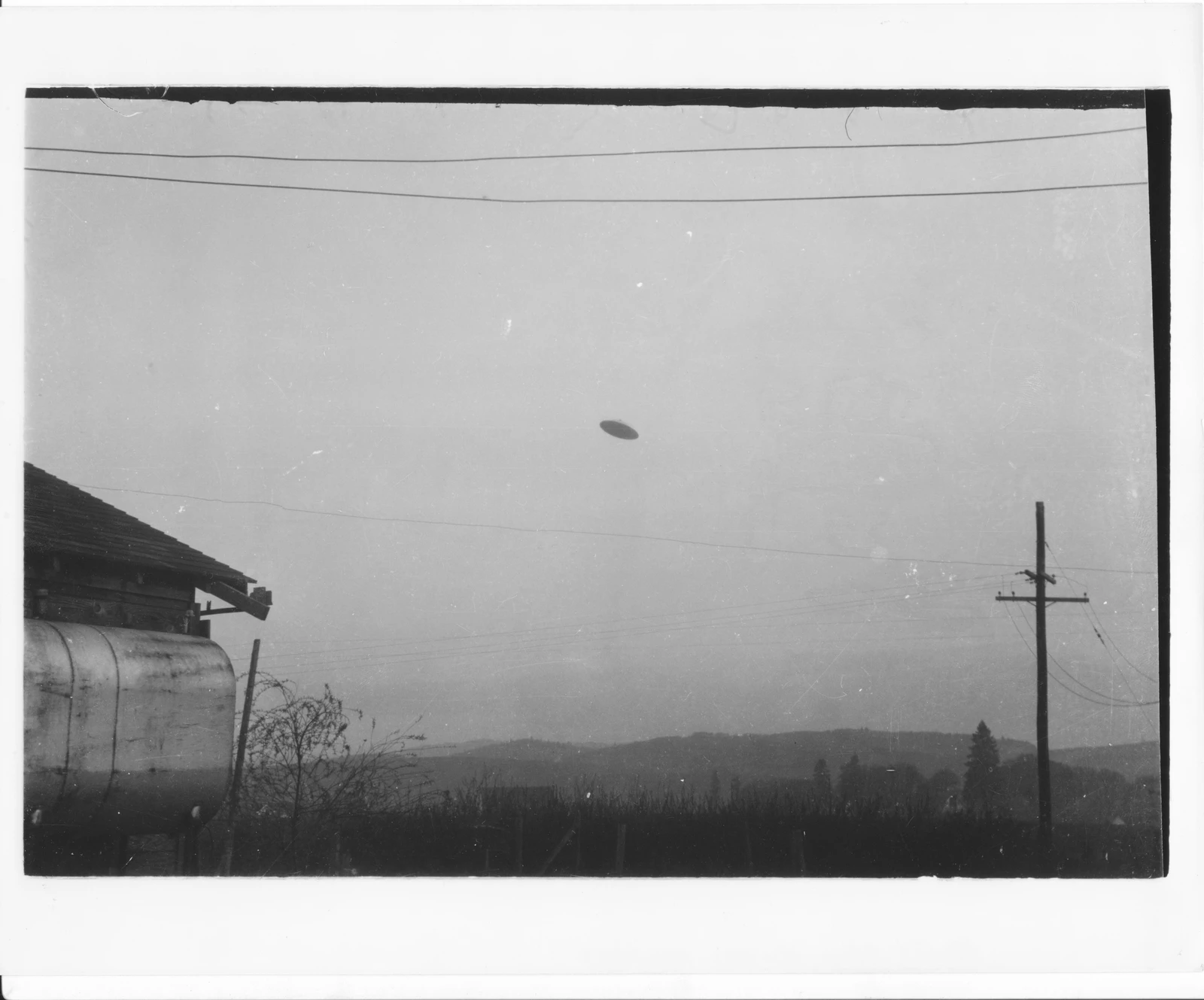
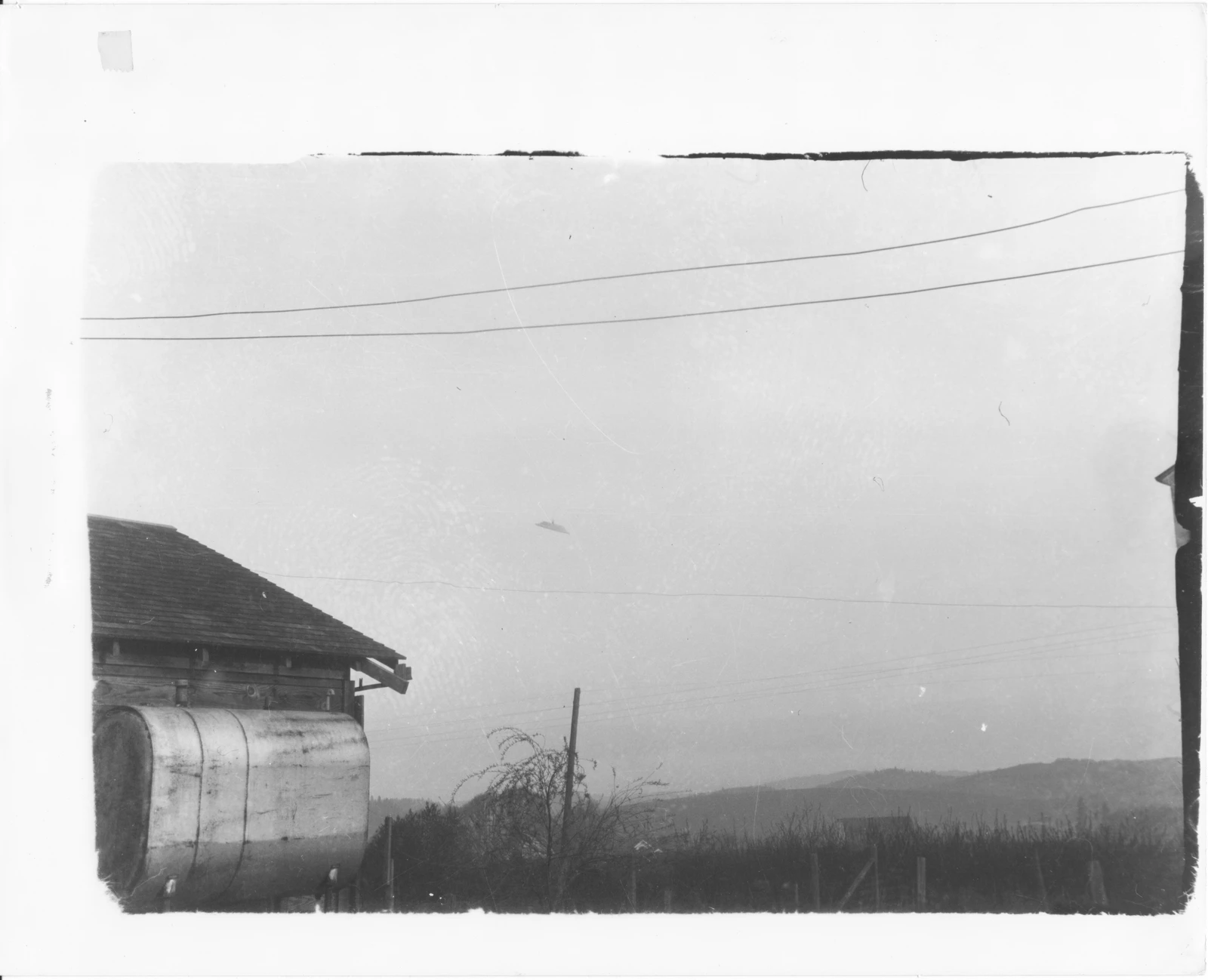
A small disc appears above an Oregon farm in two photographs. More than seventy years later, the pictures still invite comparison between witness testimony, geometry and possibilities the photographs alone cannot settle.
This article distinguishes the source material, participants’ accounts and later interpretations.
Finding the camera
Paul and Evelyn Trent associated the photographs with 11 May 1950 at their farm near McMinnville. According to the account examined in the Condon study, Evelyn noticed the object and Paul obtained a camera and made two exposures. The story reached the local newspaper in June and then a national audience. Buildings and overhead wires visible in the pictures later became central to their analysis.
Two pictures, two viewpoints
Comparing the photographs reveals changes in the object’s angle and background alignment. William Hartmann’s Case 46 in the Condon report examined geometry and brightness. It took the possibility of a distant object seriously while also discussing a suspended model. Reading a favourable sentence or a single caveat in isolation loses the structure of that examination.
Why the wires stay in the frame
The wires are not a distraction to remove for a cleaner composition. They are a reference used by competing explanations. Rooflines, distant fields and shadows also matter. Both photographs are therefore retained as source images rather than replaced by an enlargement that discards their surroundings.
What remains open
Without a known distance, the disc’s image size cannot be converted into a physical diameter. An unresolved fine thread does not prove there is no thread; visible overhead wires do not themselves establish suspension. The case remains useful because important claims can be compared with the same two surviving images. Readers can see the references on which each interpretation depends.