The hollow boat: the woman who came from the sea in 1803
A rounded vessel, a woman holding a box and writing nobody could read. Edo-period pages preserve a story strikingly familiar to modern readers, yet rooted in a different world of coastlines, borders and strangers.
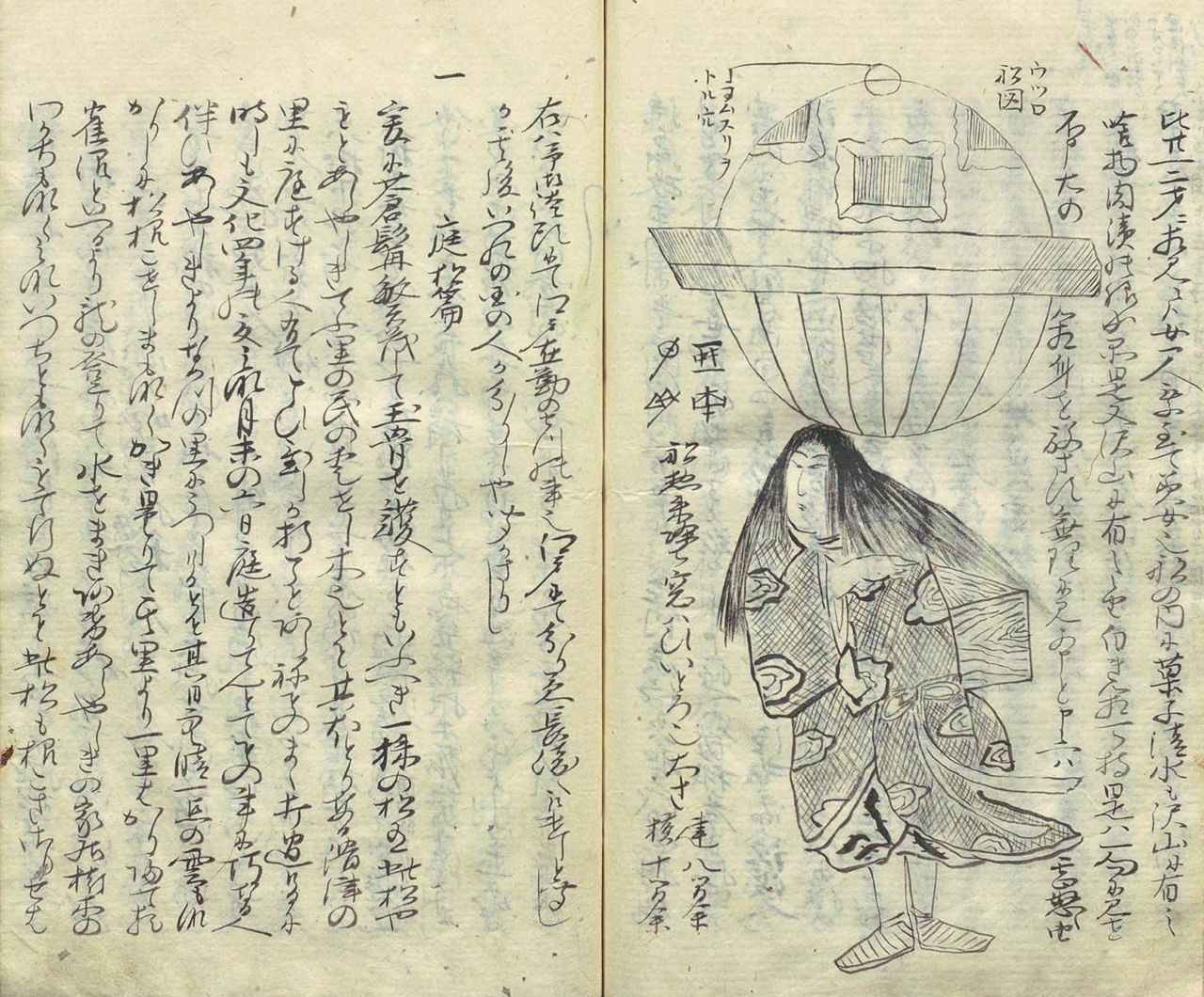
A rounded vessel, a woman holding a box and writing nobody could read. Edo-period pages preserve a story strikingly familiar to modern readers, yet rooted in a different world of coastlines, borders and strangers.
This article distinguishes the source material, participants’ accounts and later interpretations.
A vessel from the sea
The account assigned to 1803 describes a hollow vessel arriving on the Hitachi coast. Its variants feature a woman speaking an unfamiliar language and holding a box she would not surrender. The vessel is rounded and windowed; some drawings include strange symbols. Its mystery does not require adding a flight sequence: the older narrative concerns an arrival by sea.
1803 is the story’s date
The lead image comes from Komai Norimura’s Ōshuku zakki, a late Edo manuscript. It is a genuine historical illustration, not a securely established eyewitness picture made at the reported event. Another familiar version appears in the 1825 Toen shōsetsu. The date assigned to the story and the date of each surviving document are different pieces of information.
Reading the shapes
The page brings vessel, person and symbols into a single composition. Its circular craft invites comparison with the modern flying saucer, but resemblance does not turn a drawing into an engineering specification. Comparing versions is more revealing: which details recur, how the clothing and vessel change, and how each narrator describes a woman with whom communication is impossible.
Encounter, tale and memory
The hollow boat can be read as an encounter mystery and as a story about reactions to outsiders. Its strength is that the visual documents survive and can be revisited without modern reconstruction. They establish the existence of this narrative and imagery in nineteenth-century Japan; the vessel’s origin and the woman’s identity remain interpretive questions.