Junichi Yaoi: bringing the unexplained to Japanese television
Before short clips and feeds, Yaoi turned testimony, journeys and unusual ideas into television events. Surviving material reveals both the mysteries he pursued and how television shaped their presentation.
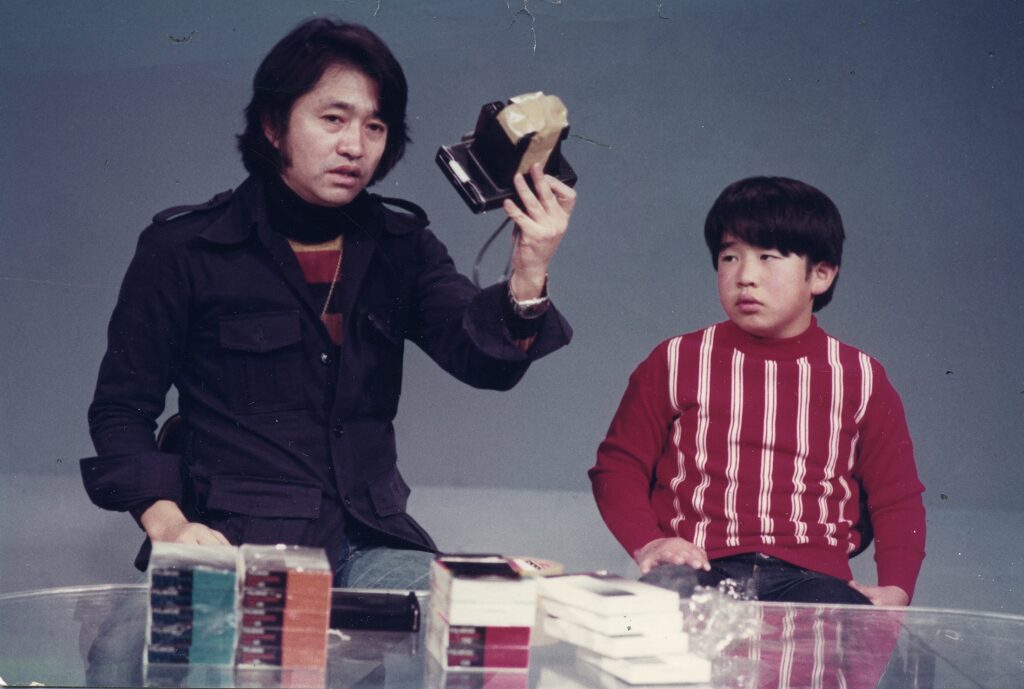
Before short clips and feeds, Yaoi turned testimony, journeys and unusual ideas into television events. Surviving material reveals both the mysteries he pursued and how television shaped their presentation.
This article distinguishes the source material, participants’ accounts and later interpretations.
A camera that asked people to look up
Junichi Yaoi worked at Nippon Television and became associated with 11PM and its Thursday special programmes. In a Bunka Hoso interview, he said he had not begun with a deep personal interest in UFOs. He wanted people absorbed in daily life to stop and look at the sky. That programming decision became central to his public identity.
The studio as part of the story
Yaoi’s work extended beyond UFOs to claimed psychic abilities and other unusual phenomena. The period photograph shows him with Masuaki Kiyota. It documents television participants and their production context, not a verified landing. Its historical value is strongest when its caption preserves that distinction.
How to read a television archive
A television segment has several layers: location footage, interview statements, narration, editing and sometimes reconstruction. Returning to its source requires the programme name, broadcast date and continuous sequence. Dramatic music and reaction shots are part of how an audience encountered a story, not additional observations of the event. A later upload title cannot replace original broadcast details.
A legacy beyond a single case
Yaoi deserves an archival profile in his own right. He connected Japanese audiences with accounts and questions from different places and turned them into a shared viewing experience. His significance does not require treating every programme as a verified encounter. Photographs and interviews provide a starting point for examining the producer and then returning to individual cases.