Rujm el-Hiri: was the Wheel of Giants the tomb of King Og?
Concentric basalt rings and a central burial mound form one of the Golan's largest prehistoric monuments. Its modern Hebrew name and its location in biblical Bashan have connected it to Og, the last of the Rephaim.
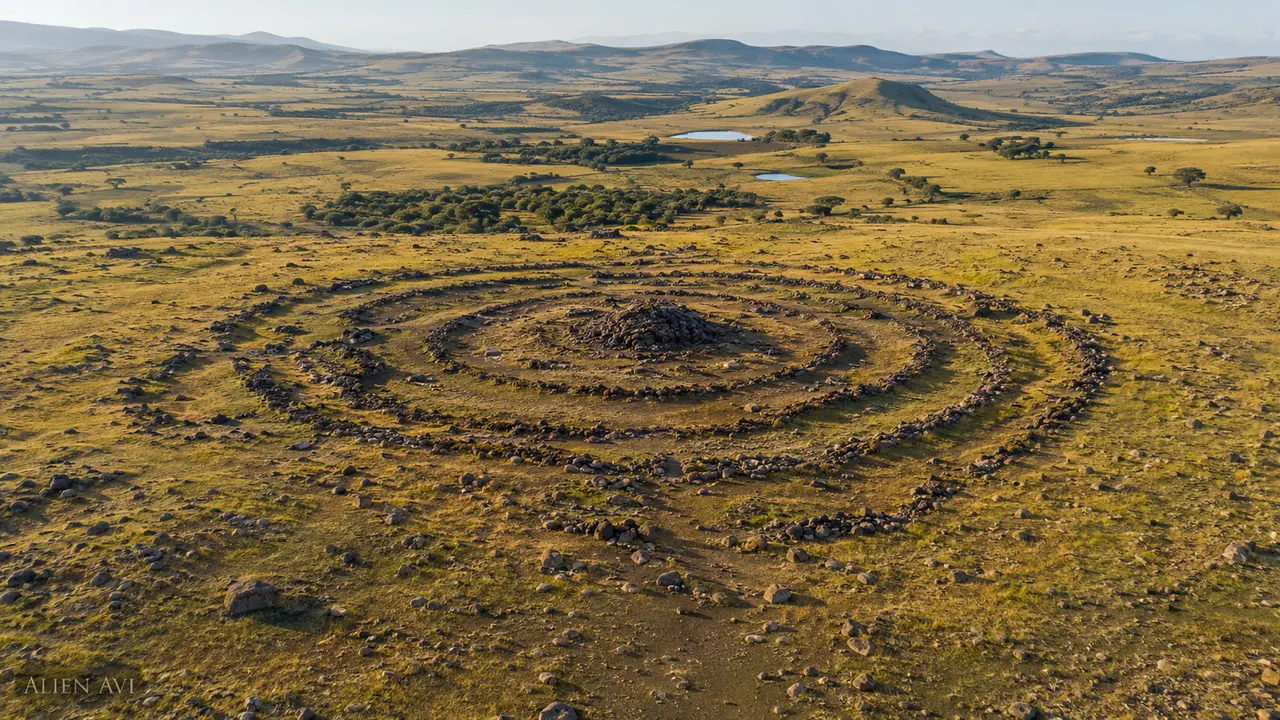
The complex is about 150 metres across and contains tens of thousands of basalt stones. Major phases are generally assigned to the Bronze Age, with the central burial mound possibly added later.
No inscription or human remains identify the tomb as Og's. The connection comes from geography, biblical tradition and later legend, not a direct archaeological identification.
Architecture on a landscape scale
Several rings, radial walls and a central tumulus turn the basalt plain into a planned ceremonial landscape visible most clearly from above.
Burial, ritual or calendar
Proposals include a gathering place, funerary centre, ancestor monument and seasonal marker. Recent work cautions that tectonic movement complicates claims of exact astronomical alignment.
Biblical texts place the Rephaim in Transjordan and describe Og of Bashan as their surviving remnant. His unusually large bed helped shape the enduring image of a giant king.
The Bible places Og in the time of Moses and does not say that he survived the Flood. That dramatic detail belongs to later Jewish legends and midrashic expansion.
The central mound has funerary architecture but no surviving identification. The association with Og remains a powerful cultural reading of an ancient and still partly unexplained monument.