Hire Benakal: India's forgotten city of megalithic stone
Hundreds of dolmens, burial chambers, stone circles and rock paintings cover a granite hill range in Karnataka. Hire Benakal is one of southern India's largest megalithic landscapes and preserves evidence of engineering, ceremony and memory across many centuries.
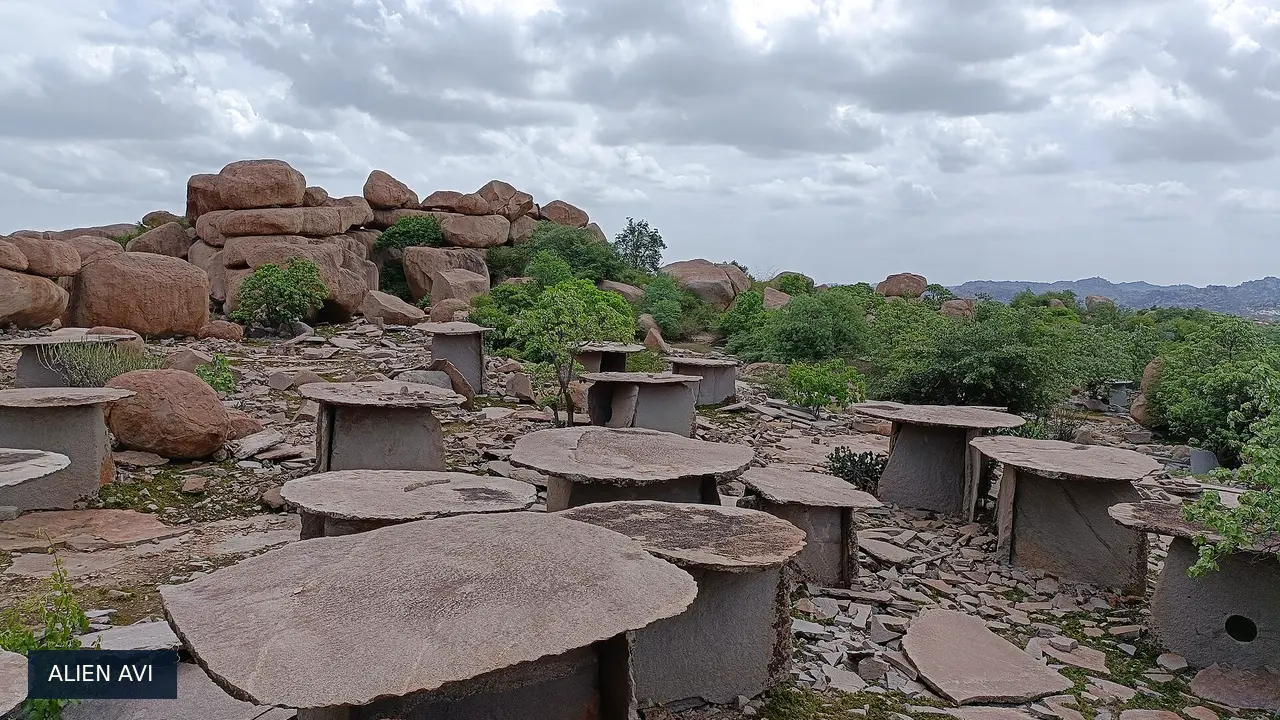
The megaliths of Hire Benakal
UNESCO's tentative-list record describes a roughly 20-hectare complex containing close to one thousand megalithic structures of several architectural types, some standing for more than 2,500 years.
Not every structure has been excavated or individually dated, and the communities responsible for every phase are not known by name. Counts vary according to survey scope and the condition of collapsed monuments.
A landscape, not a single monument
Hire Benakal spreads across granite hills in Karnataka's Koppal district. Its house-like forms can resemble an abandoned settlement, but most are understood as funerary and memorial monuments placed within a wider ceremonial landscape.
Engineering without mortar
Vertical stone slabs support heavy capstones without mortar. Portholes, passages, cairns, menhirs and stone circles show that the builders used several architectural traditions and possessed detailed knowledge of local rock.
Many monuments are dated broadly between 800 and 200 BCE, although the landscape also preserves evidence from earlier and later periods. Pottery, iron-working remains and rock art indicate repeated use rather than a single building campaign.
Shelters contain red-ochre scenes of people, animals, dancing and hunting. A hemispherical boulder produces a resonant sound when struck, linking sound and landscape to the site's possible ceremonial life.