When chance began to listen: twenty-eight years of Princeton's PEAR lab
Millions of trials asked whether human intention could shift a random-event generator. Each effect was tiny, but the data accumulated for nearly three decades.
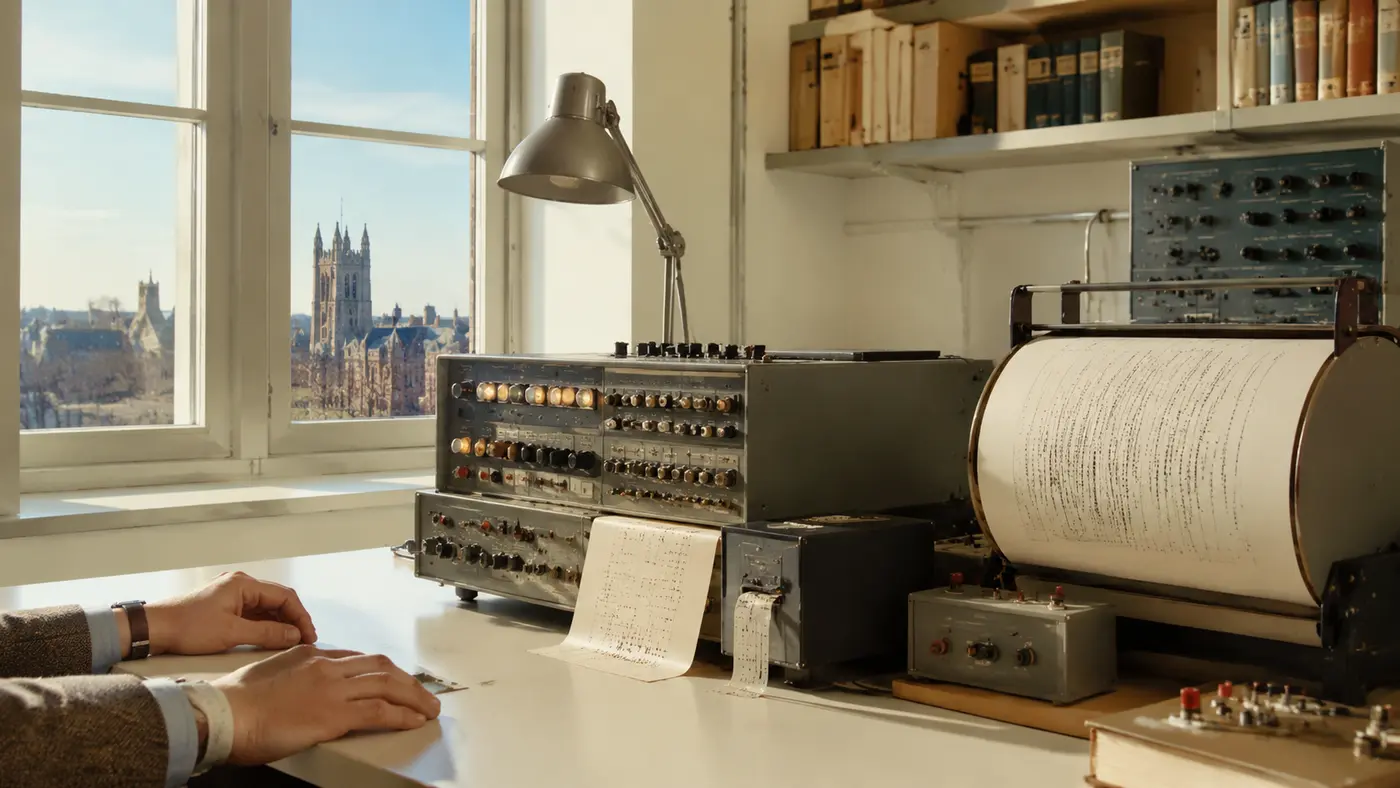
PEAR operated at Princeton from 1979 to 2007 and its experimental records are preserved in the university archive.
The interpretation remains disputed because effect sizes were minute and independent replications produced mixed results.
An unusual engineering laboratory
Robert Jahn and Brenda Dunne built a programme around measurable interactions between consciousness and physical systems rather than spectacular demonstrations.
High, low and baseline
Operators asked electronic noise generators to produce more high values, more low values or an untouched baseline across enormous streams of random bits.
PEAR reported small directional shifts that accumulated statistically over millions of trials, as well as experiments involving distance, timing and mechanical devices.
Its legacy is methodological: it turned a question about intention and chance into a long engineering programme with machines, protocols and an archive open to examination.