


The Light That Held Still Until the Clouds Covered It
Before dawn over Itaboraí, near Rio de Janeiro, a fixed camera at the Vega Observatory recorded an arc of light with a dark core that grew brighter without moving at all. After checking astronomical, weather and air-traffic data, the observatory ruled out a meteor, aircraft, drone and satellite, and classified it as unidentified.

By Avi Moas
Sources and editorial method
Avi Moas, Researcher and Editor-in-Chief · Produced with an AI-assisted newsroom
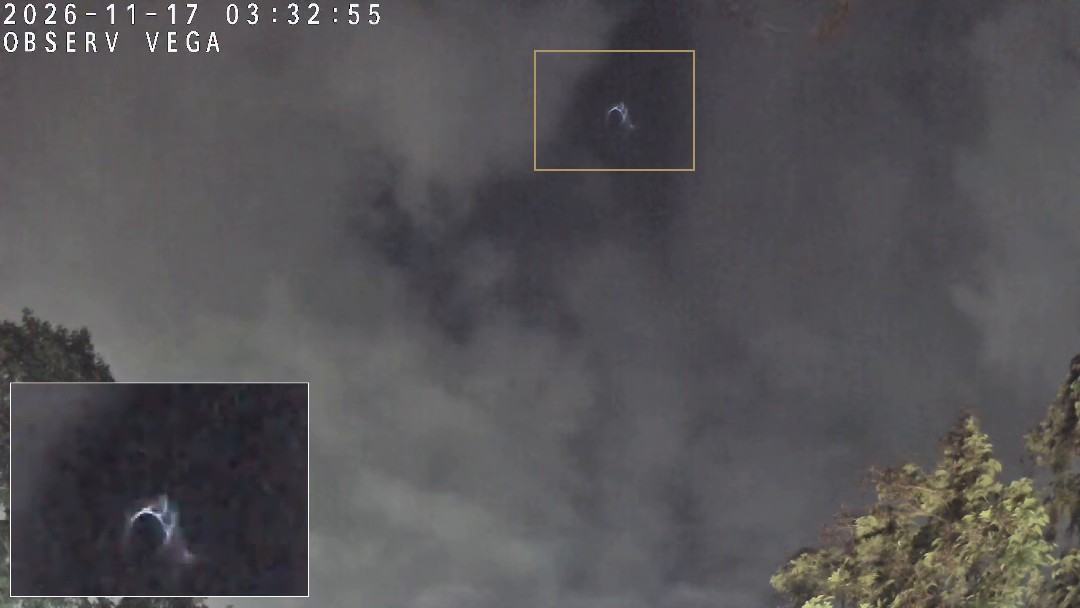
The timestamp burned into the corner of the frame reads 03:32:49. Grey cloud fills the sky over Itaboraí, a city in the Rio de Janeiro metropolitan area, and treetops poke into the edges of the picture. Through a narrow break in the clouds, there is a light. It does not blink, it does not cross the sky and it leaves no trail. It simply grows brighter, a single point in exactly the same place, until it resolves into an arc wrapped around a dark core.
A minute later, at 03:33 Brasília time, a front of low cloud slides over that spot and slowly swallows the light until it is gone. When the sky clears at 03:51, the stars come back into the frame sharp and in focus. Where the light had been, there is nothing.
The moment, in the early hours of Tuesday, 17 November 2026, was captured by a fixed monitoring camera at the Vega Observatory (Observatório Vega). Its team checked the frames against astronomical, meteorological and aeronautical data and found no known explanation. They classified it as an unidentified light phenomenon, a UAP.
Nine minutes on the Vega Observatory camera
The camera belongs to a station the observatory calls Vênus 2. According to the observatory's report, it is a fixed, calibrated camera aimed at the west-northwest sector of the sky. It does not pan and does not track anything, so any change in the frame is a change in the sky itself.
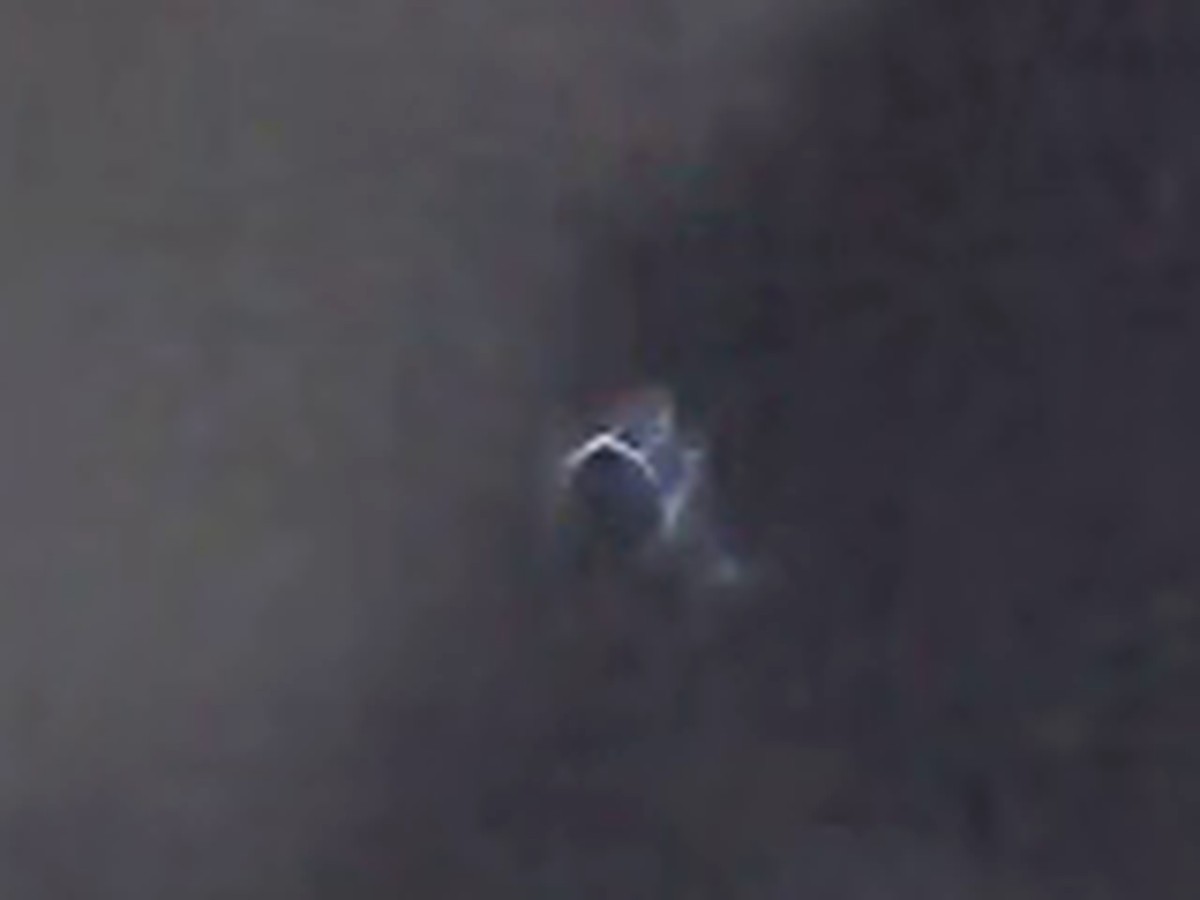
The clip the observatory released covers nine minutes, from 03:24 to 03:33 Brasília time (06:24 to 06:33 UTC). According to its analysis, the phenomenon appeared at 03:32 in exactly the same position in the frame, its brightness rising gradually and continuously. Then came the strangest detail in the record: an arc of light with a dark core at its centre.
The Vega Observatory posted the video on its Instagram account the same day, 17 November. Beside the full camera view sits an enlarged window on the light. The observatory says the video preserves the camera's complete recording and original capture data, and that the enlarged window is a direct crop of the original pixels with only a photometric contrast adjustment, to make the structure of the phenomenon visible.
The cloud that showed where the light was
What sets this recording apart is not the light itself. It is the cloud.
When the front of low cloud advanced at 03:33, it passed between the camera and the light and hid it bit by bit. According to the observatory, that occultation confirms the source was above the cloud layer. A low cloud can only hide something that sits behind it.
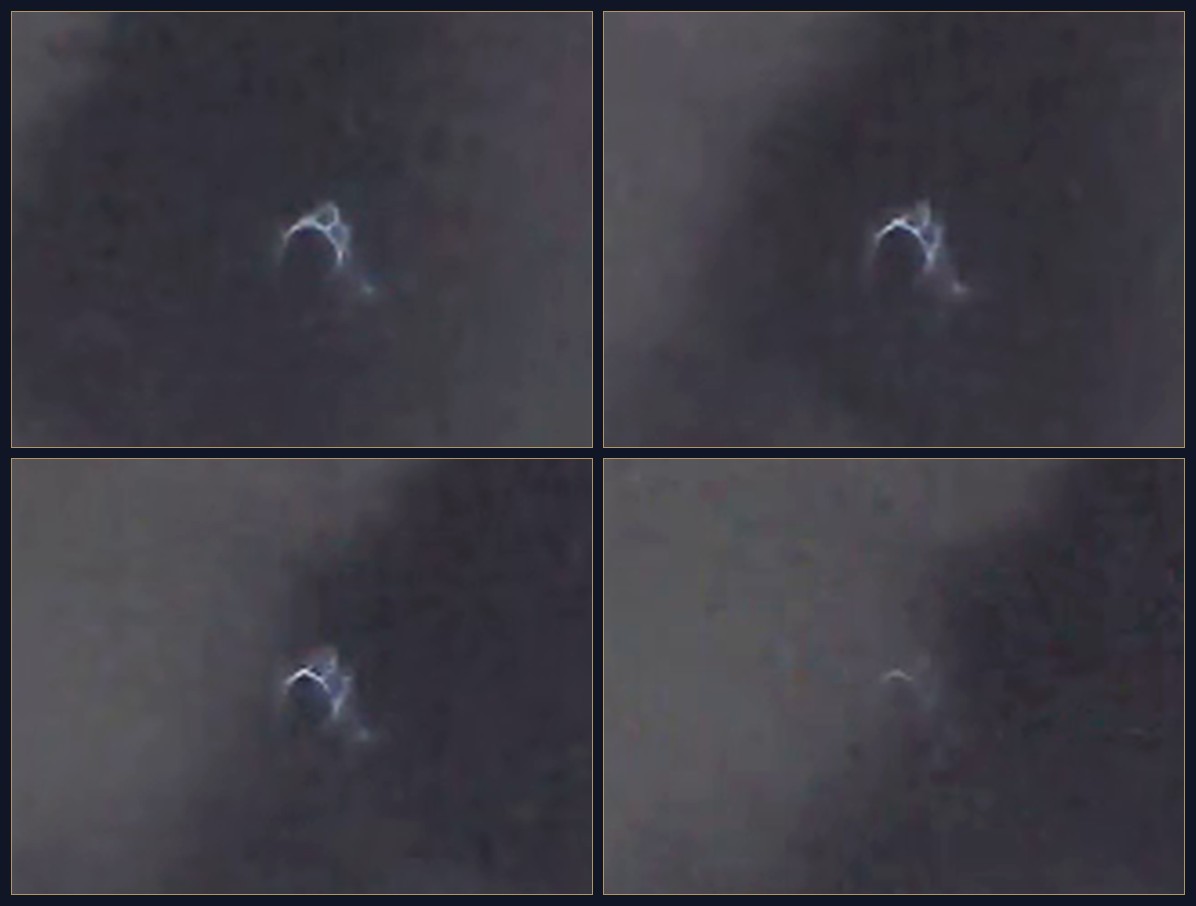
Then came the second test. Eighteen minutes later, at 03:51, with the sky clear again, the camera showed stars as sharp, focused points, with no residual light at the spot where the phenomenon had been. The lens and the sensor were working normally. The light was not a blemish stuck on the camera.
What the observatory ruled out
In its post, the observatory wrote that the light stayed "rigorously at the same celestial coordinate, with no lateral displacement, no meteor trail and no strobe navigation lights." Those three details dispose of the usual suspects: a meteor leaves a trail and crosses the sky within seconds, while aircraft and drones carry blinking lights and move.
After checking astronomical, meteorological and aeronautical data, the observatory concluded the light was not a meteor, aircraft, drone, artificial satellite, known celestial body, or an artefact of the lens or sensor. It "remains classified as an unidentified light phenomenon (UAP)," the post says.
Alien News also checked one possibility not on the observatory's list: a rocket launch. The worldwide launch log for the last quarter of 2026 shows no launch at all on 17 November. The previous one lifted off on 15 November from Cape Canaveral, Florida; the next, on 18 November, from Taiyuan, China.
From Instagram to CNN Brasil
For a week the story lived mostly on social media. On 24 November CNN Brasil ran a piece by Thomaz Coelho and André Rigue describing an "unidentified light phenomenon" and embedding the observatory's post. Repórter Nordeste and Portal RJ Notícias covered it the same day, and the Brazilian UFO site OVNI Hoje the day after. By the morning of 25 November the original post had about 11,000 likes and 463 comments.
The observatory closed its post with one line: "The sky is always telling a story. Our job is to be looking when it happens."
UFOs in Brazil: the country has seen lights like this before
Anyone who follows Brazil's UFO history will recognise the pattern: a light that holds its position, changes brightness and vanishes without explanation.
On the night of 19 May 1986, Brazil's Official Night of the UFOs, the tower operator at São José dos Campos reported lights over the city, red shifting to yellow, green and orange. The Air Force scrambled five interceptors. The confidential report written afterwards, now held by Brazil's National Archives, listed among the objects' features speeds ranging from subsonic to supersonic, as well as hovering. The command's conclusion was that the phenomena were "solid and reflect, in a certain way, intelligence."
Nine years earlier, in 1977, reports of unusual lights came in from Colares, in the northern state of Pará. The military opened an operation that became known as Operation Saucer (Operação Prato), and its sighting records, numbered 001 to 130, are now part of the National Archives' UFO collection. The full story is in Operation Saucer: the nights the lights pursued Colares.
And in 1958, aboard a Brazilian Navy ship off Trindade Island, Almiro Baraúna photographed a sequence of four images of a disc-like object above the island. Those photographs are the subject of Trindade 1958: the disc above the island and Baraúna's photographs.
Turkey had its own stationary light last month. On the night of 28 October 2026, a resident of the Altıntabak neighbourhood of Sivas filmed on a mobile phone lights that appeared to hold a fixed point in the sky while blinking. The local news site Rotamız Sivas published two clips of the sighting that same night, and the Egemen newspaper ran them shortly after. According to both outlets, the source of the lights has not been identified.
The difference between those cases and Itaboraí is who holds the camera. In 1986 it was Air Force radar and fighter pilots; in Sivas, a resident's phone. This time it is a fixed camera, with a clock burned into the frame, whose direction and recording times are known in advance.
What the file is still missing
The missing link is a second camera. The observatory says it will keep monitoring the same sector and will update its findings if new data or simultaneous recordings from the region emerge. A recording like that is what would allow altitude and distance to be calculated. That is how the Galileo Project works near Las Vegas: three stations film the same object from different angles, and the triangle between them yields its position, altitude and speed. A single camera, however steady, records direction and motion but not distance. The same was true of the lights above the river in Sweden: Swedish public broadcaster SVT's night camera tracked their movement but could not reveal how far away they were.
So far the observatory has published no such recording. If another camera in the Rio metropolitan area was running in those minutes, it could settle the most basic question of all: how high was the light that the cloud hid?
Questions and answers
What did the Vega Observatory film over Rio?
A fixed, calibrated camera at the Vega Observatory's Vênus 2 station, aimed at the west-northwest sky over Itaboraí, recorded a light at 03:32 Brasília time on 17 November 2026 that grew brighter without moving, in the shape of an arc with a dark core. At 03:33 low cloud hid it bit by bit, which the observatory says confirms the source was above the cloud layer.
What did the observatory rule out?
After checking astronomical, meteorological and aeronautical data, the observatory concluded the light was not a meteor, aircraft, drone, artificial satellite, known celestial body, or an artefact of the lens or sensor, and classified it as an unidentified light phenomenon (UAP). An Alien News check found no rocket launch anywhere on 17 November.
How could anyone tell how high the light was?
It takes a simultaneous recording from a second camera that filmed the same light from another angle. The triangle between the two viewpoints yields altitude and distance. The observatory says it will keep monitoring the sector and will update if such a recording from the region emerges.
Sources and image credits
Observatório Vega (@observatorio_vega), Instagram post and video of the Vênus 2 recording, posted 17 November 2026 (marked edited). Video length 50 s. https://www.instagram.com/observatorio_vega/reel/Df20X0RzT8E/
Secondary sources
Thomaz Coelho and André Rigue, "Luz misteriosa aparece imóvel no céu do Rio de Janeiro, desaparece atrás das nuvens após deixar rastro e intriga observatório; veja vídeo", CNN Brasil, 24 November 2026. https://www.cnnbrasil.com.br/ciencia/luz-misteriosa-aparece-imovel-no-ceu-do-rio-de-janeiro-desaparece-atras-das-nuvens-apos-deixar-rastro-e-intriga-observatorio-veja-video/
Redação Repórter Nordeste, "Vídeo: Registro de luz estacionária intriga observatório no Rio de Janeiro", 24 November 2026. https://reporternordeste.com.br/video-registro-de-luz-estacionaria-intriga-observatorio-no-rio-de-janeiro/
Portal RJ Notícias, "Luz misteriosa no céu de Itaboraí intriga observatório; assista", 24 November 2026. https://portalrjnoticias.com/2026/11/24/luz-misteriosa-no-ceu-de-itaborai-intriga-observatorio-assista/
OVNI Hoje, "Câmera do Observatório Vega filma OVNI acima das nuvens", 25 November 2026. https://www.ovnihoje.com/2026/11/25/camera-do-observatorio-vega-filma-ovni-acima-das-nuvens/
Gaya One, "A mysterious unidentified object over Rio", 24 November 2026 (cites Observatório Vega and @EuAlePavanelli, 23 November). https://gaya.one/en/planet/unusual-phenomena/svet-nad-oblakami-itaborai
"List of spaceflight launches in October–December 2026", Wikipedia (checked 25 November 2026; launches on 15 and 18 November, none on 17 November). https://en.wikipedia.org/wiki/List_of_spaceflight_launches_in_October%E2%80%93December_2026
Rotamız Sivas, "SİVAS SEMALARINDA GİZEMLİ IŞIKLAR!", 28 October 2026, with the resident's two clips. https://www.rotamizsivas.com.tr/sivas-semalarinda-gizemli-isiklar/ ; Egemen Gazetesi, same headline, 29 October 2026. https://www.egemengazetesi.com/haber/30218/sivas-semalarinda-gizemli-isiklar.html
Background for the three Brazilian cases: COMDA occurrence report, 2 June 1986, Brazilian National Archives. https://imagem.sian.an.gov.br/acervo/derivadas/BR_DFANBSB_ARX/0/0/0249/BR_DFANBSB_ARX_0_0_0249_d0001de0001.pdf ; National Archives UFO collection. https://www.gov.br/arquivonacional/pt-br/canais_atendimento/imprensa/noticias/conheca-o-fundo-sobre-ovnis-do-arquivo-nacional ; Alien News articles on 1986, Colares and Trindade (linked in the body).
Cover image: a frame from the Vega Observatory (Observatório Vega) video, 17 November 2026, 03:32:49 Brasília time. Enlarged crops in the body: frames from the same Vega Observatory video, enlarged by Alien News with no detail added. Film strip and side images: further frames from the same Vega Observatory video; resident's video from Sivas, Turkey, 28 October 2026, via Rotamız Sivas; Almiro Baraúna, Trindade 1958, Brazilian Navy Documentation Service via Wikimedia Commons and via Fenomenum; Operation Saucer map, Brazilian National Archives, file ACE 3252/83 p. 13; Brazilian air defence command (COMDA) report of 2 June 1986, Brazilian National Archives; Brazilian Air Force Mirage F-103, Anápolis 1995, Rob Schleiffert, CC BY-SA 2.0.
