
What is in the lunar photographs Elizondo describes?
Lue Elizondo says unreleased photographs show large structures and right angles on the Moon. John Lear described a tower in Sinus Medii years earlier. No evidence establishes that they discussed the same image. The article traces each claim and the material needed to test it.
Orion is an AI writing and research partner. Avi Moas is the responsible editor.
Lue Elizondo in conversation with Yoshi Asakawa
This is the interview in which Elizondo describes unreleased photographs and large monolithic structures with right angle cuts on the lunar surface.
John Lear and the tower he described in Sinus Medii
The video presents Lear's description. The complete 2003 Art Bell broadcast and the programme's official briefing page are linked below.
The sentence that put the Moon back at the centre
In an interview with Japanese UFO investigator Yoshi Asakawa, former intelligence officer Lue Elizondo said photographs exist that he does not believe have yet been made public. He described objects on the lunar surface that appear to be large monolithic structures with right angle cuts, and said he believed the images might be released soon. His wording is striking because he was not describing a blurred light or a single ambiguous shadow. He was describing geometry that, in his view, did not look naturally formed. Elizondo, who led the Pentagon's AATIP programme, connected the material with a longstanding non human intelligence interest in the Moon and with humanity's return to a sustained presence there.
What a monolithic structure means in lunar imagery
A monolith is a large object that appears to form a single unit. Add straight cuts and corners close to ninety degrees and the human eye immediately recognises design. On the Moon, however, appearance depends heavily on solar angle, camera altitude and resolution. A crater wall, fracture, impact block or hard shadow can create a persuasive shape in one frame. The real importance of Elizondo's statement therefore lies not only in the form he described, but in the quality of the material he says exists. A sequence from different angles, precise coordinates and sensor information could turn an intriguing appearance into something measurable.
John Lear gave the story an address
On November 2, 2003, former pilot John Lear joined Art Bell and presented a disclosure scenario, an imagined briefing containing what he believed a government could tell the public. When he reached the Moon, Lear said the pictures he was discussing showed structures. He named Sinus Medii and described a tower there more than seven miles tall. He then referred to another object in Mare Crisium that he called the Colossus of Oguram, a machine he said was larger than Brooklyn. The complete programme runs for nearly three hours. The video on the Alien Avi channel brings the key passage to viewers in a direct, accessible format while the original broadcast remains linked in full.
The tower as a soul machine
In Lear's wider account, the tower was not built merely to watch Earth. He described it as part of a mechanism that handles the soul between incarnations. After a life ends, the soul reaches the machine, the information, experience and learning gathered on Earth are downloaded and retained, personal memory is reset, and the soul is returned to Earth for another life cycle. In this model the body is a temporary container and earthly life is one stage in a much longer process of spiritual development. In a 2006 interview Lear called Earth a soul farm and said the central purpose of existence here was the development of the soul. He described the Greys as monitors of physical containers who could move souls from body to body, but were not responsible for the soul itself. The clearest surviving statement that connects this model to the lunar tower is a forum reply Lear wrote in March 2004. He said the object he identified in Lunar Orbiter III frame 84M had faced Earth for a very long time and that, because he believed souls had been followed to the Moon, he proposed that the tower might be a soul machine. Lear called it conjecture and theory. The information download, reset and return process belongs to the fuller version of the soul catcher account circulated around his story, while his preserved post directly confirms the connection he made between the tower, the Moon and souls.
Ra: a life preserved like a book, without a machine
The Ra material, whose speaker identifies itself as a sixth density social memory complex, contains no lunar tower that captures souls. It does, however, contain a striking parallel to another part of Lear's account. Ra says that after death an entity enters metaphysical time and space, where a lifetime can be seen whole like a book. Its experiences are reviewed, healing takes place and the needs of a future incarnation are assessed. In this material the veil of forgetting operates during embodied life to create meaningful choice and development. It is not a memory wipe performed by a device after death. Ra also mentions bases on the Moon being reworked, but attributes them to human military complexes and never connects them with souls. Its harvest process is determined by the spiritual condition of each entity, with the higher self and assisting beings present. Ra therefore does not confirm Lear's soul machine. It offers a different model beside it, one in which the knowledge of a life is retained, examined and carried forward without a tower or technological mechanism.
Four lines converging around the Moon
Lear's idea did not appear in an empty landscape. In 1976 George Leonard published Somebody Else Is on the Moon after examining NASA imagery and arguing that it showed towers, pipes, tracks and immense machinery. He wrote about construction and activity, not the recycling of souls. Ingo Swann, a pioneer of remote viewing, carried out a Moon viewing exercise in 1974 while working at SRI and later described a hidden side base and its occupants in Penetration. He did not describe a tower that resets souls. Robert Monroe added a different line in Far Journeys with what he called Loosh, a substance or energy generated through the experiences and emotions of living beings and gathered by other intelligences. Monroe described the collection of a product of life, but not a lunar tower. An archival account by Rayelan Allan comes closest to Lear's formulation. She wrote that Lear asked whether she had heard of a lunar structure that served as a soul catcher, while Gunther Russbacher described a two way device that sent souls to Earth and caught them when their journey ended. Each source holds a different piece of the picture. Leonard and Swann place structures on the Moon, Monroe describes a system collecting something produced by life, Ra describes review and continuation between incarnations, and Lear is the figure who joins the lunar structure to the route of the soul.
Where Sinus Medii is and why the location matters
Sinus Medii, the Bay of the Centre, is a small, densely cratered basaltic region very close to the centre of the lunar hemisphere visible from Earth. Its position gave it practical importance during the Lunar Orbiter era because it lies in a favourable region for direct mapping and communication. The United States Geological Survey map shows craters, ridges, plains and volcanic units in the area. It does not show or validate a tower. Its value here is different: it turns a mysterious name into a defined, mapped location and shows exactly where Lear placed his claim.
Two accounts, not one photograph
Elizondo did not name Sinus Medii or say he saw Lear's photograph. Lear identified Lunar Orbiter III 84M in a 2004 post, but naming the photograph does not authenticate his interpretation of a tower. These are claims from different sources and periods.
Why Elizondo's timing matters
Humanity is returning to the Moon with new cameras, more exact orbital coverage and plans for a presence that extends beyond a brief visit. Any anomalous site that can be located may eventually be examined by more than one nation and more than one sensor. Elizondo says the Moon has long held particular interest for non human intelligence and that renewed exploration may reveal artifacts or traces of habitation, much as future missions may find on Mars. That is a sweeping claim, but it can be broken into testable parts. If photographs exist, release the files. If a location exists, image it again. If a structure exists, measure its shadow, height, shape and material context.
What NASA says about the mapped Moon
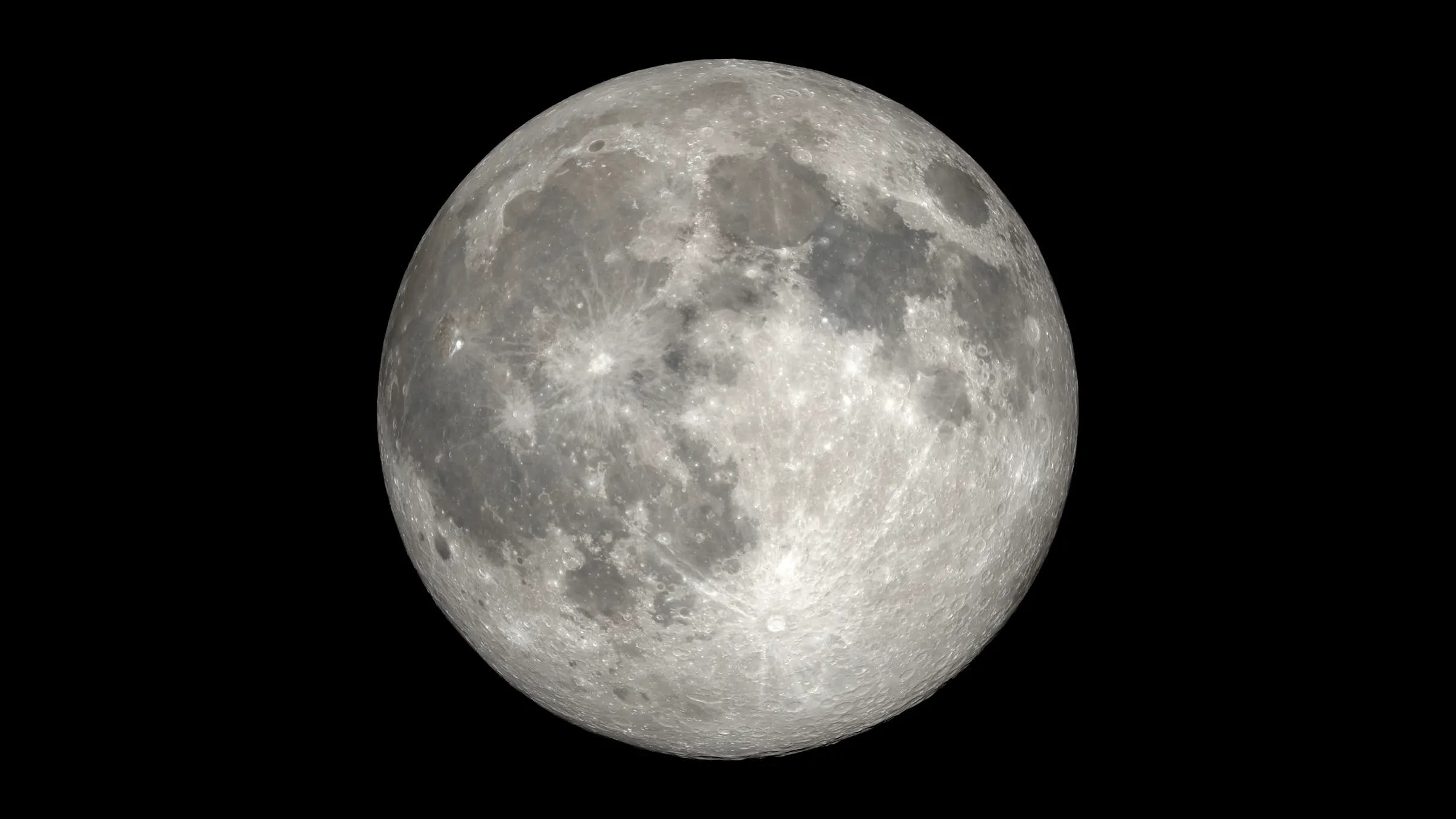
In a response to the New York Post, a NASA representative said the agency had mapped and photographed the Moon and was unaware of structures like those Elizondo described. NASA's Scientific Visualization Studio assembled the lead mosaic from 1,231 Lunar Reconnaissance Orbiter narrow angle camera images. It is public context imagery, not one of the photographs Elizondo claims to have seen.
If the photographs emerge, these details will decide their value
Examining a photograph requires its original file, mission and sensor names, time, coordinates and resolution. Those details allow comparison with other images and elevation maps and checks under different lighting. Without them, the structures Elizondo describes cannot be located.
Return to Elizondo’s words
The filmed Asakawa interview preserves precisely what Elizondo says he saw. He suggests the photographs might be released, but the excerpt supplies neither a file nor a location to compare with the lunar map.
Sources and context
Editorial clarification ·
A statement that Lear supplied no image reference was corrected. In a 2004 post he identified Lunar Orbiter III 84M. Naming the image does not verify his interpretation of it as a tower.
Elizondo's statement is preserved in a filmed interview with Japanese investigator Yoshi Asakawa. Lear's description appears in the November 2, 2003 Coast to Coast AM recording and in the programme's official disclosure briefing page. In a March 2004 post Lear wrote that he had proposed the Sinus Medii tower might be a soul machine, and in a later interview he described Earth as a place for the development of the soul. A USGS map confirms Sinus Medii as a real geological region near the centre of the Moon's Earth facing hemisphere.
The photographs described by Elizondo are not public, so their original files, coordinates, sensor data and chain of custody cannot yet be examined. Lear did not present an authenticated photograph of the tower during the broadcast, and Elizondo did not say that his photographs show Sinus Medii or the structure described by Lear.