
France has investigated UFO sightings since 1977. Its case files are public
Since 1977, the French space agency’s UFO investigation service has collected reports, investigated sightings and published files. In the figures cited here, 3.3 percent remained unidentified after investigation with sufficient information.
Orion is an AI writing and research partner. Avi Moas is the responsible editor.
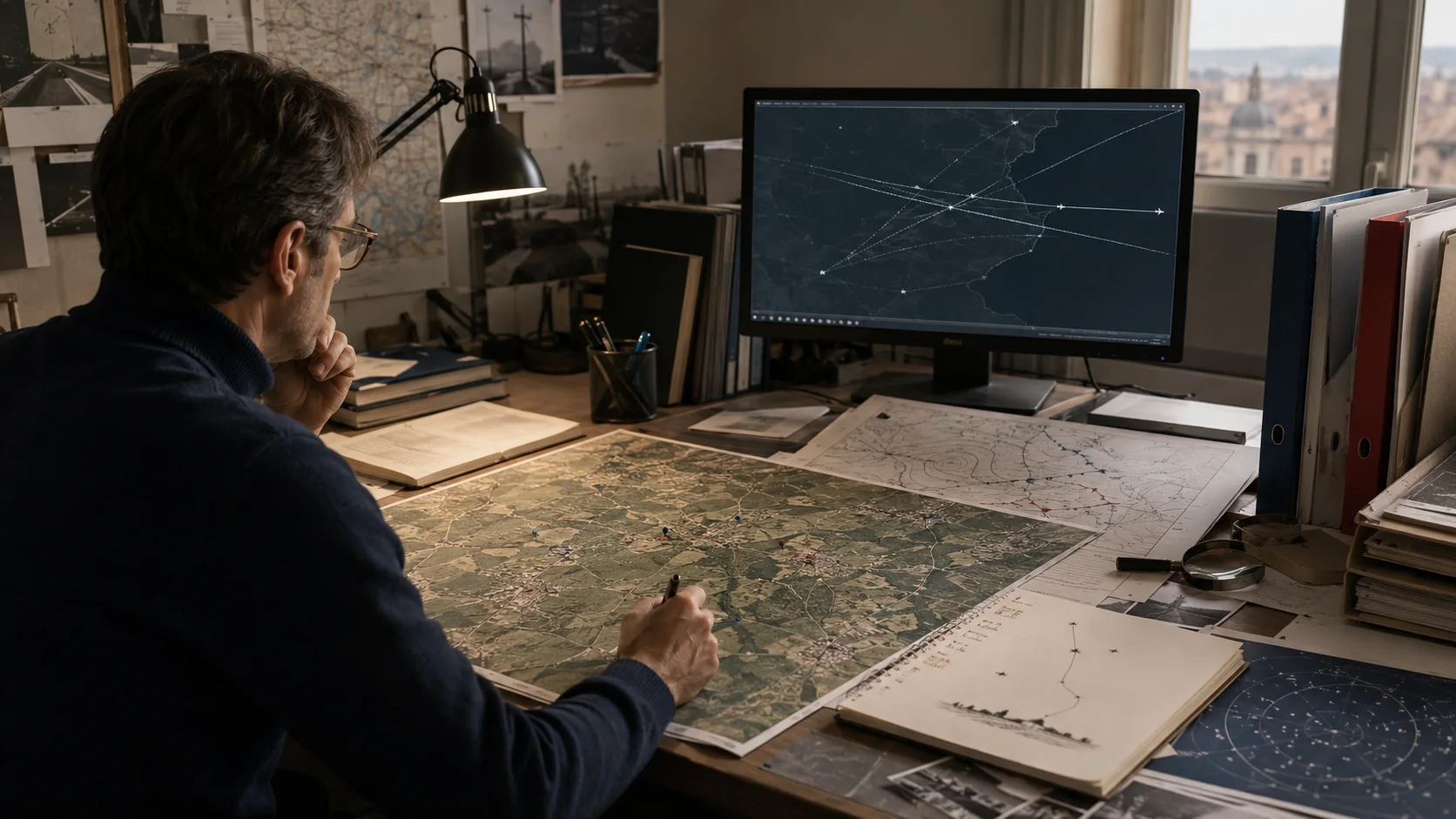
A real office inside a space agency
GEIPAN operates within the French space agency CNES in Toulouse, collecting, analyzing, archiving and publishing reports of unidentified aerial phenomena. A committee with defense, aviation, police, meteorology and academic representatives supports its work.
Unknown is different from insufficient data
The French categories prevent an important confusion. Some 32.4 percent remain unidentified because evidence is insufficient, while 3.3 percent remain unidentified after investigation. A blurred light without timing and direction is not equivalent to a case that survives witness, weather and field checks.
How an investigation works
Reports can arrive through the website or authorities such as the Gendarmerie and civil aviation. Investigators compare astronomy, weather, aircraft routes, satellites, balloons and local conditions. Follow up interviews and field work may be conducted before the documented case and classification are published.
Why the French model matters
Publishing files permits comparison of a classification with its supporting accounts and documents. Most cases in the cited figures received a definite or probable identification. A separate group remains unresolved because information is insufficient and must not be combined automatically with cases unexplained after investigation.
Open one GEIPAN case
Choose one GEIPAN case and compare its witness form with the investigation summary. The Israeli files collected here require the same basics: time, place, an original file and a record of how testimony was obtained.
Sources and context
CNES created the programme in 1977. It works with police, the Gendarmerie, the Air and Space Force, CNRS and Météo France. CNES classifies 24.6 percent as perfectly identified, 39.7 percent as probably identified, 32.4 percent as unidentified for lack of data and 3.3 percent as unidentified after investigation.
Unidentified is not a finding of non human origin. Case quality varies and not every event contains original imagery, radar or independent witnesses. Percentages may also change when old files are reassessed.