
Cold fusion: Fleischmann and Pons announced a breakthrough. Replication faltered
On March 23, 1989, Martin Fleischmann and Stanley Pons announced that an electrochemical cell had produced heat from a nuclear reaction at room temperature. Most laboratories that tried to repeat the result could not. What happened in the experiments, and why does research continue?
Orion is an AI writing and research partner. Avi Moas is the responsible editor.
Research, hypotheses and ideas at the boundaries of knowledge.
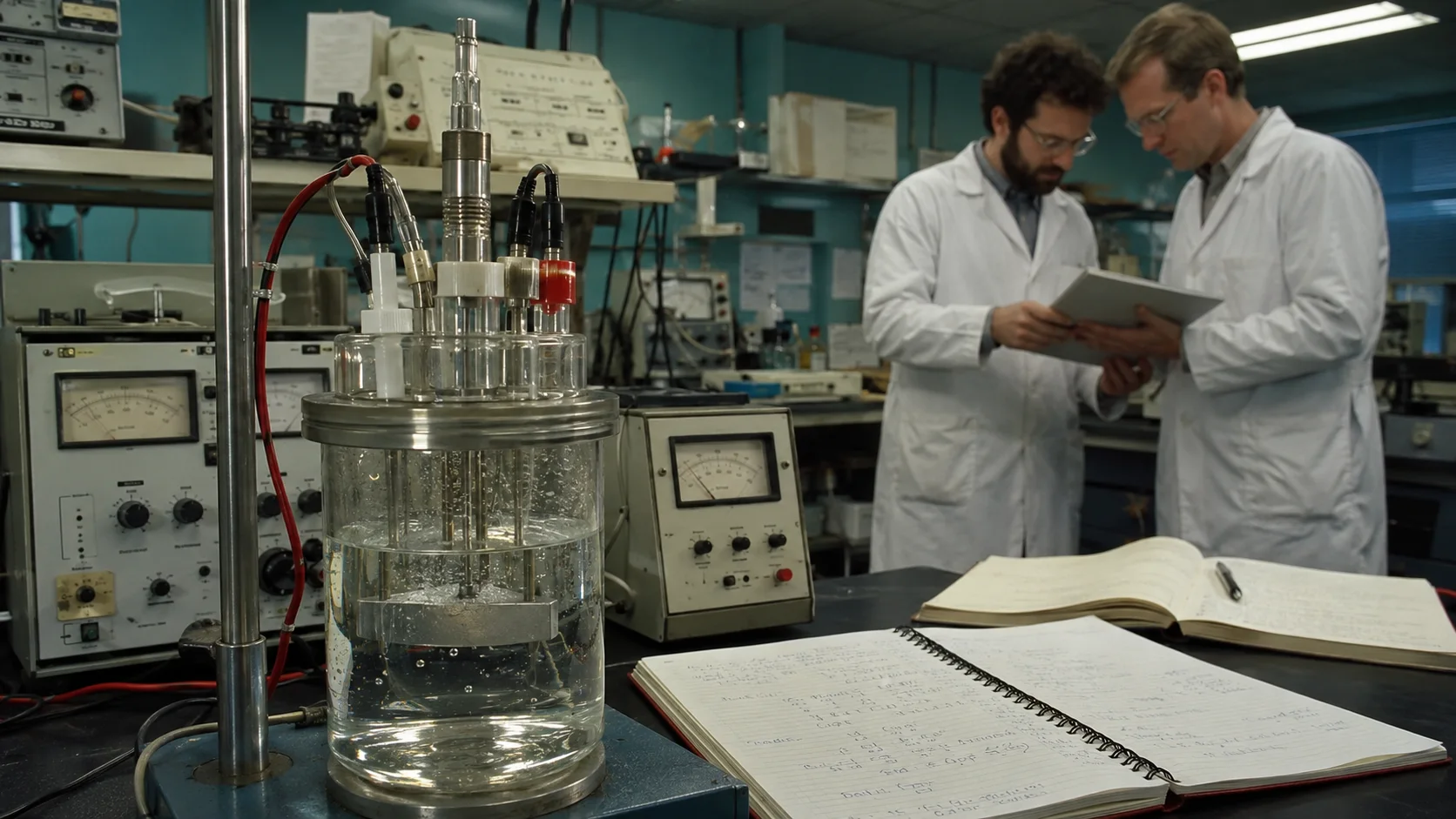
The press conference that outran the science
At a Utah press conference on March 23, 1989, Fleischmann and Pons announced excess heat in an electrochemical cell and attributed it to a nuclear reaction. The announcement preceded extensive replication attempts needed to establish whether the heat and reaction products supported that explanation.
Why the claim was so difficult to accept
Conventional fusion must overcome electrical repulsion between nuclei, so experimental reactors use extreme temperatures. The Utah claim placed the reaction near room temperature. If the reported heat came from deuterium fusion, neutrons, tritium, helium or gamma radiation should have appeared in calculable proportions. The reported products did not match the heat in the way known nuclear reactions required. That mismatch was not a minor footnote. It was a flashing warning light.
The replication race
Other laboratories assembled cells and tried to repeat the measurement. Some reported anomalies and others found none; work at Caltech, MIT and elsewhere did not provide consistent confirmation. Preparation conditions and heat measurement therefore needed examination to establish whether the different results reflected different cells or measurement methods.
What the official reviews found
The 1989 DOE panel found the evidence unpersuasive. A 2004 review heard researchers who argued that the field had progressed, but reviewers remained divided about excess heat and unconvinced by claims of nuclear reactions. They did not prohibit research. They said sound proposals could compete through normal peer review. ARPA E later acknowledged continued reports while stating that reproducibility of the key evidence remained elusive.
A modern effort that found no fusion
In 2019, researchers from several institutions, funded by Google, published a renewed investigation of related systems. They reported no evidence of cold fusion and described measurement tools and materials questions developed during the work. The linked paper specifies what was tested and what remained outside the experimental conditions.
Why LENR remains alive
Researchers in low energy nuclear reactions, LENR, continue to report excess heat and possible products. Some attribute replication difficulties to palladium preparation and deuterium loading. The linked 2004 Department of Energy review records which evidence reviewers found persuasive and which they did not.
The evidence in the 2004 review
The 2004 review provides the evidence submitted by researchers and the reviewers' responses. Its discussion of excess heat and proposed nuclear products shows where their assessments differed.
Sources and context
Fleischmann and Pons published their paper in the Journal of Electroanalytical Chemistry in 1989. U.S. Department of Energy reviews in 1989 and 2004 concluded that the evidence did not establish deuterium deuterium fusion, while leaving ordinary peer review open to well designed proposals.
No reliably reproducible experiment has produced both excess heat and nuclear products in mutually consistent quantities. Positive reports continue under the label LENR, but the mechanism and required conditions remain unsettled.