
Project Vigília in the Amazon: sensors record unusual lights in Yawanawá territory
Brazilian researcher and computer engineer Rony Vernet installed cameras and sensors in Acre to investigate Yawanawá reports of frightening lights. Alien Avi’s video presents recordings and an effort to turn local testimony into continuous data.
Orion is an AI writing and research partner. Avi Moas is the responsible editor.
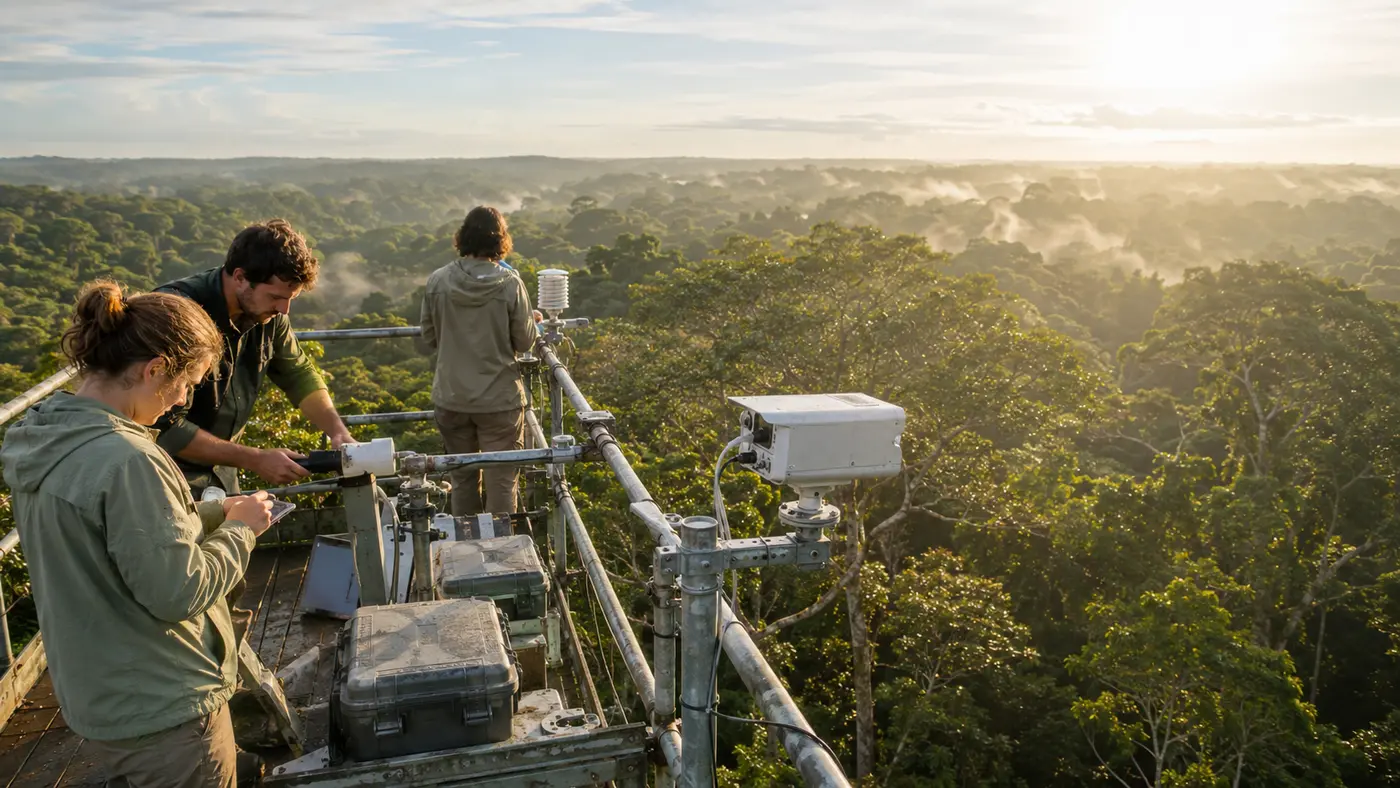
Project Vigília in the Amazon: sensors record unusual lights in Yawanawá territory: source video
The original post and video load within this article.
From local testimony to continuous observation
According to the project's description, the expedition followed Yawanawá reports of recurring lights. Vernet installed a system intended to record and measure without a team continuously present. System logs are needed to establish its operating duration and data continuity.
Five cameras
The project description lists a robotic camera with 25 times optical zoom, a wide sky camera with 12 megapixel resolution and three additional 4K cameras. Together they can survey a broad area, locate an unusual feature and zoom toward it while retaining the sky and horizon context.
Eleven measurement channels
The system includes thermal infrared imaging, a magnetometer, radio and microwave receivers, a radiation sensor, infrasound, acceleration, gyroscope, temperature, pressure, humidity and GPS measurements. Not every sensor detects an aerial object, but combined records can reveal environmental change, electromagnetic interference or movement of the installation itself.
Cloud processing and AI
Starlink connectivity permits daily data transfer from the forest. Processing can filter long periods of empty sky, detect motion and identify recurring patterns. AI can assist detection, but significant alerts require comparison with original files, sensor timing and explanations such as aircraft, satellites, insects or reflections.
What the video shows
The video shows light sources moving or changing within the field of view. Attribution to a fixed system supplies recording context, but synchronized camera and measurement records are needed to establish whether they captured the same event.
Why Acre matters
The western Amazon combines vast distances, limited artificial lighting, wildlife, complex weather and rich local traditions. These complicate identification while supporting dark sky observation. Local participation is essential because residents know the area’s ordinary patterns and can identify departures from them.
Which files belong to each event
The linked project publication identifies files associated with particular events. A package containing times, footage before and after, calibration and sensor logs would permit comparison. The video alone does not contain it.
Sources and context
Vernet led an expedition to Yawanawá territory in Acre, Brazil, and installed a monitoring system connected through satellite internet. Alien Avi’s post preserves footage from the project.
A complete public package synchronizing every frame with every sensor, original files, calibration logs and analysis code is unavailable. The footage belongs to an ongoing project, not its final scientific report.