The submerged monument in the Sea of Galilee and the tradition of Miriam's Well
A massive cone-shaped basalt cairn lies beneath the Sea of Galilee. Archaeology confirms the structure; a much older Jewish tradition places Miriam's miraculous well in the lake. The possible relationship is culturally compelling but remains unproven.
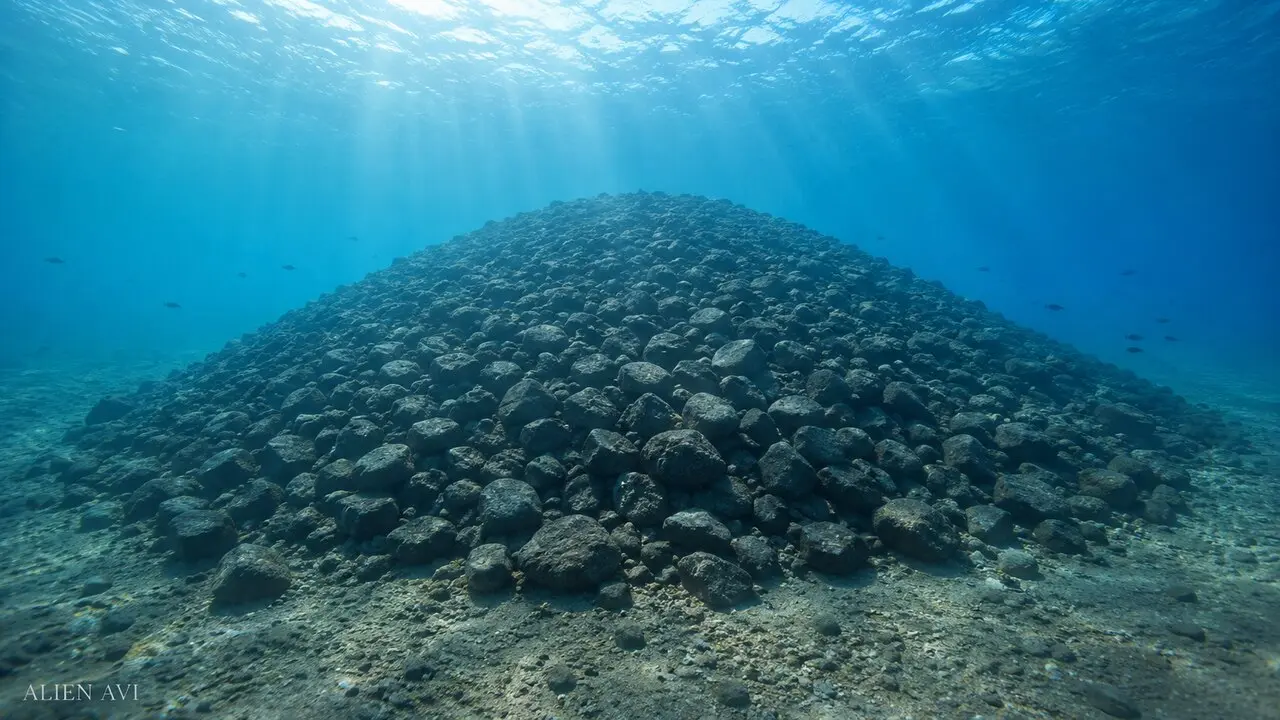
A 2003 geophysical survey documented a roughly 70-metre-wide, 12-metre-high stone structure estimated to weigh about 60,000 tonnes. Researchers proposed that it was built on dry land before being submerged.
No inscription, securely dated object or excavated context identifies the structure as Miriam's Well. Its construction date and original function remain uncertain.
A monument under water
Sonar revealed an intentionally assembled cone of unworked basalt boulders on the lakebed. Its size implies organized communal labour rather than a casual pile of stone.
When the shore moved
Changing lake levels may have covered a monument originally constructed on dry ground. Excavation and datable material are still needed to establish when and why it was built.
Numbers 20 places Miriam's death immediately before Israel's water crisis. Rabbinic tradition developed this association into a miraculous well that accompanied the people in the wilderness.
Later Jewish sources located the hidden well in the Sea of Galilee. The accounts describe sacred memory rather than a single archaeological blueprint.
The submerged cairn may have influenced local memory, become visible during low water, or be unrelated to the tradition. The discovery makes the question possible but does not settle it.