
Robert Bigelow says nonhuman intelligence chooses when to make contact
In his third conversation with George Knapp, Robert Bigelow argues that nonhuman intelligence operates alongside us and chooses when to make contact. He says technological power has grown faster than the responsibility needed to use it, and connects this to whether people are ready for an encounter.
Orion is an AI writing and research partner. Avi Moas is the responsible editor.
Research, hypotheses and ideas at the boundaries of knowledge.
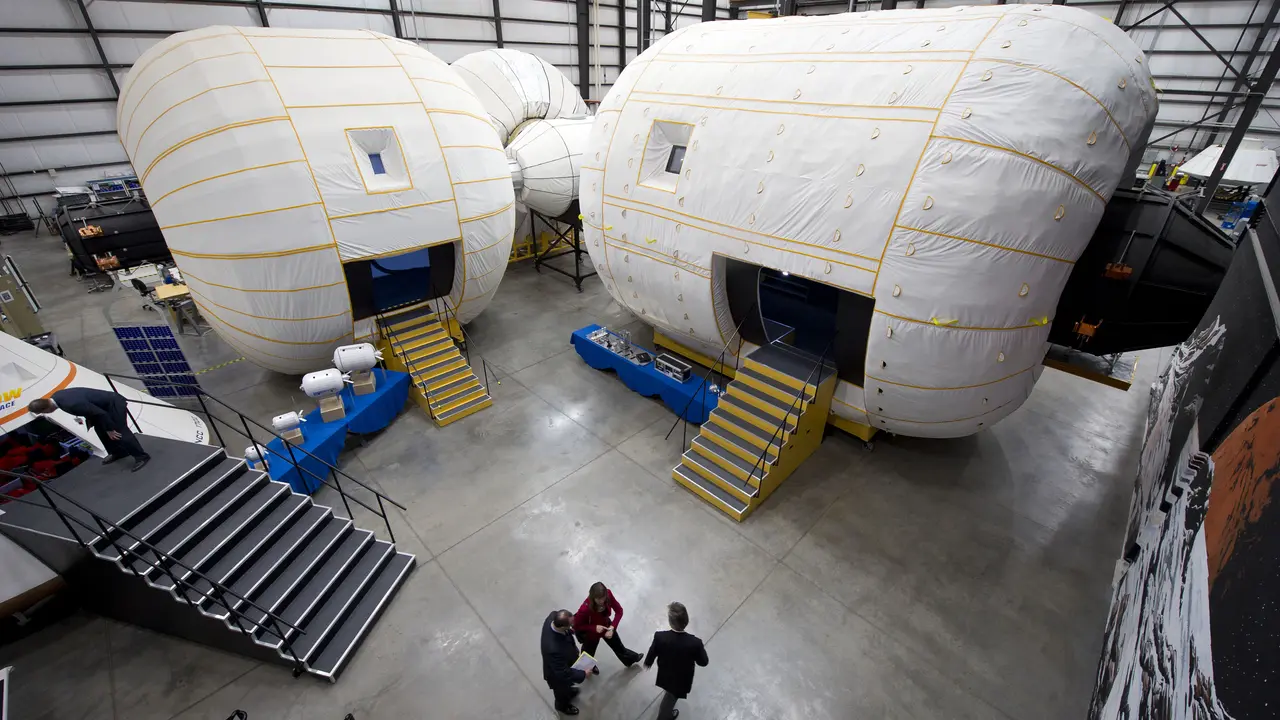
Robert Bigelow with George Knapp
The complete episode is embedded so Bigelow's accounts, interpretations and philosophical conclusions can be heard in their original context.
Who is speaking and why he matters
Robert Bigelow did not enter this subject through a passing viral clip. He is an aerospace entrepreneur who founded Bigelow Aerospace and spent decades financing private work on UAP, consciousness and anomalous events. He created the National Institute for Discovery Science, placed research teams at Skinwalker Ranch and was connected to the research infrastructure from which AAWSAP emerged. That history does not turn every conclusion into fact. It does make his account historically unusual because he speaks as an owner, funder and participant rather than as an observer outside the work.
The first rule: we are not in control
The conversation rests on a simple and unsettling claim. If an intelligence can appear without invitation, affect perception and leave without a track that people can follow, humans do not set every term of the event. Bigelow argues that trying to force contact, chase a craft or convert the phenomenon into a military target may misunderstand its nature. In his view, the encounter resembles engagement with an independent agent more than testing a machine. The agent decides what to reveal, to whom and when. He therefore reads some inconsistency not necessarily as failure but as a possible feature of intentional behavior.
What he says about communication
Bigelow describes experiments in which intention, concentration and mental state were, in his interpretation, part of the conditions for a response. He refers to Skinwalker Ranch events his team treated as demonstrations: phenomena that appeared around researchers, seemed to answer their presence and sometimes stopped when the team attempted a predictable measurement. He does not present a language, dictionary or orderly message. The communication he imagines is wider than words and may arrive through an image, sensation, sequence of events or change in the environment. If thought is part of the interface, he argues, placing a camera and waiting may not be enough.
The danger of an intelligent intermediary
Knapp and Bigelow discuss using artificial intelligence to detect patterns and mediate communication. This is a proposal, not a system shown in the episode decoding an authenticated message. It raises a further question: how could a pattern in the original material be distinguished from assumptions added during interpretation?
The gap that worries Bigelow
The deepest claim in the episode concerns people rather than aircraft. Bigelow describes a widening distance between technological power and moral responsibility. Humanity can split the atom, build strategic weapons and create powerful artificial intelligence, yet still struggles to resolve conflict without violence. He asks whether our species is ready for sustained contact with a civilization stronger than itself. In his interpretation, restraint by an advanced presence may say more than an appearance. If it possessed the ability to harm humanity and chose not to do so, perhaps the real examination concerns how humans use the freedom and power they already possess.
What is established and what remains absent
The video establishes that Bigelow holds this position and is willing to state it publicly. It preserves his reasoning without requiring a short edited clip. It does not establish that a non human presence controls time, consciousness or the terms of contact. An open investigation would need experiment logs, times, witnesses, recordings, controls and results reported whether they succeeded or failed. Human perception, expectation, environmental conditions or unfamiliar technology could explain some events. The complete private record might also be stranger than the episode can show. Both possibilities remain available to the public because the decisive material is not present.
Return to the full conversation
The episode records Bigelow's explanation of research he funded and experiences he described. Testing the events requires experimental logs, times, testimony and recordings absent from the episode. The linked full conversation is a starting point for separating events he describes from experience and the conclusions he draws from them.
Sources and context
Bigelow made the statements in a complete recorded conversation published through the Bigelow Podcast. Over several decades he funded private research, created NIDS, owned Skinwalker Ranch and participated in work that preceded AAWSAP. The full video lets viewers distinguish his personal accounts, his interpretations and his philosophical conclusions.
The episode does not provide sensor files, program documents, complete experiment records or physical evidence that could verify the mechanisms Bigelow describes. No public protocol shows how communication occurred, how ordinary causes were excluded or how an independent team could repeat a result.