How Italy reports a UFO: from the Carabinieri to the Air Force
In Italy, a civilian reporting an unidentified phenomenon completes a form and submits it to a Carabinieri station. The Air Force checks for natural and human causes, publishes the event and retains the UFO classification only when no technical or natural explanation is found.
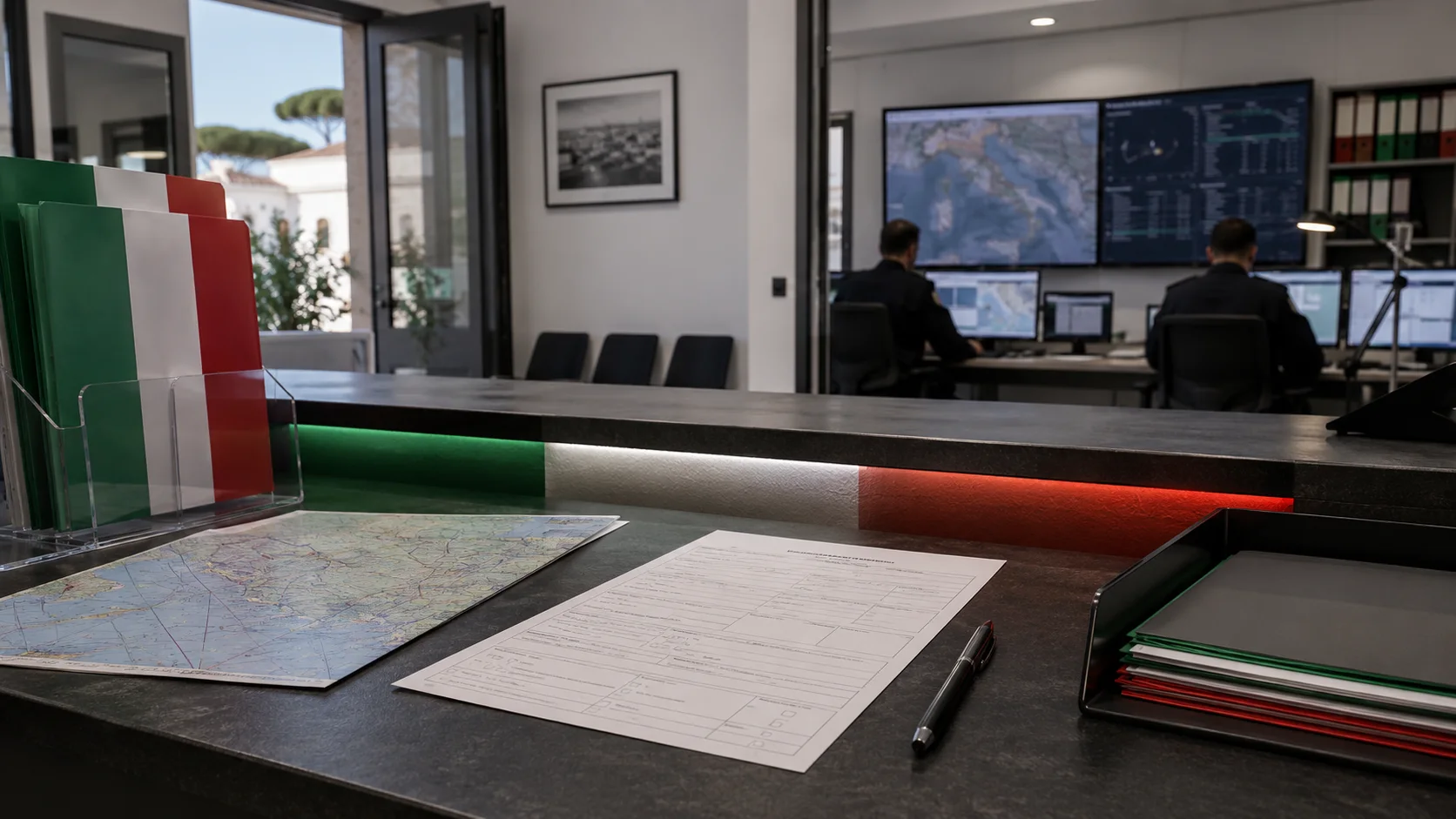
After the 1978 sighting wave, Italy designated the Air Force as the institution responsible for collecting, checking and monitoring UFO reports. The function now sits with the General Security Department of the Air Staff, and its official page indexes reporting years from 1972 through 2026.
The public page does not place complete sensor material, witness interviews and the detailed analytical method for every case in one location. Listing an event does not establish unusual physics or non-human origin.
A system born from the 1978 wave
Following a large wave of reports, Prime Minister Giulio Andreotti assigned the Italian Air Force institutional responsibility for the subject. That responsibility remained inside the national-security structure after public attention declined and continues today.
The witness begins at a Carabinieri station
A civilian completes a dedicated form and delivers it to the nearest Carabinieri station. This produces a timed, attributable location record rather than a social-media post that may disappear. The Air Force can then begin a technical inquiry and involve other authorities where needed.
The stated purpose is to test correlations with human activity and natural phenomena while protecting flight and national safety. Only when no technical or natural justification is found is the episode classified as an unidentified flying object. The term describes the identification result, not the object's origin.
The official page groups sightings by year and reaches from 1972 through 2026. The continuity is more valuable than a single viral case because it can reveal patterns by region, period or report type and show when an official explanation changes a classification.
A reliable intake route preserves reports, but full transparency also requires releasable source material: the anonymised form, original imagery, weather checks and analytical conclusion. Without them, the public sees the final line but cannot fully reconstruct the decision.