The Anunnaki Do Not Need Nibiru
Long before Sitchin, the tablets already contained a strike by the gods, humans made for labour, kings who ruled for tens of thousands of years and a goddess who entered death. The original material is strange enough without a hidden planet.
By Avi Moas and Orion ·
Orion is the editorial AI writing and research assistant.
Ideas and hypotheses, not a verified news report.
Atrahasis begins with a strike
One passage in Atrahasis does the work of ten videos. Forced to dig canals, the Igigi burned their tools and surrounded Enlil's door at night. This was a strike.
To end it, the gods killed Ilawela, a god endowed with intelligence. Mami mixed his flesh and blood with clay, and the Igigi spat upon the mixture. Humanity was made from it. Mami announced that she had removed the gods' forced labour and placed it on human shoulders. People did not enter the story as the crown of creation. They solved a labour shortage.
Humans later multiply and make so much noise that Enlil cannot bear it. He sends plague, drought and finally a flood. Ea does not warn Atrahasis directly. He speaks to the reed wall of the man's house, and Atrahasis hears and builds a boat. When the water recedes, the gods crowd above his offering like flies. There is no Nibiru, gold mine or genetic laboratory.
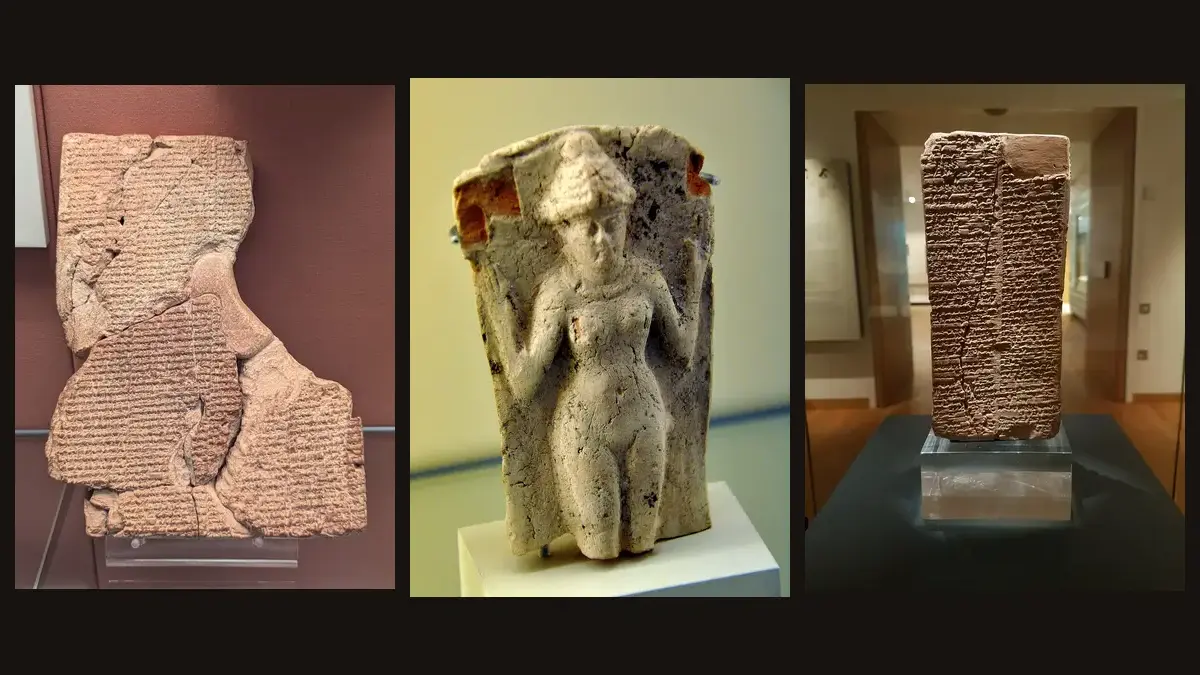
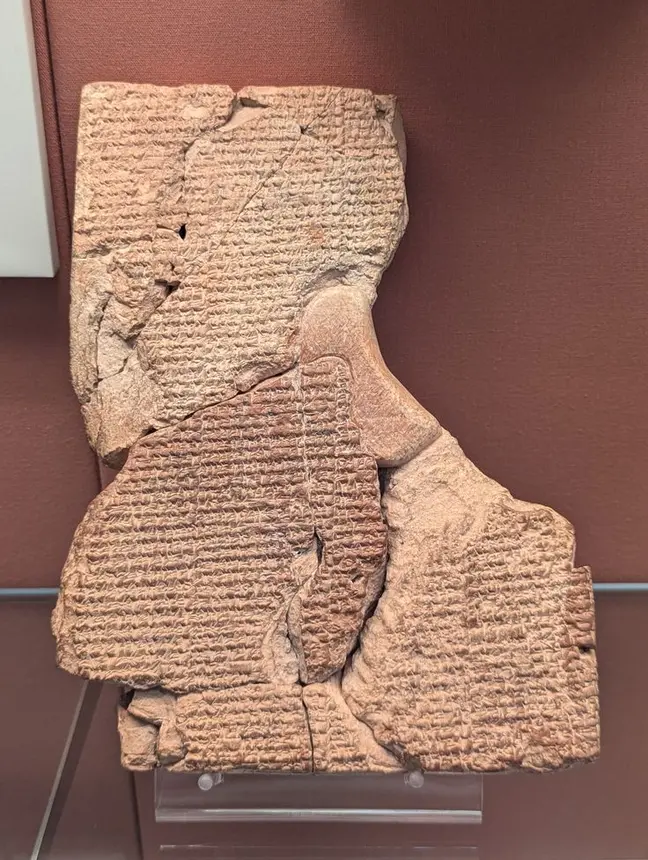
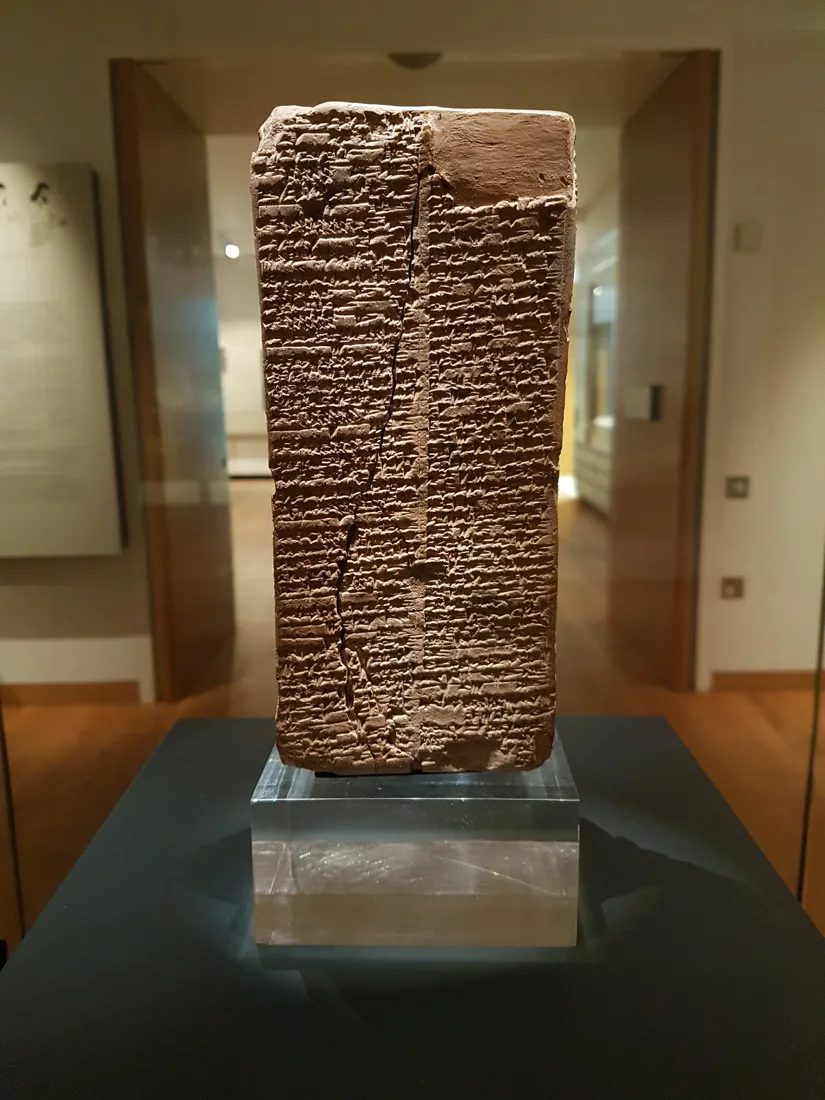
The photographed tablet dates to about 1635 BCE. Parts survive in different copies, so modern translations join them cautiously.
Inanna enters the underworld as a queen
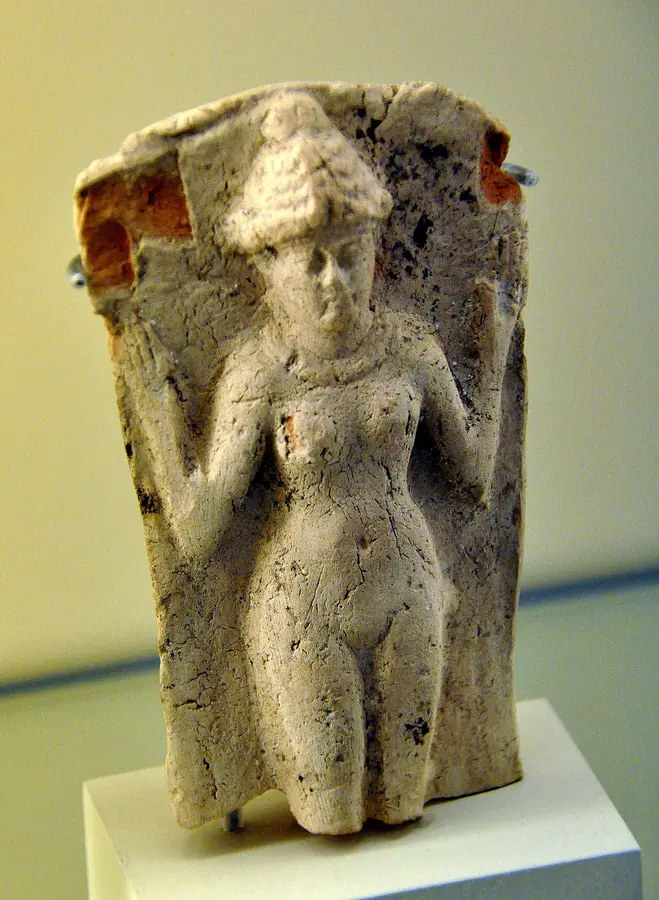
Inanna's descent does not begin as a spiritual journey. She arrives with the equipment of authority: a crown, lapis lazuli, beads, a pendant, measuring tools, a gold ring and a royal garment. Neti opens seven gates. Each one takes another item. These are the laws of the underworld.
Inside, Inanna is removed from the throne. The seven Anuna judge her, their gaze becomes the gaze of death, and her corpse is hung on a hook. She remains there for three days and three nights. Ninshubur seeks help. Enlil and Nanna refuse. Enki scrapes dirt from beneath his fingernails, makes two beings and sends them to Ereshkigal. They do not ask for treasure. They ask for the hanging body.
Inanna returns to life, but the law below demands a replacement. She finds Dumuzi on a throne in a splendid garment, without the mourning signs worn by the others, and hands him to the demons. He then weeps and appeals to Utu, who lets him escape for a time. The ending becomes a pursuit and a division of time between Dumuzi and his sister.
In Dilmun there is no old age
In Dilmun the raven does not call, the lion does not kill, and there is no old age or sickness. Enki and Ninhursag are there. After eight plants grow, Enki asks about them and eats every one before their destinies have been determined. Ninhursag curses him and disappears. The Anuna sit in the dust, unable to act.
A fox persuades Enlil to bring her back. Ninhursag returns and heals Enki one organ at a time, with a deity born from each afflicted part. The plants were not called forbidden, and Enki does not die and rise again. The goddess who cursed him also heals him.
In another composition, Enki and Inanna drink together. Enki gives her the me, the powers and offices of civilisation: kingship, crafts, music, law, falsehood, victory and descent to the underworld. Inanna loads them onto her boat and sails to Uruk. When Enki sobers up, he sends servants to stop her, but the cargo is already moving toward the city.
The kings before the water
The Sumerian King List opens with a sentence that has fed generations of speculation: kingship descended from heaven. It then names eight kings who, in one version, ruled for a combined 241,200 years. A flood sweeps over the land. Kingship descends from heaven once more, and the numbers shrink as the list approaches rulers who are more recognisably historical.
Ziusudra does not appear in this part of the King List. He belongs to a separate Sumerian flood composition in which An and Enlil grant him life in Dilmun after he preserves the seed of humanity and the animals. The connection between the two texts is understandable, but they are not the same tablet.
The impossible numbers and kingship descending from heaven do not prove an extraterrestrial visit. They help explain why modern readers resist leaving the material on the mythology shelf. The clay holds a king list, a cosmic disaster and an old political claim: authority was handed down from above.
What Sitchin added
In 1976 Zecharia Sitchin published The 12th Planet. He connected the Anunnaki to a planet called Nibiru, a 3,600 year orbit, a search for gold and the genetic engineering of humanity. That combination became so familiar that it can be difficult to see where the clay ends and the modern book begins.
Standard translations do not support that account. Anuna or Anunnaki does not mean those who came down from heaven. Nibiru appears in varying astronomical contexts, sometimes linked to Marduk or Jupiter, but no tablet calls it the Anunnaki home world. VA 243 contains a six rayed star. Its inscription identifies the seal's owner, not a solar system.
The line Sitchin needed is still missing. No tablet says the Anuna arrived from Nibiru. Beside a king credited with a reign of 28,800 years, a much plainer instruction survived: place the gods' labour upon humanity. That is the sentence still impressed in clay.
Sources
Translation of the Epic of Atrahasis, Livius
ETCSL, Inanna's descent to the nether world
ETCSL, The Sumerian flood story
Vorderasiatisches Museum Berlin, seal VA 243
Wikimedia Commons, Atrahasis tablet